Introduction
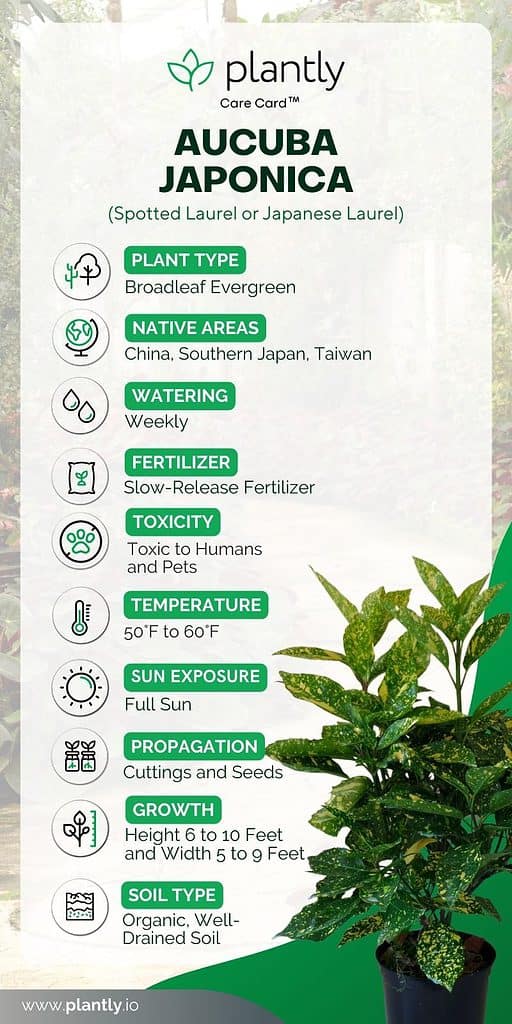
The Aucuba is a member of the Cornaceae family, native to the Himalayas, China, and Japan. This plant has been widely used for its ornamental value, making it an ideal choice for indoor spaces, gardens, and landscaping.
Characteristics
Upon closer inspection, you’ll notice that the Aucuba shares similarities with the Holly tree. In fact, one species of Aucuba is often referred to as the “Holly-like” plant due to its resemblance.
The leaves of the Aucuba can grow up to 7 inches long and have a leathery texture with lance-shaped blades. The margins may be smooth or toothed, depending on the species. One notable feature of the Aucuba is its unique leaf markings, which are often striking and distinctive.
Flowers
The flowers of the Aucuba are relatively small, typically appearing between March and April. They consist of four petals in a deep purple-magenta hue, which contrasts beautifully with the green foliage.
Interestingly, the Aucuba plants are dioecious, meaning that each individual is either male or female. This can result in varying levels of flowering depending on the specific plant’s sex. If both male and female plants are present, you may observe red berries forming, as the female flowers produce fruit.
Cultivation
Caring for Aucuba plants is relatively straightforward. They prefer partial shade and can thrive in areas with moderate temperatures between -15°C to 20°C.
However, overwatering can lead to root rot and other issues. It’s essential to monitor soil moisture and water sparingly, avoiding excess irrigation that may cause stagnation.
Regular pruning is also necessary to maintain the plant’s shape and promote healthy growth. Prune your Aucuba in early spring, using clean tools to prevent the spread of disease.
Nutrition
During the growing season (spring-fall), a balanced fertilizer containing essential macro- and micro-nutrients like iron, copper, and zinc can enhance plant performance. Dilute the fertilizer according to the manufacturer’s instructions and apply it every two weeks.
Autumn and winter are times for dormancy, so fertilization should be suspended during these periods.
Propagation
Aucuba plants can be propagated through division or layering. To divide, wait until new growth emerges in early spring, then carefully separate the roots using a sterile tool.
For layering, bend a long stem down to the ground and secure it with a rock or other weight. As the plant grows, you’ll need to cut it away from the parent plant, making sure not to damage the roots.
Species
Within the Aucuba genus, three species are most commonly cultivated:
- Aucuba japonica: The Japanese Aucuba is widely available and can grow up to 30 feet tall when properly pruned. Its leaves have a glossy, oval shape with toothed margins, while its red berries ripen between October and November.
- Aucuba chinensis: The Chinese Aucuba reaches maximum heights of around 6 meters. It has pale green underside foliage with darker upper surfaces and can be grown as a wildflower in Asian forests at elevations between 300-1000 meters.
- Aucuba himalaica: This Himalayan species features oval-shaped leaves with smooth margins, showcasing its vibrant green color.
Growth Habit
The growth habit of the Aucuba varies depending on the specific species and growing conditions. In general, they tend to grow as shrubs or small trees, often reaching heights between 3-10 feet tall.
However, when grown in a container or pot, the Aucuba can become more compact and manageable, making it an ideal choice for indoor spaces or smaller gardens.
Pest and Disease Management
As with any plant, the Aucuba is susceptible to pests and diseases. Regular monitoring and prompt action can help prevent issues from arising.
Common pests affecting the Aucuba include spider mites, mealybugs, and scale insects. To manage these issues, use organic pest control methods whenever possible, such as neem oil or insecticidal soap.
For fungal diseases like root rot or leaf spot, treat affected areas with a fungicide specifically designed for houseplants.
Common Problems
While the Aucuba is generally a low-maintenance plant, it can be prone to certain issues. Here are some common problems and their solutions:
- Leaf drop: This may be caused by overwatering or exposure to extreme temperatures. Check your watering schedule and ensure good air circulation around the plant.
- Yellowing leaves: Yellowing leaves can indicate nutrient deficiency or root rot. Fertilize with a balanced fertilizer, and inspect the roots for any signs of damage.
- Slow growth: This may be due to inadequate light or insufficient nutrients. Move the plant to a brighter location, and consider fertilizing regularly.
Conclusion
In conclusion, the Aucuba is an attractive and versatile plant that can add beauty to indoor spaces or outdoor gardens. With proper care and attention, it can thrive in a variety of environments.
By following these guidelines and learning more about the different species within the Aucuba genus, you’ll be well on your way to becoming an expert in Aucuba cultivation.
FAQs
- What is the ideal temperature range for growing Aucuba plants?
- Aucuba plants thrive in temperatures between -15°C and 20°C.
- How often should I water my Aucuba plant?
- Overwatering can lead to root rot; it’s best to check soil moisture regularly and water sparingly, avoiding excess irrigation.
- Can I propagate Aucuba plants using division or layering?
- Yes, both methods are viable options for propagating Aucuba plants.
- What is the average lifespan of an Aucuba plant?
- Aucuba plants can live for up to 20 years with proper care and maintenance.
- Can I grow Aucuba plants in containers or should they be planted directly into the ground?
- Both methods are viable, but Aucuba plants may benefit from being grown in larger pots to accommodate their mature size.
- Are there any specific fertilization requirements for Aucuba plants during different seasons?
- During the growing season (spring-fall), a balanced fertilizer should be applied every two weeks; autumn and winter are times for dormancy, so fertilization should be suspended.
- How often should I prune my Aucuba plant to maintain its shape?
- Prune your Aucuba in early spring using clean tools to prevent the spread of disease.
- Can Aucuba plants tolerate extreme weather conditions, such as drought or excessive rain?
- While Aucuba plants can adapt to some level of stress, prolonged exposure to extreme weather conditions may still cause damage; it’s essential to monitor their condition and take corrective action when necessary.
By understanding the unique characteristics and needs of your Aucuba plant, you can create a thriving environment that allows it to reach its full potential.