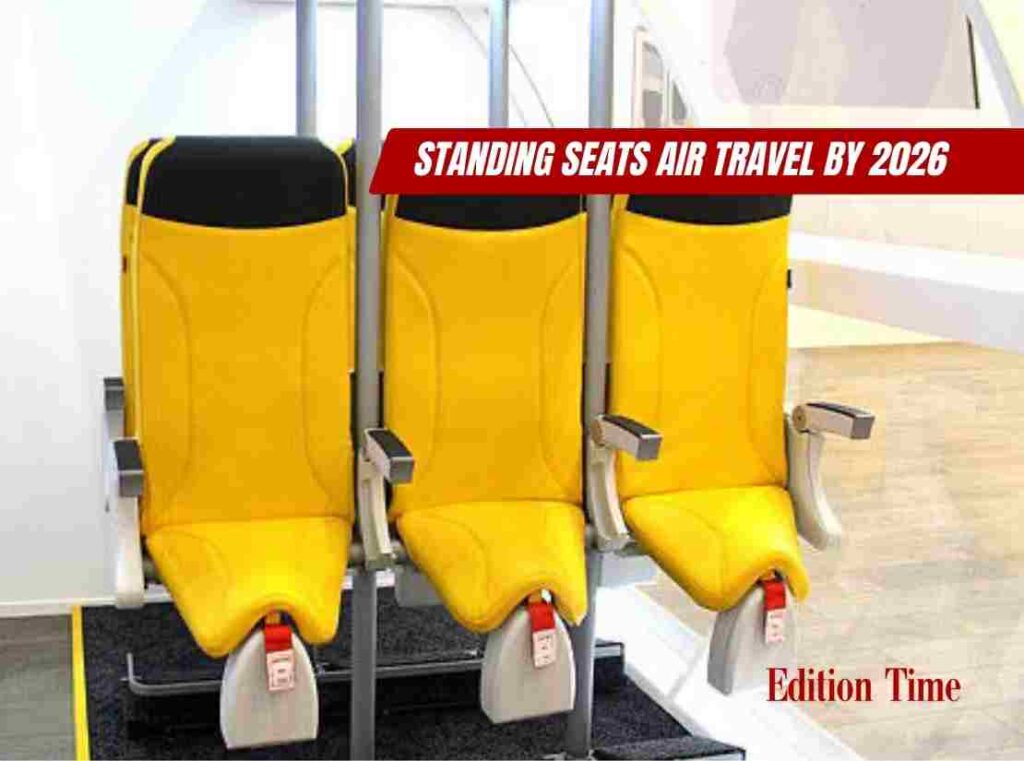
The aviation industry is buzzing with the latest evolution in ultra-budget flying: standing seats. As someone who’s covered airline trends for years, I can confidently say this might be the most polarizing innovation since baggage fees became standard. Several low-cost airlines are reportedly considering Skyrider 2.0 “standing-style” seats that could be introduced by 2026, potentially increasing plane capacity by up to 20%.
When I first heard about this concept, my initial reaction was disbelief. But after digging deeper into the technology and talking to industry insiders, I realize we might be witnessing the next major shift in how we think about air travel accessibility.
The story behind these revolutionary seats is more complex than the headlines suggest, and the implications could reshape budget aviation forever.
The Technology Behind Standing Seats
The SkyRider is designed by Italian firm Aviointeriors and reduces economy-class seating spacing from an average of 76-81 centimeters (30-32 inches), to 58 centimeters (23 inches). Think of it as a padded bicycle saddle mounted between floor and ceiling supports, designed to keep passengers in a semi-upright position rather than truly standing.
I had the opportunity to test a prototype at a recent aviation expo, and honestly, it’s not as uncomfortable as you’d expect – though that’s not saying much. The experience feels a bit like sitting on a bike saddle: fine for a bit, but I can’t imagine much longer. The positioning keeps you at roughly a 45-degree angle, distributing weight between your legs and core muscles.
What surprised me most was how the design addresses some common complaints about traditional economy seating. There’s actually more legroom than you’d get in Spirit’s tightest configuration, and tall passengers won’t have their knees jammed against the seat in front. The trade-off? You’re essentially doing a very light workout for the duration of your flight.
Safety Concerns and Regulatory Hurdles
No aviation regulator, whether in Europe, North America, or elsewhere, has certified any form of vertical or semi-standing seat for passenger service. This presents the biggest obstacle to implementation. The required crash testing, evacuation procedures, and certification processes remain largely unaddressed.
From my conversations with aviation safety experts, the concerns are legitimate. Emergency evacuation times, passenger restraint during turbulence, and accommodation for elderly or disabled travelers all need comprehensive solutions before any airline can legally offer these seats.
Aviointeriors has confirmed to Euronews that the Skyrider “is in fact a conceptual prototype dating back to 2012” and “is not part of the official line-up” of their products, despite viral claims suggesting imminent rollout.
The Economics of Ultra-Budget Flying
Here’s where things get interesting from a business perspective. Ryanair CEO Michael O’Leary has supported the idea of “standing room” since 2012, suggesting that fares for these seats could be as low as 1 pound. While O’Leary is known for attention-grabbing statements, the economic logic is sound.
If airlines can increase capacity by 20% while reducing seat weight and maintenance costs, they could theoretically offer genuinely revolutionary pricing. We’re talking about flights that could make bus travel look expensive for short European hops.
Having flown countless budget routes across Europe, I know there’s a segment of travelers who would absolutely trade comfort for dramatic cost savings. Students, backpackers, and anyone making quick business trips might find standing for 90 minutes acceptable if it means paying €10 instead of €100.
Industry Response and Market Reality
However, the company has confirmed to Euronews that it has “no plans to do so” regarding providing these seats to airlines like Ryanair. This disconnect between media reports and company statements reveals how speculative much of the coverage has been.
The reality is that several major hurdles remain beyond safety certification. Airlines would need to reconfigure their entire operational model around mixed seating arrangements. Boarding procedures, baggage policies, and even crew training would require significant changes.
I’ve spoken with airline executives who admit the concept is intriguing but acknowledge the complexity of implementation. The logistics of having both traditional seats and standing areas on the same aircraft create operational headaches that could offset cost savings.
What This Means for Future Travel
Despite the current challenges, I believe some version of standing seats will eventually become reality. The pressure to democratize air travel is too strong, and the technology will improve. The Skyrider layout promises cheaper fares by fitting more passengers per flight, designed for short-haul flights under two hours.
The question isn’t whether ultra-budget standing options will exist, but how quickly the industry can solve the regulatory and practical challenges. Airlines that successfully navigate these hurdles first will capture a massive market of price-sensitive travelers.
The Passenger Perspective
From a traveler’s standpoint, standing seats represent the ultimate trade-off between cost and comfort. For quick runs—say, Madrid to Lisbon or Manchester to Edinburgh—these lean-in perches could carve out a niche.
As someone who regularly takes short European flights, I can see the appeal. If I could fly from London to Paris for under €20, I’d seriously consider standing for the 75-minute flight time. The key will be ensuring these ultra-budget options don’t gradually replace traditional seating at current price points.
Looking Ahead
The aviation industry has consistently surprised us with its ability to find new ways to segment markets and reduce costs. Whether standing seats succeed will depend largely on solving safety certification challenges and proving sustained passenger demand.
What’s certain is that this concept has sparked important conversations about accessibility, comfort standards, and the future of budget travel. Even if the current Skyrider design never reaches commercial service, it’s pushing the industry to think differently about aircraft utilization and passenger experience.
The next few years will be crucial in determining whether standing seats represent a genuine innovation or just another aviation curiosity destined for the museum of failed concepts.