
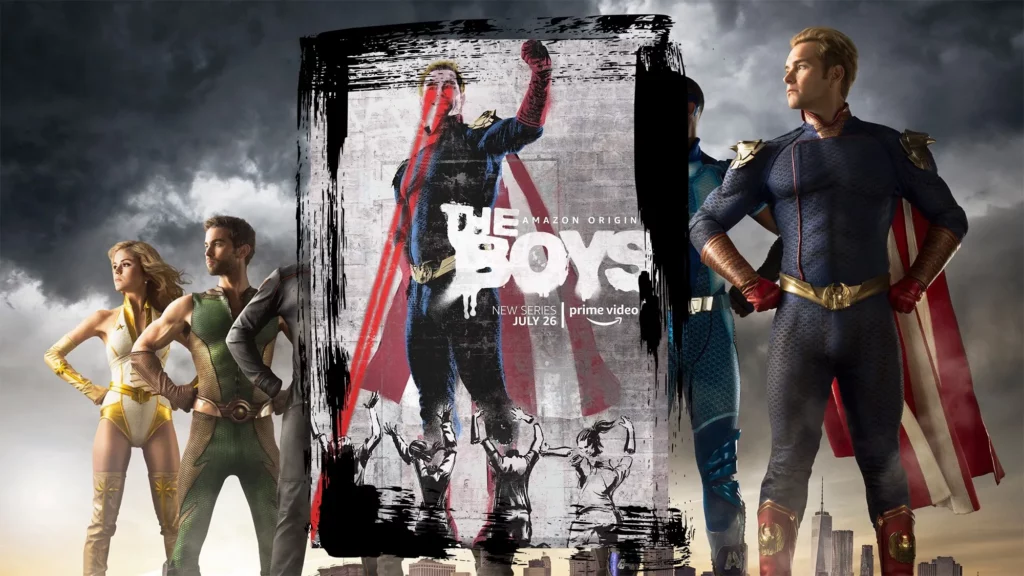
In the realm of television, few series have managed to capture the zeitgeist of our times quite like “The Boys.” This Amazon Prime original, based on the comic book series by Garth Ennis and Darick Robertson, has taken the superhero genre and flipped it on its head. It’s not just a show about superheroes; it’s a biting commentary on corruption, power, and the morally ambiguous world we inhabit. But how does it achieve this? Let’s delve deeper into the essential themes of the show and explore its remarkable social commentary.
The Premise of “The Boys”
At its core, “The Boys” presents a world where superheroes, known as “Supes,” are not just heroes but also celebrities, often more concerned with their public image than actual heroism. The show follows a group of vigilantes, aptly named “The Boys,” who seek to expose the dark underbelly of these super-powered beings and the corporation that controls them—Vought International. This premise sets the stage for a scathing critique of power structures and societal corruption, and it cleverly mirrors many real-world issues.
Power Dynamics in “The Boys”
One of the most significant themes in “The Boys” is the examination of power dynamics. The Supes symbolize not only physical power but also the influence they wield in society. Characters like Homelander, the show’s central villain, embody the ultimate manifestation of power unchecked. His narcissism, lack of accountability, and willingness to manipulate others demonstrate how those in power can exploit their position for personal gain.
In an era where we frequently witness the abuse of power across various sectors—politics, corporate America, and media—the show serves as a reflection of our reality. The stark contrast between the Supes’ public personas and their private actions highlights the façade that many powerful figures maintain, and it raises critical questions about moral responsibility.
The Role of Corporations
Vought International serves as a representation of corporate greed, an entity with immense influence over public perception and policy. The corporation’s marketing strategies and public relations campaigns often overshadow the ethical implications of its actions, almost as if anyone with enough money can cloak themselves in a layer of respectability. This can be seen in modern discussions surrounding big tech companies or pharmaceutical giants, which wield their financial power to shape narratives to their advantage.
In Season 1, we see how Vought markets superheroes to the public, turning them into products that can be consumed, much like modern-day celebrities. This commodification leads to a society more focused on consumerism than on moral values, showcasing a real-life parallel to the way corporate branding can overshadow the integrity of individuals and organizations.
The Fallibility of Heroes
In “The Boys,” the divide between heroism and villainy is often blurred. The characters we initially view as villains, like Homelander, often mirror traits found in traditional hero archetypes. They have incredible powers but lack the moral compass expected of heroes. Conversely, characters like Billy Butcher and Hughie Campbell, while part of “The Boys,” are flawed and make questionable decisions in their quest for justice, which can lead to collateral damage.
The show unveils the uncomfortable truth that heroes are often just as fallible as anyone else. This portrayal resonates with audiences who are increasingly disillusioned by real-life heroes—be they politicians, celebrities, or sports figures—who fall from grace due to scandal or unethical behavior. The series challenges viewers to consider the complexity of morality and the dangers of idolizing individuals based solely on their perceived virtue.
Media Manipulation and Public Perception
One of the standout features of “The Boys” is its honest portrayal of media manipulation and the impact it has on public perception. In today’s society, where news is frequently sensationalized and opinions are molded by sound bites and social media trends, the show reflects a reality many recognize.
Vought International uses extensive public relations campaigns to control the narrative surrounding its heroes. They craft heroic stories, using strategic marketing to overshadow any wrongdoings by the Supes. The narrative parallels our current media landscape, where perception can often overshadow reality, and the truth can be distorted with the right presentation.
Characters like Annie January (Starlight) initially embody the idealistic view of heroism. Yet, as she becomes more enmeshed in the world of Vought, she discovers the manipulative tactics used to maintain public favor. This journey of discovery echoes the challenges many individuals face when confronting the complexities of truth in a world saturated with misleading information.
[amazon box=”B08XLLF3PG”]
The Fight Against Corruption
At the heart of “The Boys” is the struggle against corruption. The titular group is not merely fighting against the supervillainy of the Supes but also against the system that enabled their rise to power. Billy Butcher is relentless in his quest for justice, often pushing moral boundaries to seek vengeance against those who misuse their power.
As viewers, we are invited to question where we draw the line between justice and revenge. The methods employed by “The Boys” raise ethical dilemmas that challenge the notion of righteousness. As we watch their battles unfold, we are reminded of the importance of accountability and transparency in any system of power, whether it be governmental or corporate.
Real-World Parallels
“The Boys” offers viewers a mirror to reflect on contemporary societal issues. The series doesn’t shy away from addressing themes such as police brutality, corporate corruption, and the ethics of surveillance—all relevant topics in today’s world.
The character of Homelander, with his authoritarian tendencies, can be seen as an embodiment of the ultra-nationalism some fear in modern governance. This representation raises awareness about the importance of democratic processes and the dangers of relinquishing our moral compasses in favor of populism.
Further, the show’s portrayal of women’s experiences, particularly with characters like Starlight and Queen Maeve, delves into themes of exploitation within both corporate and superhero cultures. Their journeys reflect the struggles many women face in patriarchal systems, echoing the ongoing real-world movements that confront these issues.
Social Commentary Through Dark Humor
Another compelling aspect of “The Boys” is its use of dark humor to tackle serious topics. The show balances graphic violence and absurd scenarios with a level of satire that forces viewers to confront the absurdity of societal norms, celebrity culture, and moral hypocrisy.
By exaggerating extreme situations—like a superhero using a plane crash for his own publicity—the series compels audiences to reflect on the lengths to which individuals will go to uphold their image and gain followers. The juxtaposition of comedy and horror allows the show to convey its messages in a digestible manner while also provoking thought and discussion among viewers.
Conclusion: The Legacy of “The Boys”
As “The Boys” continues to develop, its social commentary remains as relevant as ever. The exploration of power and corruption resonates deeply in a world where the divide between right and wrong is increasingly hazy. The show’s clever narrative, colorful characters, and poignant themes serve as a much-needed critique of the society we live in.
By exposing the flaws of its characters and the systems they operate within, “The Boys” provides a cautionary tale about the dangers of power, the complexities of morality, and the consequences of our own complicity in systems of corruption. As audiences engage with its thrilling and often shocking storytelling, they are also invited to reflect on their own perceptions of heroism and the societal structures that shape our lives.
In a world hungry for moral clarity, “The Boys” serves as a reminder that the struggle for truth and integrity is a timeless endeavor—one that requires vigilance, accountability, and perhaps, a little bit of heroism from all of us.
So, as you binge-watch the latest episodes, remember that beneath the surface of this action-packed series lies a treasure trove of social commentary and existential musings that speak to the heart of human experience. After all, in the battle against corruption and power, every viewer plays a part in shaping the narrative of our times.


