
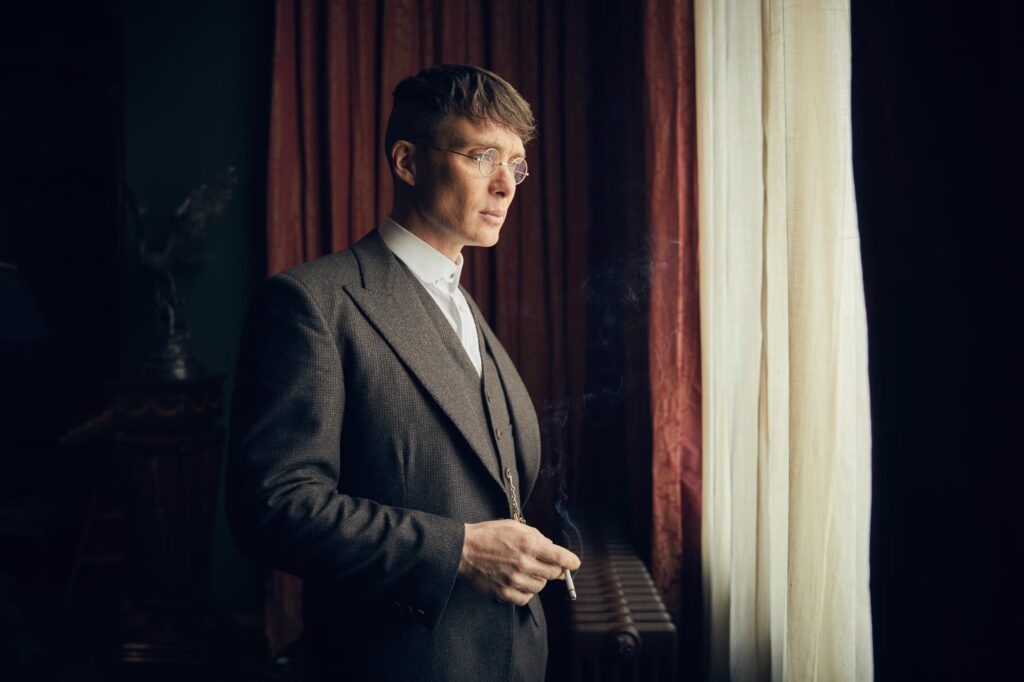
When it comes to captivating television characters, few have made as profound an impact as Thomas Shelby from the hit series Peaky Blinders. This character, portrayed masterfully by Cillian Murphy, has become emblematic of complex storytelling and intricate character development. In this article, we delve into the evolution of Thomas Shelby, exploring how Cillian Murphy’s performance not only defined the character but also shaped the very fabric of the show itself.
The Genesis of Thomas Shelby
Peaky Blinders, created by Steven Knight, premiered in 2013 and quickly captured audiences with its gritty portrayal of post-World War I Birmingham, England. The series tells the tale of the Shelby family and their notorious gang, who have become notorious for their razor blade-studded caps and ruthless operations. At the heart of it all is Thomas Shelby, the ambitious leader and primary protagonist.
When Cillian Murphy first stepped into the shoes of Tommy Shelby, viewers were introduced to a war veteran returning to a world rife with chaos, disillusionment, and opportunity. Murphy’s initial portrayal of Tommy was infused with a somber intensity, which perfectly encapsulated the trauma that lingered after the war, allowing audiences to empathize with a character who embodies the classic antihero trope.
Cillian Murphy: The Actor Behind the Legend
Cillian Murphy’s unique blend of charisma, intelligence, and vulnerability breathes life into Thomas Shelby. Drawing on his extensive background in theatre, Murphy brings depth to Tommy’s character, illuminating the internal struggles that shape him. From the very start, his portrayal hinted at a complexity that would only deepen as the series progressed.
One of the most striking aspects of Murphy’s performance is his ability to convey a broad spectrum of emotions, often with minimal dialogue. The subtlety of his expressions, along with the tension in his body language, allows viewers to engage with Thomas on an emotional level. This nuanced performance underscores the transformative journey of Tommy Shelby throughout the series.
Season by Season: Tommy’s Evolution
Season 1: The Reluctant Leader
In the first season, Thomas Shelby is introduced as a man grappling with the shadows of his past. Murphy successfully conveys Tommy’s desire for power interlaced with an underlying vulnerability. His determination to grow the family business stands in stark contrast to the societal constraints of post-war Britain. As he navigates alliances and rivalries, Murphy portrays a character who is still rooted in loyalty to his family while yearning for more.
One standout moment that encapsulates this season is Tommy’s dealings with the Birmingham police. Murphy’s performance showcases Tommy’s tactical mind as he strategizes to expand his family’s influence while dodging the threat of law enforcement. Each move is calculated, reflecting the ruthlessness of the Peaky Blinders, and offering a glimpse into the man Tommy will become.
Season 2: The Rise to Power
By the time we reach Season 2, Tommy Shelby has begun his ascent into the world of legitimate business, but his methods remain as ruthless as ever. Murphy’s transformation in this season is palpable. He becomes more self-assured, wielding power with an air of confidence that suggests he’s learned to capitalize on his wartime experiences.
However, this season also introduces the weight of the decisions he faces. Murphy encapsulates the internal conflict of a man torn between ambition and the morality of his choices. The introduction of Noah Taylor’s character, the ruthless American businessman, adds new layers to Tommy’s personality. The interactions between the two characters highlight Tommy’s adaptability and cunning, reinforced by Murphy’s standout performance.
Season 3: The Family Man
In Season 3, we witness another significant shift in Thomas Shelby’s character. The balance between personal life and business becomes increasingly evident, particularly as he grapples with the impact of his choices on those around him. Murphy’s ability to switch between angry, brooding moments and tender interactions with his family is astounding, showcasing the depth of character development.
His relationship with Grace Burgess, played by Annabelle Wallis, plays a crucial role in this evolution. The juxtaposition of love and betrayal showcases Murphy’s range, capturing both the sweetness of their romance and the heartbreak of betrayal. This season ultimately sets Tommy on a path towards deeper existential crises, which Murphy navigates with sophistication.
[amazon box=”B08XLLF3PG”]
Season 4: The King of Birmingham
In Season 4, the stakes are raised with the arrival of new antagonists and an impending war. Cillian Murphy’s portrayal of Tommy Shelby in this season is a masterclass in tension. His character is pushed to the brink as he confronts family betrayal and external threats.
One of the most compelling aspects of this season is the physical transformation of Tommy. Murphy embodies the burden of leadership and the toll it takes on Tommy’s psyche, showcasing the weariness that comes with being a kingpin. The weight of his family’s legacy and the consequences of his actions are etched into Murphy’s face, conveying a man who is beginning to question his destiny.
Season 5: The Man in the Mirror
Season 5 sees Tommy Shelby at a crossroads, facing the realities of his power in a changing world. Murphy’s portrayal takes on an increasingly reflective tone, as Tommy begins to confront his demons—both personally and politically. The character’s growing paranoia and uncertainty are amplified by Murphy’s ability to blend vulnerability with defiance.
A pivotal moment occurs during Tommy’s speech at a political rally, where Murphy’s impassioned delivery marks a turning point for the character. In this moment, viewers are reminded of the overarching themes of the show: power, loyalty, and the choices that can lead to one’s downfall.
The Cultural Impact of Thomas Shelby
Cillian Murphy’s interpretation of Thomas Shelby has transcended mere character portrayal; it has contributed to a cultural phenomenon. The Peaky Blinders’ aesthetic, including its fashion and music, has found a place in contemporary culture, largely influenced by Tommy’s character. From the iconic flat caps to tailored suits, the style associated with the show has been embraced by fans and has infiltrated fashion trends worldwide.
Moreover, Thomas Shelby has become a symbol of resilience and complexity in modern storytelling. The character’s morally ambiguous decisions resonate with audiences, inviting discussions about leadership, loyalty, and the consequences of ambition. Cillian Murphy has undeniably etched Tommy Shelby into the annals of television history, a figure who reflects the tumult of both personal and historical narratives.
Conclusion: A Character for the Ages
Cillian Murphy’s performance as Thomas Shelby is a testament to the power of storytelling in modern television. The evolution of Tommy, from a war-weary leader to a complex figure entangled in love, betrayal, and ambition, showcases Murphy’s extraordinary talents.
As Peaky Blinders prepares to enter its final chapters, the legacy of Thomas Shelby—brought to life by Murphy’s brilliant performance—will undoubtedly live on. The character’s journey reflects not only the story of a family and a gang trying to forge their path in a tumultuous world but also the timeless struggle between ambition and morality that captivates audiences around the globe.
So, how did Cillian Murphy’s portrayal of Thomas Shelby evolve throughout Peaky Blinders? Through compelling performances that encapsulated the internal and external struggles of a man driven by both ambition and the haunting memory of war, Murphy has defined a character that resonates deeply with fans and stands as a remarkable achievement in the realm of television. Tommy Shelby is not just a character in a show; he is a symbol of the profound impact storytelling can have on culture, identity, and the human experience.


