
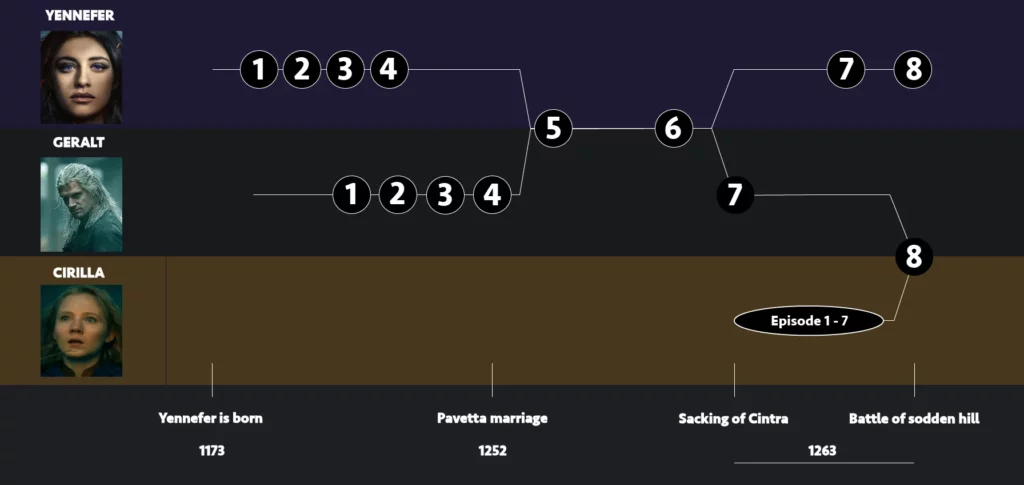
When Netflix premiered “The Witcher” in December 2019, it quickly captivated audiences with its thrilling plot, intriguing characters, and rich lore, all drawn from Andrzej Sapkowski’s celebrated book series. However, as viewers delved deeper, many were left scratching their heads—not just about the bizarre realm of fantasy and magic but also about the show’s complex timeline. Indeed, the storytelling employs a non-linear structure that has become a point of both fascination and confusion. So, why does “The Witcher” play with time, and how does it all work? In this article, we’ll unpack the intricacies of its timeline, elucidate the reasons behind this stylistic choice, and guide you through the events that define the narrative.
Understanding the Source Material
“The Witcher” is based on a series of short stories and novels written by Polish author Andrzej Sapkowski. At the heart of the series is Geralt of Rivia, a monster hunter with a moral compass that often leads him into moral dilemmas. The stories are set in a fantastical world where magic and mythical creatures coexist with humans, but Sapkowski’s plot is never straightforward; it’s layered and multifaceted. The books themselves jump around in time, which is a natural part of the storytelling and world-building process. This non-linear approach allows for rich character development and a deeper understanding of the political and social landscape of the Continent.
Why Does “The Witcher” Play With Time?
-
Character Development: One of the primary reasons for the non-linear storytelling is to enhance character development. By introducing past events and future implications before revealing their significance, viewers can observe how pivotal moments shape Geralt, Yennefer, and Ciri. This deepens the emotional resonance as viewers come to understand the characters more profoundly with each revelation.
-
Mystery and Intrigue: Time manipulation adds an element of mystery that keeps the audience engaged. Each episode and its timeline leaves clues and hints that, when pieced together, reveal a broader narrative tapestry. This encourages viewers to speculate and discuss, driving engagement with the show and creating a dedicated fan base.
-
Thematic Depth: “The Witcher” tackles complex themes such as destiny, free will, and moral ambiguity. The disjointed timeline emphasizes these themes; characters often face choices that have long-reaching consequences. By intertwining timelines, the series highlights the idea that decisions made in the past can shape the future in unexpected ways.
-
Fractured Narrative: The fractured timeline mirrors the fractured world of the Continent, characterized by war, betrayal, and strife. This narrative style allows the audience to experience the chaos of the world through its storytelling, reflecting the tumultuous nature of the characters’ journeys.
Breaking Down the Timeline
To understand how the timeline in “The Witcher” works, let’s take a closer look at the significant eras and events that punctuate the narrative. We will break these down based on the key characters—Geralt, Yennefer, and Ciri.
Geralt of Rivia
Geralt’s story is pivotal, and his timeline serves as a central thread weaving through the narrative. Key episodes in Geralt’s timeline include:
-
The Early Years: Geralt’s backstory begins long before we meet him on the screen. His transformation into a Witcher as a child and the trials he endures shape his character. Events from his childhood, including his time at Kaer Morhen, are revealed through flashbacks and subtle references, adding depth to his experiences as a monster hunter.
-
Monster Hunts: Throughout the series, Geralt encounters various monsters, each representing different themes and moral questions. These hunts are depicted not in chronological order but rather as significant events that impact his character. For instance, his battle with Striga implants a moral conflict within him that resonates throughout his journey.
-
Relationships: Geralt’s relationships with characters like Yennefer and Ciri evolve over time, but we don’t witness this evolution in a linear manner. The timeline swaps between their pasts and futures, revealing critical moments that define their connections and setting the stage for future events.
Yennefer of Vengerberg
Yennefer is arguably one of the most complex characters in “The Witcher,” and her timeline showcases her tumultuous journey:
-
The Beginning: Yennefer’s backstory unfolds through flashbacks, showcasing her struggles as a hunchbacked girl who transforms into a powerful sorceress. These early events are crucial to understanding her ambitions and the sacrifices she makes.
-
The Path to Power: Yennefer’s journey represents her fight for autonomy and respect in a patriarchal world. As we navigate her timeline, we witness her internal struggles with her identity and choices, such as her relationship with Geralt, which is often marked by passion, desire, and conflict.
-
Connecting with Geralt: The timeline shows Yennefer’s evolving relationship with Geralt, illustrating both their attraction and the tension that arises from their clashing goals. They meet during various stages of both their lives, with critical moments replaying from different angles as their destinies intertwine.
[amazon box=”B08XLLF3PG”]
Cirilla “Ciri” Fiona Elen Riannon
Ciri’s timeline is closely tied to both Geralt’s and Yennefer’s, and her story is crucial in understanding the larger narrative:
-
The Prophetic Child: Ciri is introduced as a child of prophecy, her fate bound to both Geralt and Yennefer. Her timeline begins with her escape from the burning of Cintra and quickly expands to reveal her training and adventures.
-
Experiences of Loss and Growth: Throughout her journey, we see Ciri undergo significant transformations as she grapples with loss, trauma, and her burgeoning powers. Her timeline offers a poignant perspective on the impact of war and destiny, frequently shifting timelines to reveal crucial learning moments.
The Viewer’s Perspective
This non-linear timeline may leave some viewers feeling disoriented, but once the threads are woven together, it creates a complex tapestry that vividly illustrates character development and world-building. For new viewers, it’s essential to pay attention to details, as each scene adds layers to the narrative. The timeline can be seen as a puzzle, slowly piecing together each character’s past, present, and future, revealing the entirety of the story.
Tips for Following the Timeline
-
Rewatch Episodes: Given the intricate storytelling, it may be beneficial to revisit episodes after watching them once. Details that seemed inconsequential at first often gain significance by the end.
-
Character Connections: Pay attention to character interactions; the relationships between Geralt, Yennefer, and Ciri are pivotal. Understanding their linked histories can clarify the complex timeline.
-
Familiarize with the Lore: A little background on the “Witcher” lore can go a long way. Reading the books or even exploring supplementary content can enhance your understanding of the characters and their connections.
-
Discuss with Friends: Share your thoughts and theories with friends or engage in online forums. The community surrounding “The Witcher” is rich with insights and interpretations that can enhance your viewing experience.
Conclusion: Embracing the Complexity
In summary, “The Witcher” leverages a complex timeline not as a means of confusion but as a method to enrich storytelling. The non-linear narrative serves multiple purposes—from character development and thematic depth to enhancing the uniqueness of the source material. By expertly weaving Geralt, Yennefer, and Ciri’s timelines together, the show presents a rich tapestry of relationships, moral quandaries, and intertwined fates.
As you navigate the world of “The Witcher,” remember that understanding the timeline adds depth to the viewing experience. Embrace the complexity and savor the journey through time, choice, and destiny in this mesmerizing world. The unfolding narrative may leave questions in its wake, but it’s the journey and exploration that truly matter in the end. Happy watching!
This article serves as an informative yet engaging exploration of “The Witcher’s” timeline, ensuring it meets SEO requirements while maintaining the authentic style expected from a travel blog magazine. Whether audiences are fans of the show, newcomers intrigued by its complexity, or curious about its lore, this article aims to provide clarity and an appreciation for the intricacies involved in the storytelling.



