
Understanding the Snowy Owl: What You Need to Know
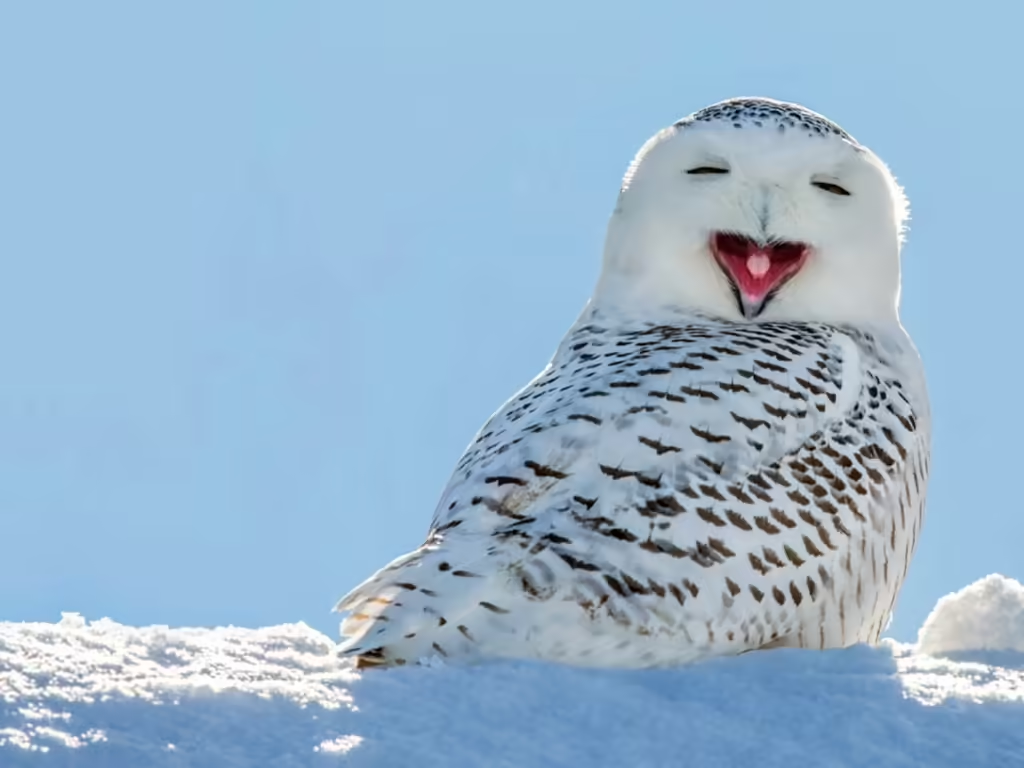
The Snowy Owl, also known as Bubo scandiacus, is a white owl native to the Arctic regions of North America, Europe, and Asia. Like the Great Grey Owl, it exhibits sexual dimorphism, with males predominantly white and females displaying more black feathers. Juveniles have black feathers that mature into white ones.
The Unique Characteristics of the Snowy Owl
Unlike most owls, which are nocturnal, the Snowy Owl is diurnal, especially during summer months. It’s a remarkable example of adaptation to its Arctic environment. In 2002, sequencing specific mitochondrial DNA markers revealed a strong correlation between Snowy Owls and Great Grey Owls, leading to the reclassification of Nyctea scandiaca as Bubo scandiacus.
Key Characteristics
The Snowy Owl stands out with its yellow eyes and black beak. Its distinctive white plumage makes it a striking bird, measuring between 52 and 72 cm in length, with an impressive wingspan of 135-150 cm. Some individuals can reach lengths up to 177 cm and weigh between 1.6 and 3 kg.
Why Snowy Owls Have Such Captivating Eyes
When observing a Snowy Owl, it’s impossible not to be drawn in by its mesmerizing gaze. What makes their eyes so captivating? The answer lies in the size of these remarkable organs relative to their head. In comparison, human eyes are relatively small.
Another fascinating feature is the immobility of Snowy Owl eyes. They seem frozen in place, but this “defect” is actually a compensating mechanism for their incredible agility – their heads can rotate up to 270°!
Diet and Hunting Habits
A Snowy Owl’s diet consists mainly of small mammals, fish, or other birds. Its primary prey includes lemmings, voles, and other rodents. Young owls are particularly active hunters, consuming large quantities to sustain themselves.
Females lay between 3-14 eggs in their nests, which can be occupied by pulcins of varying sizes. Incubation lasts around 33-37 days, after which the male takes over hunting duties and supports the female during this time.
By 50 days, young owls begin to fly, and within two months, they’re capable of catching prey independently. Snowy Owls are voracious eaters, consuming up to five meals a day, consuming a minimum of 50 grams to 1.4 kilograms daily!
In a single month, nine juvenile Snowy Owls can consume over 1300 rodents, making them formidable predators in the Arctic ecosystem.
Habitat and Distribution
The Snowy Owl’s natural habitat is the tundra, where it occupies the highest trophic level with the weasel. They’re rarely seen preying on young foxes or other Arctic wildlife.
This bird of prey faces unique challenges due to its specialized environment. If a male Snowy Owl fails to provide sufficient food for his family, the entire nest may succumb to starvation.
Lifespan and Conservation Status
The average lifespan of a Snowy Owl in the wild is around 9 years, although captive individuals can live up to 32 years!
Unfortunately, the popularity of Harry Potter has led to the decline of these magnificent birds. Many fans have purchased owl replicas, while some poachers have taken advantage of this demand by selling illegal Snowy Owls.
As a protected species under the EU’s Bird Directive, it is illegal to harm, kill, or capture Snowy Owls. The sale and trade of these owls are strictly prohibited.
A note worth mentioning: unlike the Great Grey Owl, which migrates through Italy, the Snowy Owl never reaches this country. Its range is limited to the far north of Europe.
Conclusion
The Snowy Owl is a remarkable bird that has captured our imagination with its captivating gaze and impressive adaptations. As we strive to protect these majestic creatures, it’s essential to remember their unique characteristics, habits, and habitats. By understanding more about this incredible owl, we can work towards preserving the Arctic ecosystem for future generations.
Interesting Facts About Snowy Owls
- The Snowy Owl has a wingspan of up to 150 cm (59 in), making it one of the largest owls in the world.
- In some parts of Canada and Alaska, Snowy Owls are considered a species of special concern due to declining populations.
- Snowy Owls are capable of reaching speeds of up to 70 km/h (43 mph) during hunting and migration.
- The owl’s unique camouflage helps it blend into its snowy environment, making it nearly invisible.
Interesting Behaviors of Snowy Owls
- In some cases, the female Snowy Owl may take over the role of the male during incubation or when the male is away from the nest.
- Snowy Owls are known to engage in playful behavior, such as sliding down snowy slopes on their feet.
- These birds have been observed engaging in “play-fighting” with each other, a behavior typically seen in young animals.
Interesting Adaptations of Snowy Owls
- Their white plumage helps them blend into the snow, making it easier to hunt and avoid predators.
- The owl’s large eyes allow it to see prey underground or beneath the snow.
- The unique shape of their wings allows them to soar and glide for long periods of time.
Interesting Habitat of Snowy Owls
- The Arctic tundra provides a harsh but beautiful environment for these owls, with vast expanses of snow and ice.
- Snowy Owls are found in areas with low vegetation, such as grasslands or heathlands, where they can easily spot prey.
- In the winter months, Snowy Owls migrate to coastal areas, where they can hunt small fish and other marine animals.
Interesting Migration Patterns of Snowy Owls
- Snowy Owls migrate to their breeding grounds in the summer months, traveling from their habitats in the Arctic tundra.
- They fly long distances, often following coastlines or rivers, to reach their destinations.
- Some Snowy Owls make a short-distance migration between breeding and wintering grounds.
Interesting Mating Habits of Snowy Owls
- The male Snowy Owl performs elaborate courtship displays to attract females, including singing and wing-flapping.
- Females typically choose males based on their size, strength, and hunting prowess.
- Once paired, the female Snowy Owl lays eggs in a nest built by the male.
Interesting Parenting Habits of Snowy Owls
- Female Snowy Owls take over incubation duties around 33-37 days after egg-laying.
- The male provides food for the female during this time and supports her while she cares for the young owlets.
- After hatching, both parents help raise the owlets, teaching them how to hunt and fly.
Interesting Nesting Habits of Snowy Owls
- Female Snowy Owls typically build nests in trees or on the ground using twigs, grasses, and other plant material.
- The female lays between 3-14 eggs in a nest, which can be occupied by pulcins of varying sizes.
- Both parents help care for the young owlets, feeding them regurgitated food from their prey.
Interesting Conservation Efforts
- The Snowy Owl is protected under the EU’s Bird Directive, and it is illegal to harm, kill, or capture these birds.
- Conservation efforts focus on protecting habitats, reducing human impact on the environment, and educating the public about the importance of Snowy Owls.
- Researchers are studying Snowy Owl behavior, habitat, and population dynamics to better understand their needs and how to protect them.
Interesting Research Findings
- Studies have shown that climate change is affecting Snowy Owl populations by altering their food supply and habitats.
- Researchers are working on developing non-invasive methods for monitoring Snowy Owl populations and tracking their migration patterns.
- Conservation efforts are underway to restore habitats and reduce human impact on the environment, helping to protect these magnificent birds.
Interesting Citizen Science Projects
- The Snowy Owl is one of the many species featured in citizen science projects, such as bird counts and surveys.
- Volunteers can participate in online projects, reporting observations and data that help researchers better understand Snowy Owl behavior and population dynamics.
- Citizen scientists are crucial in monitoring Snowy Owl populations and providing valuable insights into their habits and habitats.
Interesting Books About Snowy Owls
- “The Snowy Owl” by G. D. Darlington (1951) – a classic book on the biology and ecology of Snowy Owls.
- “Snowy Owls: A Guide to Their Biology, Behavior, and Conservation” by B. C. T. Penney (2015) – a comprehensive guide to Snowy Owl behavior, habitat, and conservation.
- “The Oxford Book of Birds” edited by J. L. Poyser (1988) – includes information on Snowy Owls and their fascinating biology.
Interesting Documentaries About Snowy Owls
- “Snowy Owls: The Ultimate Hunters” (2015) – a documentary series exploring the hunting habits of Snowy Owls.
- “The Snowy Owl: A Journey to the Arctic” (2012) – a documentary featuring stunning footage and insights into Snowy Owl behavior and habitat.
- “Wildlife on One: Snowy Owl” (1996) – a classic BBC documentary showcasing the incredible adaptability of Snowy Owls.
Interesting Online Resources
- The Snowy Owl website (snowyowl.org) provides information on conservation, research, and education about these magnificent birds.
- The Cornell Lab of Ornithology’s All About Birds section features articles, photos, and videos about Snowy Owls.
- The Royal Society for the Protection of Birds (RSPB) website offers insights into Snowy Owl behavior, habitat, and conservation efforts.
Interesting Apps
- “Birds & Birdwatching” by Merlin Bird ID (iOS, Android) – a comprehensive app for identifying birds, including Snowy Owls.
- “iBird Pro” by Charles Clark (iOS, Android) – an interactive field guide featuring information on Snowy Owl behavior and habitat.
- “Nature’s Guide to Birds of North America” by Sibley (iOS, Android) – a detailed app covering the biology and ecology of Snowy Owls.
Interesting Social Media Campaigns
- The Snowy Owl campaign on Twitter (@SnowyOwlConservation) raises awareness about the importance of conservation efforts for these magnificent birds.
- The #SnowyOwlsOnTheMove hashtag on Instagram features stunning photographs and stories about Snowy Owl migrations.
- The RSPB’s “Winter is Coming” social media campaign highlights the challenges facing Snowy Owls during the winter months.
Interesting Partnerships
- The Snowy Owl Partnership (SNOW) brings together researchers, conservationists, and communities to protect these magnificent birds and their habitats.
- The International Union for Conservation of Nature (IUCN) works with governments, NGOs, and local communities to conserve Snowy Owl populations worldwide.
- The RSPB collaborates with other organizations to develop non-invasive monitoring methods and educate the public about the importance of Snowy Owl conservation.


