
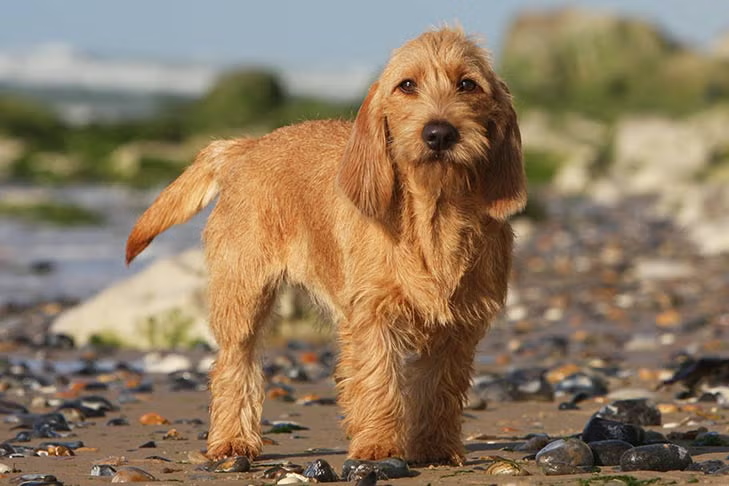
The Basset Fauve de Bretagne, a French breed, is often described as a small yet lively dog that exudes energy. Despite its compact size, it can be quite fast, especially when compared to other breeds of similar stature. This canine has an elongated skull, a distinctive black nose, and noticeable but not excessive whiskers.
Physical Characteristics
The Basset Fauve de Bretagne boasts a unique coat that can range from golden to terracotta in hue, with occasional dark patches scattered across the back and ears. The presence of small white markings on the chest is allowed by breed standards but is not actively sought after. Its sleek build allows for agility and speed.
One of the most distinctive features of this breed is its head shape. It has a short, broad skull that is well-suited for following game over long distances without getting tired. The ears are also quite long, which helps to detect sounds from far away.
The Basset Fauve de Bretagne typically weighs between 20-35 pounds (9-16 kg) and stands at an average height of 32 cm to 38 cm (12.5-15 in) at the shoulder. Despite its compact size, this breed has a sturdy build that allows for agility and speed.
Personality
This charming dog is a true gem, full of life and spirit. With children, it’s an ideal companion due to its affectionate and playful nature. It’s also known for being gentle and non-aggressive, making it suitable as both family pets and working dogs. The Basset Fauve de Bretagne has a keen sense of loyalty and love towards its human companions.
Their friendly temperament makes them a great breed for families with children. They are patient, gentle, and loving, which makes them an excellent choice for families who want a dog that can keep up with their active lifestyle.
History
The Basset Fauve de Bretagne originated in France, where it was initially bred for hunting small game like rabbits and hares. Although the original “Grande Fulve” from Brittany is now extinct, this breed has retained much of its characteristic spirit while evolving into a more social companion dog.
Historical records show that the Basset Fauve de Bretagne was used by French hunters to track and retrieve small game in the marshy regions of Brittany. Their ability to follow game over long distances without getting tired made them an invaluable asset to hunters.
Over time, the breed has evolved into a more social companion dog, prized for its affectionate and playful nature. Despite their hunting background, Basset Fauve de Bretagnes make excellent family pets due to their gentle and non-aggressive nature.
Training and Temperament
One of the standout features of the Basset Fauve de Bretagne is its ability to balance liveliness with stability, making it a joy to train. As a loyal companion, they thrive on interaction with their human family and enjoy learning as well as receiving affection.
Despite being energetic, this breed does not become overly demanding or aggressive. They are highly responsive to training due to their desire to please and their strong sense of loyalty towards their owners.
Their temperament is also characterized by a strong instinct to follow its owner, which makes them easy to train and handle. This breed is highly intelligent and can learn quickly with positive reinforcement training methods.
Raising the Basset Fauve de Bretagne
In terms of breeding, many breeders are located in France, its birthplace. Historically, the Basset Fauve de Bretagne was bred to complement its hunting background with other breeds like the “Bassetto Vendean”. Today, however, this breed remains true to its original characteristics.
Reputable breeders prioritize genetic diversity and temperament when selecting puppy parents. They also consider factors such as the dog’s physical appearance and overall health to ensure a healthy puppy with great potential.
Raising a Puppy
From an early age, the diet of these puppies should be carefully managed to avoid obesity. As they grow, their adult height typically ranges between 32 cm and 38 cm at the shoulder. In terms of temperament, young Basset Fauve de Bretagnes are more lively but equally teachable; as they mature, they settle into a balanced lifestyle.
Puppies should be socialized from an early age to help them develop good behavior and interaction with other pets and people. Positive reinforcement training methods are highly recommended for raising a well-behaved puppy.
Cost
Basset Fauve de Bretagne puppies can be found in Italy at affordable prices compared to similar breeds. However, their availability might vary, especially if you’re looking for an experienced breeder nearby. The cost of a healthy puppy with the original pedigree can start from 700 euros.
In addition to the initial purchase price, owners should also consider the ongoing costs associated with owning a Basset Fauve de Bretagne. These include food, veterinary care, and supplies such as toys, bedding, and grooming tools.
Health Issues
As with all breeds, the Basset Fauve de Bretagne may be susceptible to certain health problems like hip dysplasia or eye issues, so regular veterinary check-ups are advised.
To minimize the risk of inherited health issues, reputable breeders prioritize genetic testing for breeding stock. Responsible owners should also stay up-to-date on preventative care measures such as vaccinations and parasite control.
Conclusion
If you are thinking about bringing a new pet into your family or want to learn more about one specific breed, remember that every dog is unique and has its own story to tell. With love, care, and attention, even the most energetic companion dogs can become cherished members of the family.
The Basset Fauve de Bretagne is an excellent choice for families who want a loyal companion that is both playful and gentle. Their friendly temperament, intelligence, and trainability make them an invaluable addition to any family.
By understanding their history, personality, and needs, owners can provide the best possible care for their new furry friend. With patience, love, and proper training, Basset Fauve de Bretagnes can thrive as beloved companions in homes around the world.
Frequently Asked Questions
-
What makes Basset Fauve de Bretagne a great hunting dog?
Basset Fauve de Bretagne is known for its excellent tracking ability and versatility in diverse environments due to their origins as French hunting dogs. -
Are they good with children?
Absolutely, the affectionate nature of this breed makes them suitable for families, especially those with young children who will appreciate their playful personality. -
Can I train a Basset Fauve de Bretagne easily?
They are very responsive to training due to their desire to please and their strong sense of loyalty towards their owners.
-
What is the ideal size of a Basset Fauve de Bretagne?
As adults, they typically range from 32 cm to 38 cm at the shoulder, with a robust build but not overly large in proportion to their height. -
Do I need special exercise for my dog?
While they are relatively small, the energy of this breed requires regular exercise and mental stimulation to avoid boredom or restlessness.
-
Can Basset Fauve de Bretagne get along with other pets?
Generally, because they have a friendly temperament, Basset Fauve de Bretagnes can live harmoniously alongside cats, dogs, and even birds if socialized from an early age. -
Are there any health issues that this breed is prone to?
As with all breeds, the Basset Fauve de Bretagne may be susceptible to certain health problems like hip dysplasia or eye issues, so regular veterinary check-ups are advised.
- What does a reputable breeder look for when selecting puppy parents?
A responsible breeder typically prioritizes genetic diversity and temperament while also considering factors such as the dog’s physical appearance and overall health to ensure a healthy puppy with great potential.


