
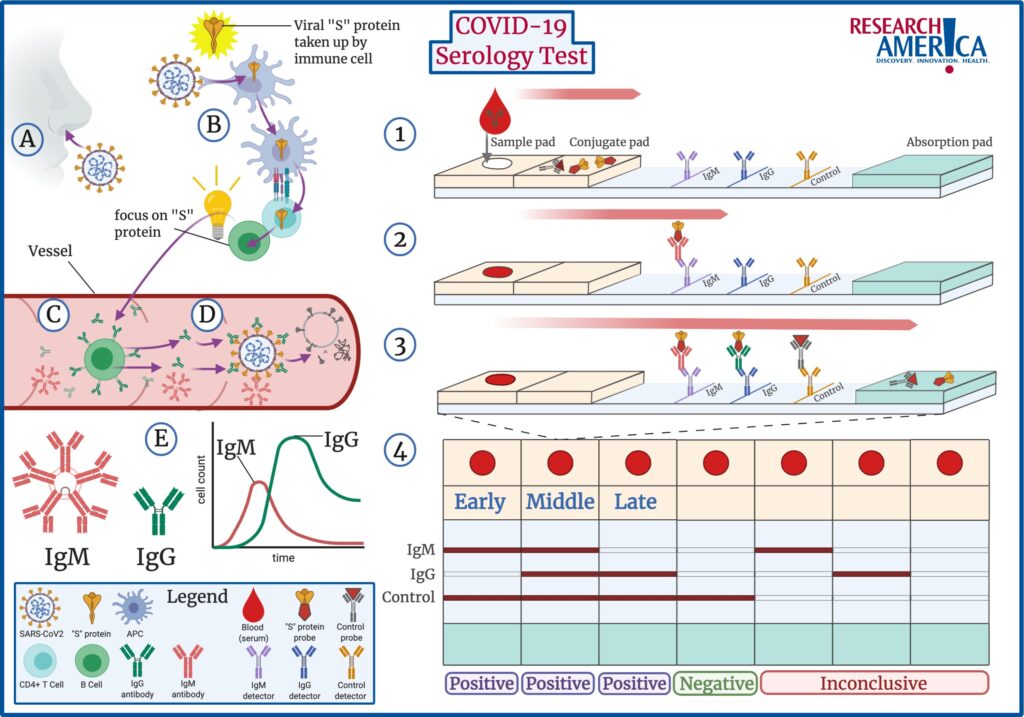
With the coronavirus spreading rapidly and dominating headlines and daily life, medical professionals are using specialized terminology that’s unfamiliar to many. Today, we’ll delve into what serological tests for COVID-19 entail and their purpose.
What Are Serological Tests for COVID-19?
Serological tests are blood tests used to determine if someone has been infected with the coronavirus. These tests can provide valuable insights into the prevalence of the virus in a specific area and help inform decision-making at high levels. Serological tests are an essential tool in the fight against COVID-19, allowing healthcare professionals to monitor the spread of the virus and develop targeted strategies for containment.
Why Do We Need Serological Tests?
The coronavirus is a highly variable disease, causing symptoms ranging from mild to severe. Unlike other viral illnesses, COVID-19 doesn’t always present obvious symptoms, making it challenging to gauge its impact. By conducting serological tests, we can:
- Determine the true number of infected individuals: This helps us understand the scope of the outbreak and identify areas where the virus is spreading.
- Develop targeted strategies for containment: With accurate data on the virus’s behavior, policymakers can create effective plans to curb its spread.
- Monitor the effectiveness of interventions: By tracking serological test results over time, researchers can assess the impact of public health measures and make adjustments as needed.
What Do Serological Tests Reveal?
Serological tests detect the presence of antibodies in a person’s blood, which indicate exposure to the coronavirus. These antibodies can provide valuable information about:
- Immunity status: By analyzing antibody levels, researchers can determine if someone has developed immunity to the virus.
- Viral load: Serological tests can help estimate the number of infected individuals in a given area.
- Transmission patterns: Antibody data can reveal whether the virus is spreading through person-to-person contact or other means.
How Are Serological Tests Conducted?
To conduct serological tests, healthcare professionals draw blood samples from patients and send them to laboratories for analysis. These tests typically involve detecting antibodies against the SARS-CoV-2 virus using various techniques, such as:
- Enzyme-linked immunosorbent assay (ELISA): This is a commonly used method for detecting IgM and IgG antibodies.
- Rapid test: These tests use lateral flow technology to quickly detect the presence of antibodies.
- ** Polymerase chain reaction (PCR)**: While PCR testing detects viral RNA, serological tests can provide additional insights into antibody levels.
Types of Antibodies Detected by Serological Tests
Serological tests can detect two types of antibodies:
- IgM: These antibodies are produced early in the infection and typically last only a few weeks. IgM antibodies are often used as an indicator of recent exposure.
- IgG: These antibodies develop later in the infection and can persist for several months. IgG antibodies suggest past exposure or immunity.
The Italian Context: Current Developments and Future Directions
In Italy, serological testing is being implemented on a regional basis to gather data on the virus’s spread. However, the process is still evolving, with ongoing research aimed at improving test accuracy and understanding the virus’s behavior.
Researchers in Italy have reported mixed results, with some studies suggesting that serological tests can detect antibodies in individuals who were infected but never showed symptoms. This has raised questions about the reliability of serological testing and its potential impact on public health policy.
While we’ve made significant progress in understanding COVID-19, there’s still much to be learned about its impact on different populations. By continuing to study serological tests and their results, researchers can provide valuable insights that inform public health strategies and help us navigate this complex pandemic.
Frequently Asked Questions
- What are the benefits of serological testing?
Serological testing provides critical data on the prevalence of COVID-19, helping policymakers develop effective strategies for containment. - How accurate are serological tests?
Serological tests have varying levels of accuracy, depending on factors such as test sensitivity and specificity. Researchers are working to improve the accuracy of serological tests through the development of new technologies and testing protocols. - Can serological tests detect asymptomatic carriers?
Yes, serological tests can identify individuals who may be asymptomatic but still carrying the virus. This information can help inform contact tracing efforts and public health policy. - What is the significance of IgM and IgG antibodies?
IgM antibodies indicate recent exposure, while IgG antibodies suggest past exposure or immunity. By analyzing antibody levels, researchers can gain a better understanding of the virus’s behavior and develop targeted strategies for containment. - Can serological testing replace PCR testing?
No, serological testing complements PCR testing by providing a broader picture of the virus’s spread and impact on the population.
Limitations and Future Directions
While serological tests offer valuable insights into the prevalence of COVID-19, there are limitations to their use. For example:
- False positives: Serological tests can produce false positive results if the individual has been exposed to a different coronavirus or if they have underlying medical conditions.
- Test variability: Different laboratories may use varying testing protocols, which can lead to inconsistencies in test results.
To address these limitations, researchers are working to develop more sensitive and specific serological tests, as well as new technologies that can detect antibodies more accurately. These advancements will help inform public health policy and support the development of effective strategies for containment.
Conclusion
Serological tests are a critical tool in the fight against COVID-19, providing valuable insights into the prevalence of the virus and its impact on different populations. By understanding serological tests and their results, researchers can develop targeted strategies for containment and inform public health policy.
As we continue to navigate this complex pandemic, it’s essential that policymakers and healthcare professionals work together to ensure that serological testing is used effectively and efficiently. By doing so, we can develop effective strategies for containment and reduce the spread of COVID-19.


