
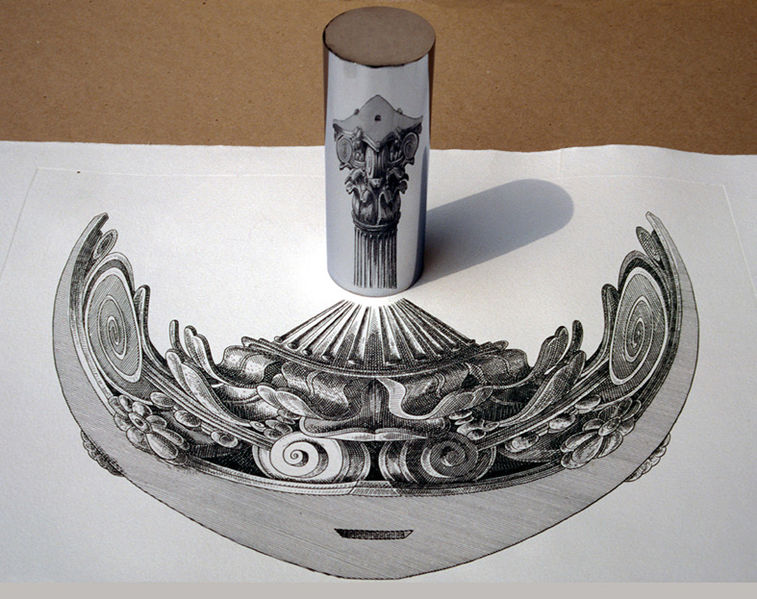
Anamorphosis is a fascinating phenomenon that has captivated artists, designers, and scientists for centuries. It’s a technique that projects a distorted image onto a plane, which can only be viewed as a true form when observed from a specific angle. This optical illusion allows us to “reconstruct” the image in its original form, revealing a hidden truth about our perception of reality.
What is Anamorphosis?
The term “anamorphosis” comes from the Greek words ἀναμόρφωσις (anamorphosis), meaning literally “form restored”. This refers to the ability to transform a distorted image into its original form when viewed from a particular position. The process involves distorting an image in such a way that it can only be perceived as a 2D shape, but when viewed from the correct angle, it takes on a new life as a three-dimensional object.
Anamorphosis can take many forms, including paintings, drawings, photographs, and even sculptures. The technique has been used throughout history to convey secret messages, hide information, or simply create visually striking art pieces that challenge our perception of reality.
How Does Anamorphosis Work?
So, how does anamorphosis work its magic? To understand this phenomenon, it’s essential to grasp the way our eyes perceive visual information. Our brains process light entering our eyes and reconstruct images onto a transparent vertical plane. This is known as the “image plane” or “visual field”.
When creating anamorphic art, artists manipulate the image on the plane in such a way that it appears distorted when viewed directly. The distortion can take many forms, including scaling, rotation, and perspective manipulation. By carefully adjusting these factors, artists can create images that can only be seen as 3D objects when viewed from a specific angle.
Reversing the Process
The key to anamorphosis lies in reversing the process of visual perception. When we look at an image on a flat plane, our brains automatically correct for the distortion, and the image appears as it was intended. However, by manipulating the image in a way that creates distortion, artists can create a new perspective that challenges our understanding of reality.
Anamorphosis: The Art
Before delving into the technical aspects of anamorphosis, let’s explore its history and application throughout art and design. From ancient civilizations to modern-day designers, anamorphic techniques have been employed in various forms.
One of the earliest recorded examples of anamorphosis dates back to the 16th century, when Leonardo da Vinci experimented with this technique in his painting “The Ambassadors”. Observe the skull in the foreground; if you tilt your head at a specific angle, it reveals its true form. This image has become one of the most famous examples of anamorphic art.
Another prominent artist associated with anamorphosis is Erhard Schön (1491-1542), a pupil of Albrecht Dürer. Schön created numerous anamorphic portraits of famous figures, often hiding secrets or conveying messages that could only be deciphered by those who viewed the image from the correct angle.
In Northern Europe during the 16th century, anamorphosis became increasingly popular as artists sought to conceal sensitive information in their work. This led to the creation of numerous anamorphic artworks, including portraits and frescoes that displayed hidden messages or symbols.
Modern Applications
Anamorphosis continues to inspire artists, designers, and scientists today. Its unique ability to challenge our perception of reality has led to innovative applications in fields such as art, architecture, and product design.
One notable example is the work of Julian Beever, a British artist known for his anamorphic paintings on walls and pavements. His works have been featured in various cities around the world, captivating passersby with their optical illusions.
Edgar Mueller, another prominent artist specializing in anamorphic art, has created striking murals that transform public spaces into interactive galleries of visual wonder. By manipulating light and shadow, Mueller’s artworks create immersive experiences that challenge our understanding of space and perception.
Alessandro Diddi, an Italian artist, has pushed the boundaries of anamorphosis by creating complex, three-dimensional sculptures that appear as flat images when viewed from a specific angle. These works have been exhibited in galleries and museums worldwide, showcasing the versatility and creativity of this ancient art form.
Conclusion
Anamorphosis is a captivating phenomenon that continues to inspire artists, designers, and scientists today. By understanding how it works and exploring its applications throughout history, we can unlock new possibilities for creative expression and innovative design solutions.
As we continue to push the boundaries of human perception, anamorphic art will undoubtedly remain a key component in shaping our understanding of reality. Whether used to conceal secrets or create visually stunning artworks, anamorphosis remains a timeless technique that challenges our perceptions and inspires us to explore new frontiers of artistic expression.
The Science Behind Anamorphosis
Anamorphosis is based on the principles of optics and perspective manipulation. To understand how it works, let’s delve into the science behind this optical illusion.
When light enters our eyes, it creates an image on the retina. The brain then reconstructs this information onto a transparent vertical plane, which we perceive as reality. Anamorphic art manipulates this process by distorting the image in such a way that it can only be viewed as a 3D object when observed from a specific angle.
The key to creating anamorphic art lies in understanding how light behaves when refracted through different mediums. By manipulating the angles of incidence and refraction, artists can create images that appear distorted or irregular under normal viewing conditions.
Designing with Anamorphosis
Anamorphosis has been used in various design fields, from architecture to product design. Its unique ability to challenge our perception of reality makes it an attractive tool for designers seeking innovative solutions.
One notable application of anamorphic art is in the field of architecture. By incorporating anamorphic elements into building designs, architects can create visually striking and memorable structures that engage passersby on multiple levels.
Product Design and Branding
Anamorphosis has also been used in product design and branding to create eye-catching and memorable advertisements. Companies like Nike and Adidas have employed anamorphic techniques in their marketing campaigns, using visual illusions to convey messages and products that capture attention.
Art Therapy and Cognitive Science
Anamorphosis has also found its way into art therapy and cognitive science research. By studying the effects of anamorphosis on perception and cognition, researchers can gain insights into how our brains process visual information.
In art therapy, anamorphic art is used to help individuals explore their creativity and overcome phobias or anxieties associated with visual stimuli. By confronting and overcoming these fears through anamorphic art, patients can develop greater confidence in their ability to perceive reality accurately.
In Conclusion
Anamorphosis remains a fascinating phenomenon that continues to inspire artists, designers, and scientists today. Its unique ability to challenge our perception of reality makes it an attractive tool for creative expression and innovative design solutions.
By understanding how anamorphosis works and exploring its applications throughout history, we can unlock new possibilities for artistic expression and cognitive development. Whether used in art therapy or product design, anamorphic art will undoubtedly remain a key component in shaping our understanding of reality.


