
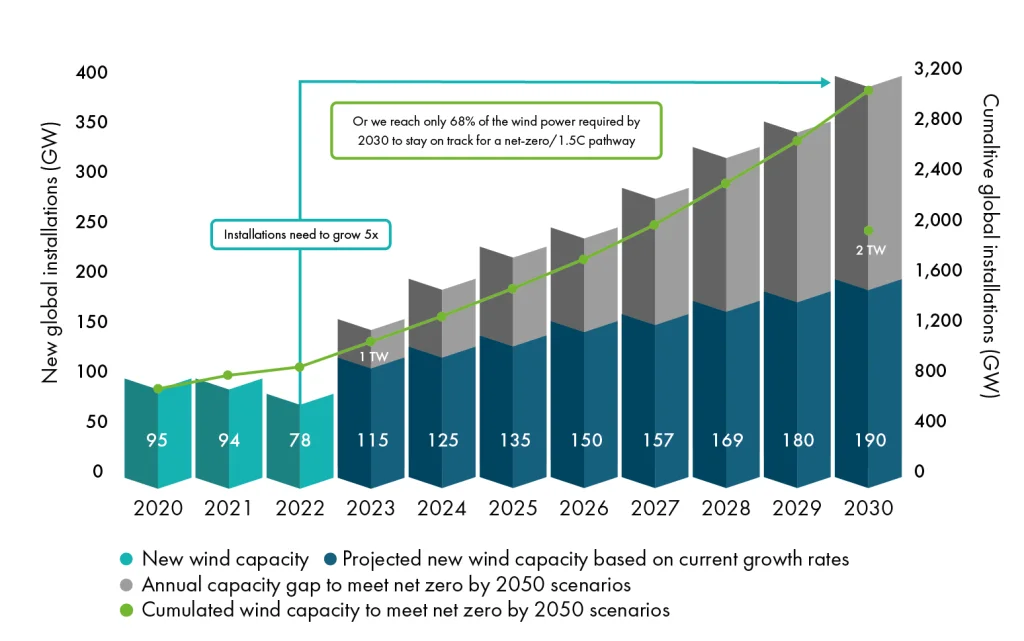
Introduction to the Global Wind Industry
The global wind industry has experienced rapid growth over the past few decades, with a significant increase in installed capacity. According to the Global Wind Energy Council (GWEC), the global wind energy capacity increased by approximately 20% in 2012. This growth is driven by the increasing demand for renewable energy sources and the decreasing cost of wind turbines.
The History of Global Wind Capacity
- 1996: The first GW of installed wind power was achieved, with a total capacity of 1.3 GW.
- 2000: The global wind industry experienced significant growth, with an installed capacity of 10 GW.
- 2012: The global wind energy capacity increased by approximately 20%, reaching a total capacity of 282.5 GW.
Global Wind Capacity by Region
Europe
- United Kingdom: A leader in offshore wind energy, the UK has invested heavily in this sector. The UK’s offshore wind sector has experienced rapid growth over the past few years, with several major projects under construction.
- Denmark: Denmark is another key player in offshore wind energy, with a significant portion of its wind power coming from offshore turbines. Denmark aims to generate at least 50% of its electricity from offshore wind by 2025.
- Belgium: Belgium has made significant progress in wind energy development, with a focus on both onshore and offshore installations. The country aims to increase its renewable energy production from wind and solar power.
Asia
- China: China has become one of the largest wind energy producers in the world, with a significant increase in installed capacity over the past few years. China’s wind industry is expected to continue growing rapidly in the coming years.
- India: India aims to generate 40% of its electricity from renewable sources by 2030, with a focus on wind energy. The country has set ambitious targets for increasing its wind energy production and hopes to become a major player in the global wind industry.
Americas
- United States: The US has been a leader in wind energy development, with a significant increase in installed capacity over the past few decades. The country aims to generate 20% of its electricity from wind by 2030.
- Canada: Canada is another key player in North American wind energy markets. The country has set ambitious targets for increasing its renewable energy production and hopes to become a major player in the global wind industry.
Global Wind Energy Market Trends
- Cost reduction: The cost of wind turbines has decreased significantly over the past few years, making wind energy more competitive with fossil fuels.
- Increasing demand: The global demand for renewable energy sources continues to grow, driving the need for more wind power capacity.
- Advancements in technology: The development of new technologies, such as larger and more efficient turbines, has enabled wind energy producers to increase their output while reducing costs.
Challenges and Opportunities
- High upfront costs: While the cost of wind turbines has decreased, the initial investment required for large-scale wind projects remains significant.
- Policy support: Government policies and incentives play a crucial role in promoting the development of wind energy.
- Integration with grid systems: Wind power is often intermittent, making it challenging to integrate into grid systems.
Global Wind Capacity by Country
Top 10 Wind Power Producing Countries
- China: 134 GW
- United States: 82 GW
- Germany: 53 GW
- India: 37 GW
- Brazil: 32 GW
- Canada: 26 GW
- Spain: 24 GW
- Russia: 22 GW
- Japan: 19 GW
- Australia: 17 GW
Wind Energy by Application
- Offshore wind: The largest share of global wind power is produced from offshore turbines, with over 20% of the total capacity.
- Onshore wind: Onshore wind energy accounts for around 60% of the total capacity.
- Small-scale wind: Small-scale wind energy accounts for a small percentage of the total capacity.
Global Wind Industry Outlook
The global wind industry outlook is promising, with increasing demand for renewable energy sources and decreasing costs driving growth. The industry is expected to continue expanding rapidly in the coming years, driven by advancements in technology and policy support.
Future Trends
- Increased adoption of floating wind turbines: Floating wind turbines are expected to become more common in offshore wind farms.
- Integration with other renewable energy sources: Wind power is likely to be integrated with other renewable energy sources, such as solar power and hydroelectric power, to create hybrid power plants.
- Advancements in grid systems: Advancements in grid systems will enable the efficient integration of wind power into the energy mix.
Conclusion
The global wind capacity has grown significantly over the past few decades, driven by increasing demand for renewable energy sources. While challenges such as high upfront costs and policy uncertainty remain, opportunities for growth and innovation continue to emerge. The future outlook for global wind energy remains promising, with increasing demand for renewable energy sources and decreasing costs driving growth.


