
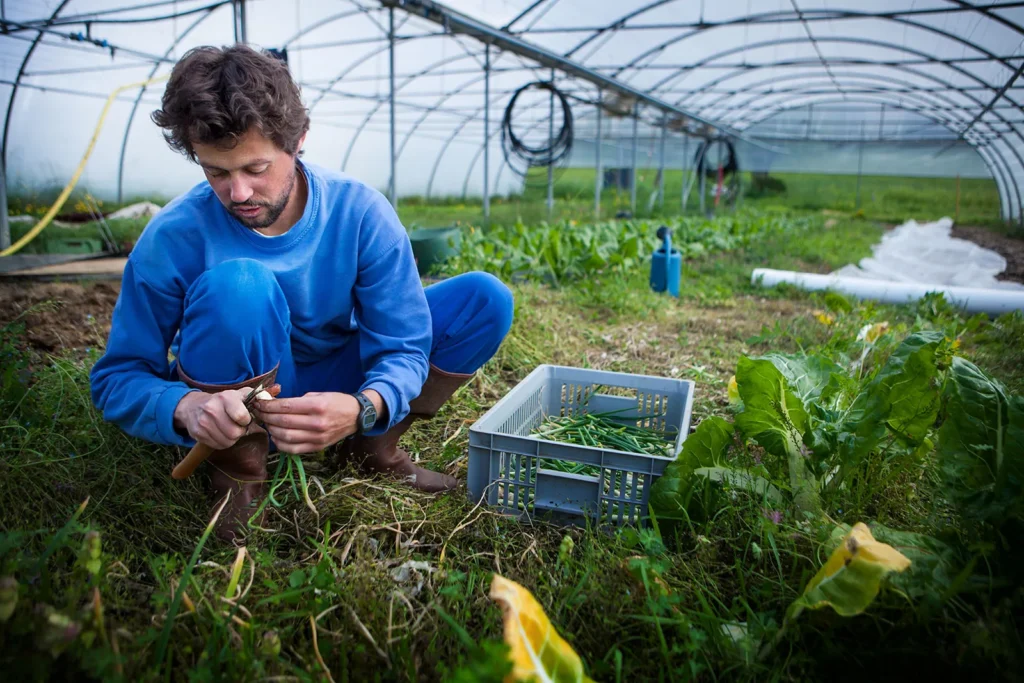
Have you ever heard of organic agriculture and want to learn more about it? We thought of sharing a guide on this agricultural practice, in the hope of satisfying many of your questions.
Let’s discover together what it’s all about!
Content
- What is Organic Agriculture
- The Growth of Organic Agriculture
- Why Buy Products from Organic Agriculture?
- What Does it Mean for a Product to be Certified Biologico?
What is Organic Agriculture
Organic agriculture is a much broader and complex method of agricultural production than just deciding not to use pesticides, fertilizers, genetically modified organisms, antibiotics, or hormones in your activities.
In fact, organic agriculture is an holistic system designed to optimize the productivity and suitability of different communities within the agro-ecosystem, including soil organisms, plants, livestock, and people. The primary goal of biologically produced and organic farming is the development of sustainable and harmonious enterprises with the environment.
What are the Principles of Organic Agriculture
The general principles of organic production can be summarized as follows:
- Protect the Environment: Reduce to a minimum degradation and erosion of soil, decrease pollution, optimize biological productivity, and promote good health;
- Maintain Soil Fertility Long-term: Optimize conditions for biological activity within the soil;
- Maintain Biodiversity: Maintain biodiversity within the system;
- Reuse Materials and Resources as Much as Possible: Reuse materials and resources as much as possible in the enterprise;
- Provide Careful Attention to Livestock: Provide careful attention that promotes health and satisfies behavioral needs of livestock;
- Prepare Biologically Produced Products with Accurate Handling: Prepare biologically produced products, focusing on accurate handling and methods of manipulation to maintain biological integrity and vital qualities of products throughout all stages of production;
- Reliance on Renewable Resources in Locally Organized Systems
In short, organic agriculture promotes the use of crop rotations, using residues and nutrients produced in the enterprise that are recycled into the soil.
Cover crops and composted manure are also used to maintain soil organic matter and fertility. Methods of preventing insects and controlling diseases, including crop rotation, genetic improvement, and resistant varieties, are also practiced. When it comes to the use of biological pesticides, those approved include products labeled as “natural” or compliant with biologic standards. Cereals, forages, and protein supplements given to livestock must be produced using organic methods.
It’s worth noting that organic standards generally prohibit the use of genetically engineered products and cloned animals, synthetic pesticides, synthetic fertilizers, sludge waste products, and their additives, as well as ionizing radiation.
Products and practices prohibited from being used in certified biologic farms for at least three years before harvesting biologically certified products. Livestock must be raised using organic methods and fed 100% with organic ingredients.
The Growth of Organic Agriculture
The global market for biological food has grown with particularly high rates over the past 15 years and is expected to continue growing in the coming years, indicating that the demand for biologically produced agriculture will also increase.
As a result, even organic farming should become a priority investment destination.
Why Buy Products from Organic Agriculture?
Consumers buy organic products for many different reasons. Some want to buy food products that are free of chemical pesticides or grown without conventional fertilizers. Others simply want to try new and different products. Taste, environmental concerns, and the desire to avoid genetically modified foods are among the many other reasons why some consumers prefer to buy biologically produced food.
From the other side, farmers should be guided by main drivers such as environmental concerns and the use of chemical products in conventional agricultural systems.
There is also an obvious energy savings problem. Many chemical pesticides for agriculture require high-energy production processes that heavily depend on fossil fuels.
What Does it Mean for a Product to be Certified Biologico?
The term “Certificato biologico” refers to products produced according to organic standards and certified by one of the certification bodies.
There are different certification bodies operating in Italy. An organic farmer who wants to be certified must contact an organization of certification that requires an independent inspection of their agricultural operation to verify whether their activity satisfies organic standards.
Farmers, intermediaries, and sellers are also required to maintain the biologic integrity of products and keep a record for control purposes by the authorities and organizations.
In other words, when considering getting a biologico certification, understanding the requirements and accreditations necessary in the market where your products will be sold becomes the first step to benefiting from the added values of this sustainable agricultural sector.


