
The sting of an insect is an event that, especially in the summer and outdoors, cannot be excluded. And, as anyone who has come into contact with this flying insect can attest, a bee or wasp sting is often very painful, making it wise to intervene immediately to try to alleviate the discomfort that may follow from too close contact with this animal.
Content
- Symptoms of a Wasp Sting
- Natural Remedies for a Wasp Sting
- Preventing Wasp Stings
- Conclusion
Symptoms of a Wasp Sting
Before we delve into understanding how to treat a wasp sting, let’s take a look at its primary symptoms, which will allow us to recognize this sting.
Well, not everyone knows that the venom of the wasp has about the same toxicity as that of the viper, although – fortunately – the amount of substance injected into our body is clearly much smaller. Therefore, the symptoms of a wasp sting are mainly limited to itching, swelling, redness, and localized pain.
Unfortunately, in a minority of cases, things go worse. If someone is allergic to a wasp sting, the risk of experiencing anaphylactic shock is much higher. In these scenarios, it’s essential to seek medical attention immediately or visit a hospital as soon as possible to receive appropriate treatment.
Natural Remedies for a Wasp Sting
So far, we’ve had a chance to understand what symptoms occur when someone gets stung by a wasp. But what are the most effective natural remedies?
Fortunately, Nature has provided us with an abundance of solutions that can help alleviate the discomfort caused by a wasp sting.
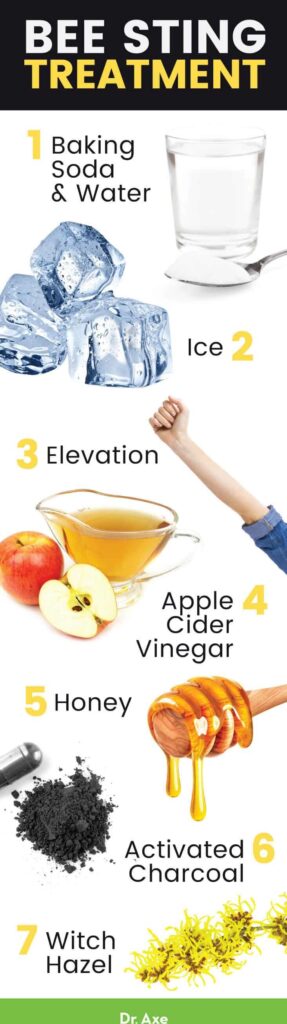
Let’s start with acetic acid. Acetic acid is one of the most well-known and effective natural disinfectants. By creating a poultice using cotton or a simple cloth, you can apply it directly to the wasp sting for a few minutes, which should bring immediate relief. Alternatively, if you don’t have access to acetic acid, you can also get good results by applying ice: simply place a few cubes in an ice pack and apply them directly to the sting. The pain should be alleviated thanks to the “numbing” effect of cold.
Another natural remedy that is often recommended after a wasp or bee sting is baking soda. You’ll need to mix some baking soda with water, creating a paste, which you can then apply directly to the affected area. Let it act for a few minutes and then rinse with cold water.
When it comes to substances to spread on the skin, gel of aloe vera is also a valid alternative. It’s a natural substance whose properties are increasingly well-known, and can help alleviate itching in an extraordinary way. You can find it in health food stores or herbal shops, or even online so that it can be delivered directly to your doorstep.
In addition to these ingredients, we should also mention the antisepptic properties of lemon juice, which you can apply to the affected area with a few drops, as well as garlic and onion, which you can leave on the skin for a few minutes.
Some studies have shown that the natural compound curcumin has potent anti-inflammatory effects. It is an active component found in turmeric, a plant widely used in cooking.
Preventing Wasp Stings
As with any unpleasant event, prevention is clearly the first step. But how?
In reality, the measures to prevent wasp stings are similar to those taken to prevent stings from bees or wasps. If you know that you’ll be spending time outdoors in the summer, it’s wise to take some precautions.
For example:
- Wear white and green clothing, avoiding bright colors or black.
- Avoid walking barefoot on fields, as sometimes wasps may land on the ground.
- Don’t leave sweet drinks or fruit outside, as they’re a magnet for wasps.
- If you notice a wasp approaching you, remain calm and try not to agitate. A careless attitude could make them more aggressive, with a higher risk of getting stung.
It’s also worth noting that if you live in an area where wasps are common, it may be helpful to consider sealing any gaps or holes around windows and doors to prevent wasps from entering your home.
Some Tips for Treating Wasp Stings
Here are some additional tips:
- After a wasp sting, wash the affected area with soap and water.
- If you experience severe pain or swelling after a wasp sting, seek medical attention immediately.
- Keep an eye out for signs of anaphylaxis, such as difficulty breathing, rapid heartbeat, and dizziness.
If you’re allergic to bee stings, it’s essential to carry an EpiPen with you at all times. You can also consider carrying other epinephrine-based medications, which can be administered in the event of a severe allergic reaction.
Natural Antihistamines
Some natural antihistamines have been found to be effective in reducing itching and inflammation after a wasp sting. Some popular options include:
- Quercetin: A flavonoid that has anti-inflammatory properties.
- Vitamin C: Can help reduce swelling and itching.
- Omega-3 fatty acids: Anti-inflammatory properties.
Conclusion
In conclusion, these are the key tips on how to prevent and handle a wasp sting with awareness.
Remember that even though this is an unpleasant event, in most cases, the consequences of a wasp sting are relatively limited, and you’ll be able to overcome them quickly. However, for those who are allergic, it’s essential to seek medical attention immediately.
If you have any concerns about wasp stings or would like to discuss further how to prevent them, feel free to contact us.
Frequently Asked Questions
- What should I do if I get stung by a wasp?
- Can I use ice packs on a wasp sting?
- How can I relieve itching after a wasp sting?
- Are there any over-the-counter medications available to treat wasp stings?
- Can I drive myself to the hospital if I’ve been stung by a wasp?
- How long does it take for a wasp sting to heal?
- Are there any natural remedies that can prevent wasp stings?
- What are some common mistakes people make when trying to treat a wasp sting?


