
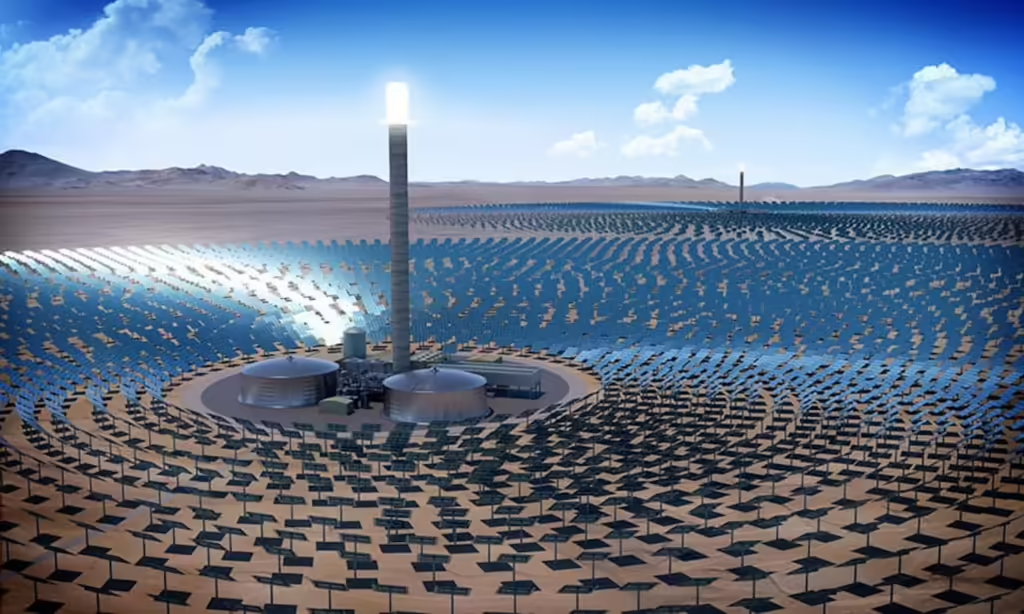
When we talk about concentrated solar energy, we’re referring to a technology typical of a solar thermal power plant, also known as a thermal solar power system or central solar power. These systems differ from other solar energy systems in that they require an additional step to generate electricity.
Concentrated solar energy is a renewable energy source that harnesses the power of sunlight to produce heat, which is then used to generate steam and ultimately electricity. This technology has become increasingly efficient over the years, making it a viable alternative to fossil fuels. In this article, we’ll explore the different types of solar thermal power plants, their working principles, advantages, and applications.
Types of Solar Thermal Power Plants
Solar thermal power plants can be classified into four main types: parabolic linear collectors, Fresnel lens collectors, tower-based systems, and parabolic reflective circular systems. Each type has its unique design and operating characteristics, which affect the system’s efficiency, cost, and environmental impact.
- Parabolic Linear Collectors
In this type of system, parabolic mirrors rotate around a single axis and reflect sunlight onto a tube receiver placed at the focal point (the spot where all sunlight converges).
Inside the tube, a thermovector carries heat, which is then transferred to an exchanger to produce steam. The steam drives turbines connected to an alternator, generating electricity.
The advantages of parabolic linear collectors include their high efficiency and ability to track the sun’s movement. However, they require more land and are more expensive than other types of solar thermal power plants.
Note 1:
To optimize energy production from the sun, the thermovector can also transport heat to a storage tank during peak energy hours, allowing it to be used in the evening.
Note 2:
Solar thermal power plants use different types of thermovectors. Initially, oil was used as a thermovector, but today salines (fused salts) are more common. The main advantage of using fused salts is that they can handle higher temperatures than traditional oils, increasing the system’s efficiency.
Fresnel Lens Collectors
In this type of system, Fresnel lenses consist of multiple narrow and parallel strips of flat mirrors that concentrate sunlight onto tube receivers placed above and running parallel to the mirror strips.
This design allows for more reflective surface area while keeping the same area footprint. Additionally, the flat mirrors are less expensive than parabolic mirrors. The thermovector behaves similarly to the one used in parabolic linear collectors.
Fresnel lens collectors are known for their high efficiency and are often used in combination with other types of solar thermal power plants. They offer a balance between cost, efficiency, and land requirements.
Tower-Based Systems
These systems feature independent mirrors that concentrate sunlight onto a receiver fixed at the top of a tower. In this setup, the mirrors track the sun’s movement to focus sunlight onto the receiver, which carries heat to an exchanger to produce steam.
The concentrated sunlight heats up the steam, which drives turbines connected to an alternator to generate electricity. These systems are more efficient than parabolic linear collectors and can reach higher temperatures due to their design.
Tower-based systems offer several advantages, including high efficiency, scalability, and low land requirements. However, they require more complex maintenance and repair procedures.
Parabolic Reflective Circular Systems
In this system, a central focus point is created by moving mirrors along two axes. This approach allows for greater reflective surface area while minimizing the footprint.
The thermovector carries heat from the mirror surfaces to an exchanger, producing steam that drives turbines connected to an alternator to generate electricity.
Parabolic reflective circular systems offer high efficiency and low land requirements. They are often used in combination with other types of solar thermal power plants to create hybrid systems.
Conclusion:
Concentrated solar energy has become increasingly efficient over the years. With various types of systems available, it’s essential to choose the best option for a specific location and climate. By harnessing the power of sunlight, we can reduce our reliance on fossil fuels and create a more sustainable future.
Advantages of Concentrated Solar Energy
Concentrated solar energy has several advantages over traditional solar panels:
- Higher Efficiency: Concentrated solar energy systems have higher efficiency rates than traditional solar panels due to their ability to concentrate sunlight onto a smaller area.
- Ability to Reach Higher Temperatures: Concentrated solar energy systems can reach higher temperatures, making them more suitable for certain applications.
- Scalability: Solar thermal power plants can be designed and built in various sizes, from small residential installations to large-scale commercial or industrial projects.
- Reliability: Solar thermal power plants have improved significantly over the years, making them a reliable source of energy.
Applications of Concentrated Solar Energy
Concentrated solar energy has various applications across different industries:
- Power Generation: Solar thermal power plants can generate electricity for residential, commercial, or industrial purposes.
- Heating and Cooling: Concentrated solar energy systems can provide heat for buildings, greenhouses, or swimming pools.
- Water Heating: Solar thermal power plants can heat water for domestic use, reducing the reliance on fossil fuels.
Challenges and Limitations
While concentrated solar energy has many advantages, it also faces several challenges and limitations:
- High Upfront Costs: Solar thermal power plants require significant investment in equipment and infrastructure.
- Land Requirements: Concentrated solar energy systems often require large land areas to accommodate the mirrors or lenses.
- Maintenance and Repair: Solar thermal power plants require regular maintenance and repair procedures to ensure optimal performance.
Conclusion:
Concentrated solar energy is a powerful technology that has the potential to transform the way we generate, distribute, and consume energy. By understanding its types, working principles, advantages, and applications, we can unlock its full potential and create a more sustainable future.
Frequently Asked Questions:
- What is concentrated solar energy?
Concentrated solar energy refers to a technology that uses mirrors or lenses to focus sunlight onto a receiver to produce heat, which is then used to generate electricity. - How does it work?
The process starts with mirrors or lenses concentrating sunlight onto a tube receiver, where a thermovector carries heat from the mirrors to an exchanger, producing steam that drives turbines connected to an alternator to generate electricity. - What are the advantages of concentrated solar energy?
Concentrated solar energy has several advantages, including higher efficiency compared to traditional solar panels and the ability to reach higher temperatures, making it more suitable for certain applications. - Can concentrated solar energy be used in different climates?
Yes, concentrated solar energy can be adapted to various climates by adjusting the system’s design or using specialized components. -
How much does concentrated solar energy cost?
The cost of concentrated solar energy systems varies depending on the type and size of the system, as well as the location where it is installed. -
Is concentrated solar energy a renewable energy source?
Yes, concentrated solar energy is a renewable energy source, as it harnesses sunlight, which is a natural resource that will always be available. - Can concentrated solar energy replace fossil fuels?
Concentrated solar energy can contribute to reducing our reliance on fossil fuels, but it’s unlikely to replace them entirely in the near future due to its higher upfront costs and land requirements. - Is concentrated solar energy a reliable source of energy?
Concentrated solar energy systems have improved significantly over the years, making them more reliable and efficient. However, like any other power generation system, they are not immune to failures or maintenance issues.
Future Outlook:
As the demand for renewable energy continues to grow, concentrated solar energy is expected to play an increasingly important role in the global energy mix. Advancements in technology, economies of scale, and decreasing costs will make it more accessible and attractive to investors, policymakers, and consumers alike.
By embracing concentrated solar energy, we can create a cleaner, more sustainable future for generations to come.


