
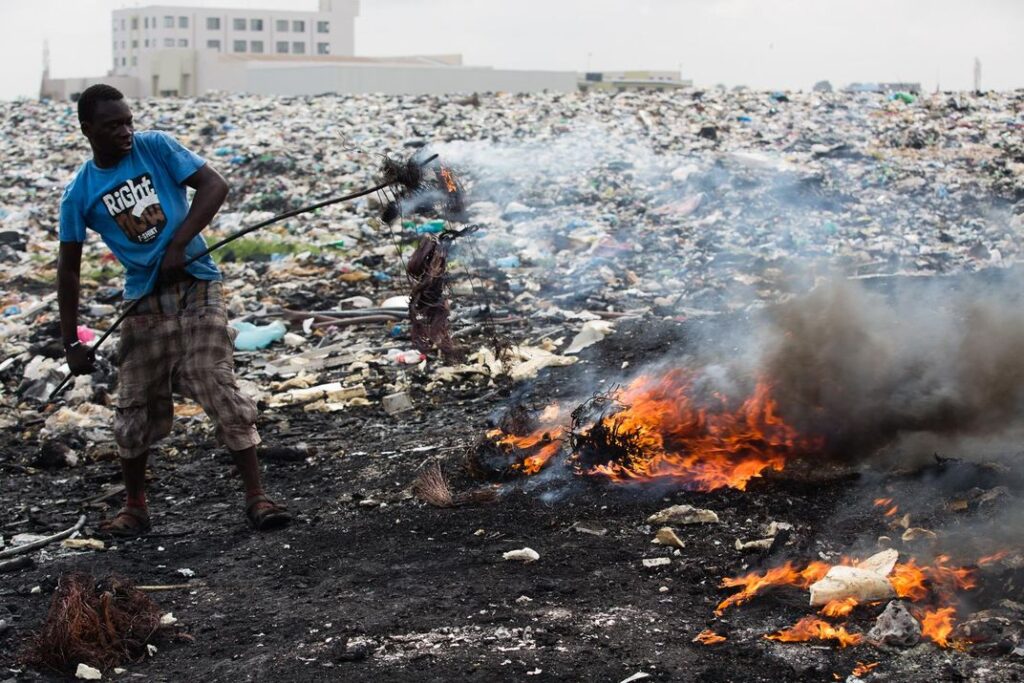
Electronic waste (e-waste) has become a major global concern, with the problem extending far beyond national borders. The international trade of e-waste is not only illegal but also highly profitable for organized crime groups. In this article, we will delve into the extent of the e-waste trafficking crisis in Africa, explore the historical context and regulatory frameworks, and examine the devastating impact on local communities.
The Scale of the Problem
According to a 2014 dossier by the Centre for Coordination of Electronic Waste (CEEW) in collaboration with Legambiente, Africa is the most affected region by e-waste trafficking. Nigeria and Ghana are the two largest ” dump” countries used by European traffickers, including Italians. In Asia, the majority of e-waste from the United States ends up.
International Regulations
The Basel Convention of 1992 sets out strict guidelines for the trade of hazardous waste, including e-waste. The convention prohibits the export of e-waste from developed countries to developing nations, with the exception of functional used equipment. However, international directives encourage the importation and trade of second-hand electronics in developing countries, provided they are functional. This regulatory framework has proven ineffective in stopping the e-waste trafficking crisis.
The Reality on the Ground
Despite international regulations, e-waste continues to flow into Africa through ports in Western coastal cities, where containers filled with non-functional appliances are dumped into open dumps. These containers primarily come from the UK, Belgium, Netherlands, Denmark, Spain, and Italy. In terms of Italian ports of origin, Legambiente has mapped out the top e-waste trafficking cases in a series of investigations that point to Ancona, Bari, Civitavecchia, and Venice as major hubs.
The Trafficking Dilemma
The international e-waste trade mixes functional equipment with non-functional items, making it challenging for regulators to track. Based on data from the United Nations Environment Programme (UNEP), in 2009, approximately 220,000 tons of electronic devices were exported from European countries to Africa, with only a third destined for refurbishment and the rest ending up in uncontrolled dumps often scavenged from abandoned mines and quarries.
Economic Impact
The e-waste trade is a lucrative business, with a single container containing up to 300 computers selling for $5,000 on the Ghanaian market. Even if only 25 functional devices are present, they can be sold for approximately $200 each, covering the costs of shipping and generating profits. The rest of the materials are discarded in dumpsites like Agbogbloshie in Ghana, where thousands of people work without protection to disassemble appliances to extract valuable metals and rare earth minerals.
Environmental Impact
The e-waste crisis has severe environmental implications, including the release of toxic chemicals into the air, soil, and water. The improper disposal of e-waste also contributes to climate change by releasing greenhouse gases. The African continent is particularly vulnerable to the environmental impacts of e-waste due to its limited resources and lack of effective waste management infrastructure.
Health Impacts
The e-waste crisis has significant health implications for local communities, including exposure to toxic chemicals, respiratory problems, and skin conditions. In Ghana, for example, residents of Agbogbloshie have reported high levels of mercury poisoning due to the improper disposal of electronic devices.
Social Impacts
The e-waste crisis also has significant social impacts, including the displacement of communities and the loss of livelihoods. The e-waste trade often involves the exploitation of local workers who are forced to work in hazardous conditions without proper protection or compensation.
Conclusion
The e-waste trafficking crisis in Africa is a multifaceted problem that requires immediate attention from governments, corporations, and individuals. Understanding the historical context, regulatory frameworks, and devastating impact on local communities can guide us toward finding effective solutions to this environmental disaster.
Frequently Asked Questions (FAQs)
- What is e-waste?
E-waste refers to electronic waste generated by the disposal of electronic devices such as computers, phones, televisions, and other appliances.
- Why is Africa a major hub for e-waste trafficking?
Africa’s vulnerability to e-waste trafficking can be attributed to its rapid economic growth, lack of effective regulations, and the demand for second-hand electronics in developing countries.
- What are the international regulations governing e-waste trade?
The Basel Convention of 1992 sets out guidelines for the trade of hazardous waste, including e-waste. However, the convention has proven ineffective in stopping the illegal e-waste trade.
- How does e-waste trafficking impact local communities?
E-waste trafficking affects local communities through the employment opportunities created by scavenging for metals and minerals but also exposes workers to toxic substances without proper protection.
- What can be done to combat e-waste trafficking?
Combating e-waste trafficking requires a multi-faceted approach that includes strengthening international regulations, increasing public awareness, and promoting responsible electronics waste management practices.
- How does the e-waste trade impact global health?
The e-waste trade poses significant risks to human health due to the release of toxic chemicals from non-functional appliances into the environment.
- What role can individuals play in reducing e-waste trafficking?
Individuals can reduce e-waste trafficking by responsibly disposing of electronics, choosing products with recyclable materials, and supporting organizations working to combat illegal waste trade.
- Can e-waste recycling be a viable alternative to dumping it in Africa or Asia?
E-waste recycling offers a viable solution to the e-waste crisis but requires significant investment in infrastructure, technology, and public awareness to ensure its sustainability.
Recommendations for Addressing E-Waste Trafficking
- Strengthen international regulations to prevent the export of hazardous waste from developed countries to developing nations.
- Increase public awareness about the risks associated with e-waste trafficking and promote responsible electronics waste management practices.
- Invest in infrastructure and technology to support e-waste recycling and proper disposal methods.
- Support organizations working to combat illegal waste trade and promote sustainable consumption patterns.
Future Directions
To effectively address the e-waste crisis, it is essential to take a multi-faceted approach that involves governments, corporations, and individuals. Some future directions for addressing e-waste trafficking include:
- Developing more effective international regulations to prevent the export of hazardous waste.
- Increasing public awareness about the risks associated with e-waste trafficking and promoting responsible electronics waste management practices.
- Investing in infrastructure and technology to support e-waste recycling and proper disposal methods.
- Supporting organizations working to combat illegal waste trade and promote sustainable consumption patterns.
Conclusion
The electronic waste trafficking crisis in Africa is a complex problem that requires immediate attention from governments, corporations, and individuals. By understanding the historical context, regulatory frameworks, and devastating impact on local communities, we can work towards finding effective solutions to this environmental disaster.


