
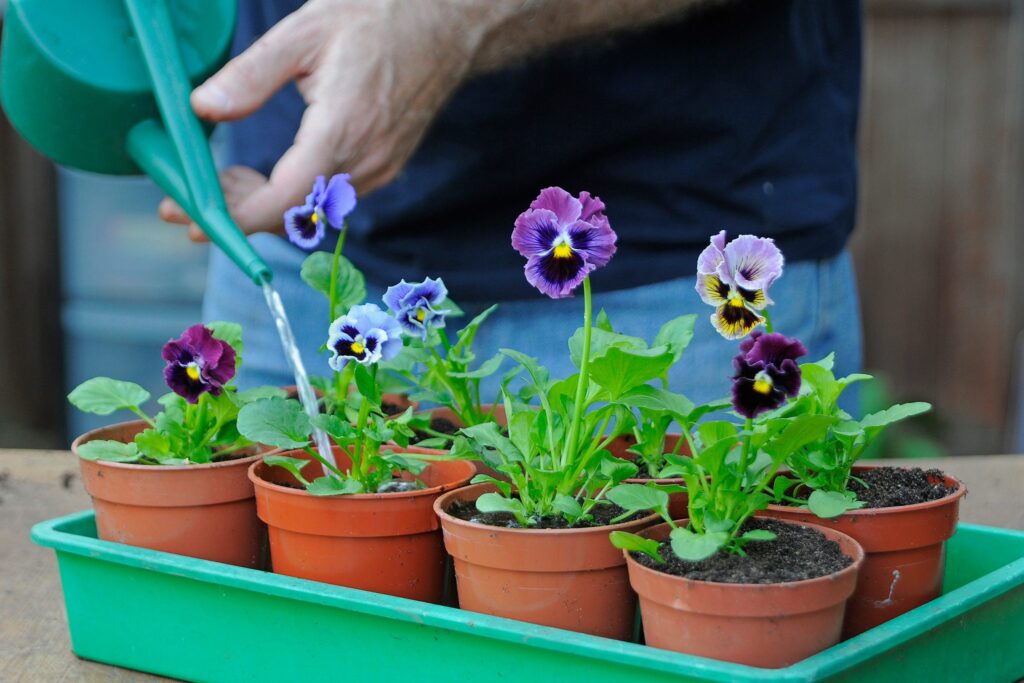
As a beautiful flower, violet of thought has many intangible and invisible properties that can prove useful. Also known as mammola, this plant can be used to prepare face masks for skin purification, in cosmetics or in herbalism as a remedy for the skin. Specifically, its flowers are an excellent ally against acne, atopic dermatitis, milk crust, and psoriasis. In the past, violet juice was used to create love potions and tonics. Let’s explore how to cultivate violet of thought, so having one in our garden could be a great advantage.
Content
- Characteristics of Violet of Thought
- Other Varieties of Violet
- Growing Violet of Thought: Soil, Exposure, and Fertilization
- Watering Violet of Thought
- Sowing Violet of Thought Seeds
- Diseases and Pests of Violet of Thought
- Significance of Violet of Thought
Characteristics of Violet of Thought
Beyond being called mammola, it’s also known as viola cornuta due to its shape, but the name isn’t particularly pleasing. It’s a small plant that doesn’t exceed 40 centimeters in height, but its stunning flowers make it a distinctive element in ornamental compositions. There are many possible combinations for violet flowers, making them vibrant and varied. In the center of the flower, the petals are almost black, but then they take on various colors including light purple, dark purple, yellow, and white. This flower has an annual or biennial rhythm, and there’s a slight difference between viola del pensiero and viola cornuta; the latter usually has smaller flowers.
Other Varieties of Violet
Violet of thought is one of many types of violet that exist in circulation. Knowing these varieties allows us to choose the most suitable ones or mix different varieties in creative ways. For example, there’s Viola lutea from mountainous regions, arriving from the UK and North America with a pale yellow flower, then there’s Viola tricolor, with blue, purple, and white flowers or yellow, one of the most admired, originating from Europe and Asia. The fragrant violet produces tiny flowers but is noticeable for its wonderful fragrance, followed by Black Princess with velvety petals in purple or even black. Other possible varieties include Atlas Mixed, multicolored with a dark center and lighter exterior, Helen Mount, with small flowers and tones of pink, Penny Lane, multicolored and very fragrant, Orchid Frost resistant to frost, French Vanilla completely white, and Daffodil yellow like one of the first varieties seen.
Growing Violet of Thought: Soil, Exposure, and Fertilization
Preparing the soil for sowing violet of thought seeds is not very difficult since this plant doesn’t require special soil to bloom generously. The essential thing is that the soil be fertile and well-drained. It’s recommended to use a mix of universal soil and sand and to rehydrate the soil before cultivating violets, removing also rocks and debris. Autumn and summer, depending on the chosen varieties, are the best times to plant violets that can bloom several times in the same year. This is why they’re well-suited for gardens or decorative arrangements.
Watering Violet of Thought
It’s not necessary to flood this plant with water; what matters is frequent watering after ensuring the soil is completely dry. To promote abundant flowering, it’s best to add a liquid fertilizer to the water used for irrigation, favoring flower production.
Sowing Violet of Thought Seeds
If we decide to let our garden bloom with beautiful violets, we can simply buy online or in a store a packet of seeds and choose between sowing them directly into a greenhouse or seed tray or scattering them around. In the first case, we need to wait for spring or autumn and sow the seeds inside a fertile potting mix.
As an alternative, we have the option of scattering seeds, which is more labor-intensive. We need containers filled with a sandy substrate and distribute the seeds evenly on top. Then cover everything with a layer of sand and a transparent plastic sheet, after which it’s just a matter of waiting for some time before new shoots emerge.
When it comes to multiplying violets of thought, we use a greenhouse with potting mix, sand, and peat moss, and then proceed with the method of taking cuttings in early summer. We separate the plant from its outermost branches that can be literally planted in pots or containers filled with a mix of soil and sand. For these new shoots to take root and bloom, they must initially remain shaded and cool.
Diseases and Pests of Violet of Thought
A beautiful plant like violet of thought cannot avoid attacks from its enemies, which are not few. In the list of threats for this plant are aphids black, whitefly, and snails. Another danger to this plant is caused by stagnant water that can lead to root rot, so it’s recommended to use well-draining soil without overwatering and eliminate dead flowers and marred leaves regularly.
Significance of Violet of Thought
What meanings have been associated with this beautiful flower? Many, including in literature, where Shakespeare mentions it in “Hamlet”. Violet of thought is a happy flower that evokes positive thoughts, joy, and memories. When deciding to give this flower as a gift means that the person receiving it is experiencing a peaceful and serene moment, a refuge from an unexpected bad day.
Frequently Asked Questions
- How do I care for violet of thought plants?
Caring for these plants involves providing them with fertile soil, well-draining water, and regular fertilization. - Can I grow violet of thought in my garden?
Yes, it’s easy to grow violets in your garden by planting seeds or seedlings in a spot with partial shade and moist soil. - What are the most common diseases that affect violet of thought plants?
Common diseases include aphids, whitefly, snails, and root rot caused by stagnant water. - How often should I water my violet of thought plant?
It’s essential to ensure the soil is completely dry before watering the plant, and using a liquid fertilizer can promote flowering. - Can I propagate violets of thought through cuttings?
Yes, it’s possible to multiply these plants by taking cuttings from their outer branches and rooting them in well-draining soil with partial shade. - How long does it take for violet of thought seeds to germinate?
Germination can take anywhere from 1-3 months depending on the variety and environmental conditions. - Are there any toxic compounds in violet of thought plants?
No, these plants are non-toxic but may cause allergic reactions in some individuals.
Additional Tips
- To increase the chances of successful germination, it’s recommended to store violet seeds at a cool temperature (around 4-6°C) until planting.
- Violet plants can be used as ornamental elements in terrariums and other closed environments.
- The sweet fragrance of these flowers is also highly valued for use in perfumes and other fragrances.
By following the guidelines presented above, you’ll be able to grow a beautiful violet of thought plant that will provide a pleasant display of flowers and benefit from its medicinal properties.


