
As we strive to reduce our carbon footprint and create more sustainable living spaces, it’s essential to understand the crucial role that thermal insulation materials play. These often-overlooked heroes help us harness the power of energy efficiency, making buildings warmer in winter and cooler in summer. In this article, we’ll delve into the world of thermal insulation materials, exploring their types, benefits, and applications.
What are Thermal Insulation Materials?
Thermal insulation materials are numerous and diverse, ranging from natural to artificial. They can be categorized into three main groups: natural, mineral, and synthetic. Each type has its unique characteristics, advantages, and uses in building construction.
Natural Thermal Insulation Materials
These materials have an environmental impact that is negligible, but excellent characteristics. They are biodegradable, non-toxic, and can be sourced from renewable resources.
- Corn Fiber: A byproduct of corn production, corn fiber is a natural insulation material with high thermal resistance.
- Pomice: A volcanic ash-based material, pomice is lightweight and effective in reducing heat transfer.
- Sugar: Yes, you read that right! Sugar can be used as an insulation material due to its low thermal conductivity.
- Wood Fiber: Wood fibers, such as those from recycled paper products, can be processed into insulation materials.
- Sheep Wool: A natural, breathable material with excellent thermal insulation properties.
Mineral Thermal Insulation Materials
These materials are ecocompatible and natural. They offer a low-impact alternative to synthetic insulations.
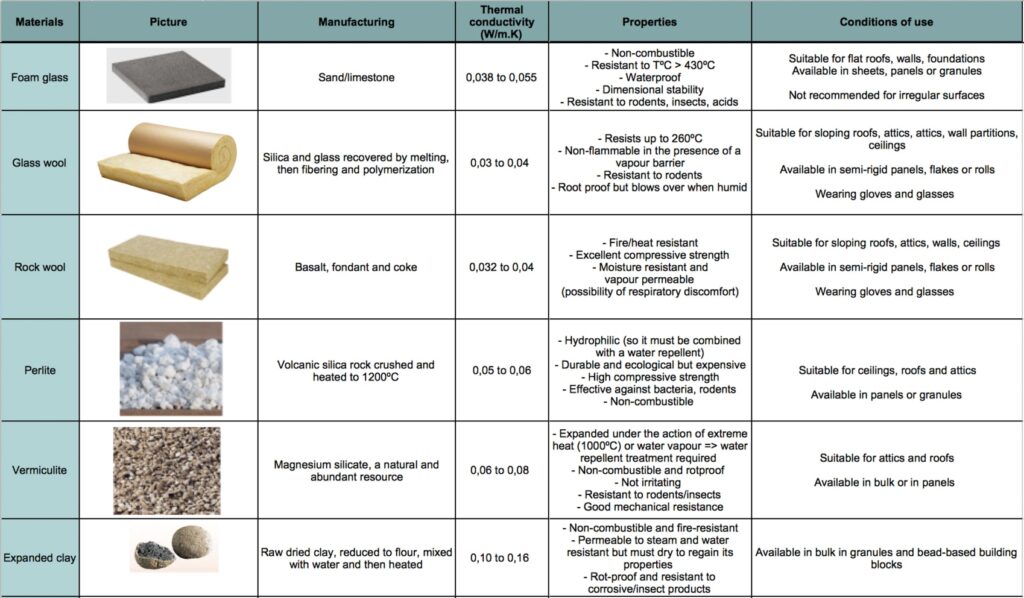
- Fibroceramic: A type of ceramic fiber, fibroceramic is resistant to heat and flames.
- Cellular Glass: A lightweight, insulating material made from glass fibers.
- Perlite: A volcanic glass-based material with high thermal resistance.
- Expanded Clay: Also known as expanded shale or clay, this material is a natural insulation option.
Synthetic Thermal Insulation Materials
These materials have very low thermal conductivity and are often derived from petroleum. They are associated with natural materials to create more efficient panels.
- Expanded Polystyrene (EPS): A common building insulation material, EPS is used in “sandwich” structures for enhanced thermal performance.
- XPS: An expanded polystyrene-based material, XPS offers improved thermal resistance and durability.
Thermal Insulation Materials and Thermal Transmittance
The U-factor represents the thermal transmittance of a material, indicating how much heat can pass through it. A lower U-factor value means better insulation performance, while higher values indicate less effectiveness. Understanding thermal transmittance is crucial for designing energy-efficient buildings.
- The U-factor measures heat transfer between a surface and its surroundings.
- Lower U-factors indicate better insulation performance.
- Higher U-factors result in less effective insulation.
Thermal Insulation Materials in Real-World Applications
These materials are used in various building applications, from walls to roofs, floors to ceilings. Their unique characteristics make them suitable for specific uses:
- Wall Insulation: Thermal insulation materials can be installed in wall cavities to reduce heat transfer and energy loss.
- Roof Insulation: Materials like EPS and XPS are commonly used in roof construction to prevent heat gain during summer months.
- Floor Insulation: Insulating floors can help regulate indoor temperatures and reduce energy consumption.
Types of Thermal Insulation
Thermal insulation materials come in various types, each with its unique characteristics and benefits. Here are some common types:
- Fibrous Insulation
- Rigid Foam Insulation
- Liquid-Formed Insulation
- Reflective Insulation
- Radiative Insulation
Benefits of Thermal Insulation Materials
Thermal insulation materials offer numerous benefits, including:
- Energy Efficiency: Reduced heat loss and gain minimize energy consumption.
- Environmental Benefits: Lower greenhouse gas emissions reduce climate change impacts.
- Cost Savings: Reduced energy bills and extended building lifespan.
Conclusion
Thermal insulation materials are the unsung heroes of energy efficiency. By understanding their types, benefits, and applications, we can create more sustainable living spaces that reduce our carbon footprint. Whether you’re a builder, architect, or homeowner, incorporating thermal insulation materials into your building design can have a significant impact on energy efficiency and the environment.
Frequently Asked Questions
- What are the main differences between natural and synthetic thermal insulation materials?
- Natural materials are biodegradable and non-toxic, while synthetic materials are often derived from petroleum.
- How do I choose the right thermal insulation material for my building project?
- Consider factors like climate, budget, and specific building requirements when selecting a material.
- Can thermal insulation materials be used in combination with other insulation methods?
- Yes, combining materials can enhance overall energy efficiency and performance.
- How do I ensure proper installation and maintenance of thermal insulation materials?
- Follow manufacturer guidelines and take steps to prevent damage or degradation over time.
- What are the long-term benefits of using thermal insulation materials in building construction?
- Reduced energy consumption, lower greenhouse gas emissions, and a more sustainable built environment.
Thermal insulation materials have come a long way since their introduction in the building industry. As we strive for energy efficiency and sustainability, these materials will continue to play an essential role in shaping our future.


