
Understanding Vata Dosha: Nutrition and Characteristics
As we navigate the complexities of human physiology, it’s essential to understand the fundamental principles of Ayurveda, an ancient art of healing that originated in India. At its core, Ayurveda recognizes three primary doshas – Vata, Pitta, and Kapha – which determine an individual’s unique characteristics, strengths, and weaknesses.
In this article, we’ll delve into the world of Vata dosha, exploring its characteristics, nutritional recommendations, and lifestyle advice to help you understand how to balance your energy and achieve optimal well-being.
What is Vata Dosha?
Vata dosha is associated with the elements of air and ether. It governs creativity, intellect, and communication. Individuals with a strong Vata constitution tend to be imaginative, curious, and quick-witted. However, when these energies are out of balance, they can manifest as anxiety, stress, and physical ailments like digestive issues and respiratory problems.
Characteristics of Vata Dosha
- Active and creative
- Quick-witted and intelligent
- Sensitivity to environmental changes (e.g., weather, temperature)
- Prone to anxiety, stress, and emotional turmoil
- Often struggles with physical health issues like:
- Digestive problems (constipation, bloating, gas)
- Respiratory issues (asthma, bronchitis)
- Joint pain and muscle cramps
Lifestyle Advice for Vata Dosha
To maintain balance in your body, follow these practical tips:
- Regular exercise: Engage in low-impact activities like yoga or walking to stimulate circulation and relaxation.
- Calming diet: Focus on warming, nourishing foods to counterbalance the cooling effects of air and ether. Avoid cold, dry, or raw foods that can exacerbate Vata imbalances.
- Relaxation techniques: Practice stress-reducing methods like meditation, deep breathing, or progressive muscle relaxation to calm your mind and body.
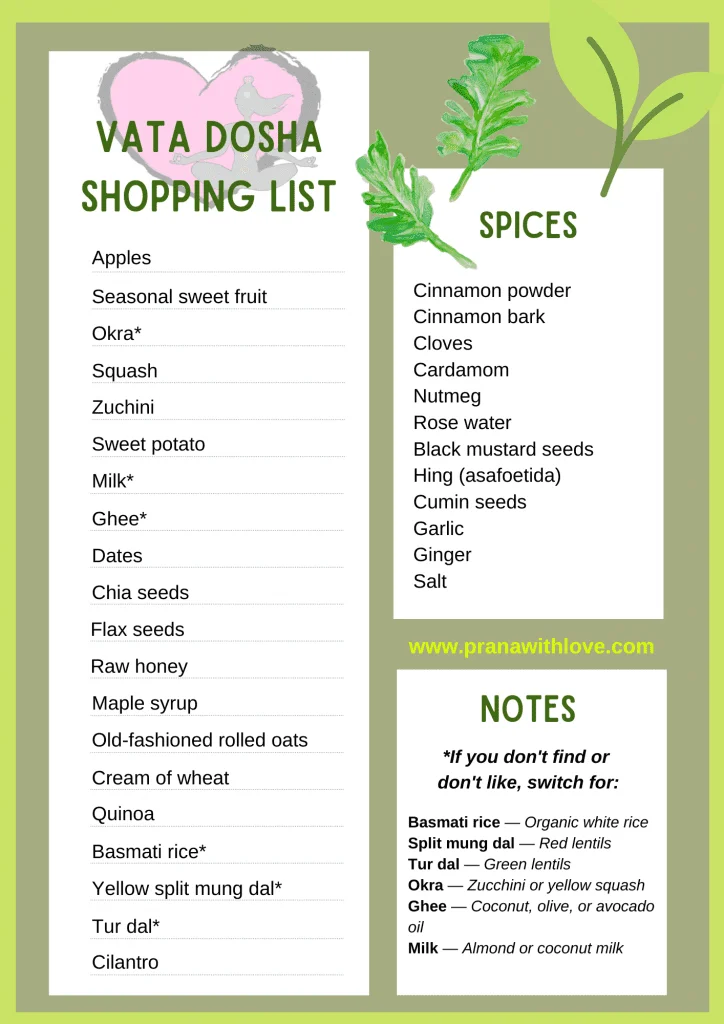
Nutritional Recommendations for Vata Dosha
To support your overall health and well-being, incorporate these foods into your diet:
| Food Group | Recommended Foods | Avoid |
|---|---|---|
| Grains | Avena, rice, quinoa | Wheat, oats (for those with wheat intolerance) |
| Legumes | Lentils, chickpeas, black beans | Soybeans, fava beans, kidney beans |
| Fruits | Sweet fruits like bananas, apples, pears | Sour fruits like lemons, limes |
| Proteins | Chicken, fish, eggs | Red meat |
| Vegetables | Steamed or cooked vegetables | Raw vegetables |
| Dairy | Yogurt, milk, cheese | Lactose-free alternatives for those with lactose intolerance |
Natural Remedies for Vata Dosha
To complement your lifestyle and dietary changes, consider incorporating these natural remedies into your routine:
- Ginseng: Known for its energizing properties, ginseng can help alleviate stress and fatigue.
- Ashwagandha: This adaptogenic herb promotes relaxation and reduces anxiety.
Frequently Asked Questions
Q: How do I know if I have a Vata dosha?
A: If you experience frequent anxiety, stress, or emotional turmoil, along with physical symptoms like digestive issues or joint pain, you might be more inclined towards Vata imbalances. Consult with an Ayurvedic practitioner for personalized guidance.
Q: What are the best exercises for Vata dosha?
A: Gentle exercises like yoga, walking, or swimming can help stimulate circulation and relaxation. Avoid high-intensity workouts that may exacerbate Vata imbalances.
Q: Can I still enjoy sweets if I have a Vata dosha?
A: While it’s essential to maintain balance in your diet, indulging in sweet treats from time to time won’t harm you. Just be sure to consume them in moderation and choose warming, nourishing options like fruit-based desserts or warm milk.
Q: How do I reduce stress as a Vata dosha?
A: Engage in relaxation techniques like meditation, deep breathing, or progressive muscle relaxation. Regular exercise, a calming diet, and sufficient sleep can also help alleviate stress and anxiety.
Q: Can I use natural remedies if I have a Vata dosha?
A: Yes, natural remedies like ginseng, ashwagandha, and ginger can be beneficial in reducing stress and promoting relaxation. However, always consult with an Ayurvedic practitioner before incorporating new supplements into your routine.
Q: How often should I practice yoga if I have a Vata dosha?
A: As a Vata individual, it’s essential to balance your energies. Practice gentle yoga routines 2-3 times a week, focusing on postures that promote relaxation and circulation. Avoid intense or energetic practices that may exacerbate Vata imbalances.
Q: What are some healthy ways to manage stress as a Vata dosha?
A: Engage in activities that bring you joy and calmness, such as reading, listening to soothing music, or practicing mindfulness meditation. Regular exercise, a balanced diet, and sufficient sleep can also help reduce stress and anxiety.
By understanding your Vata dosha and incorporating these lifestyle recommendations into your daily routine, you’ll be well on your way to achieving balance, harmony, and overall well-being.


