
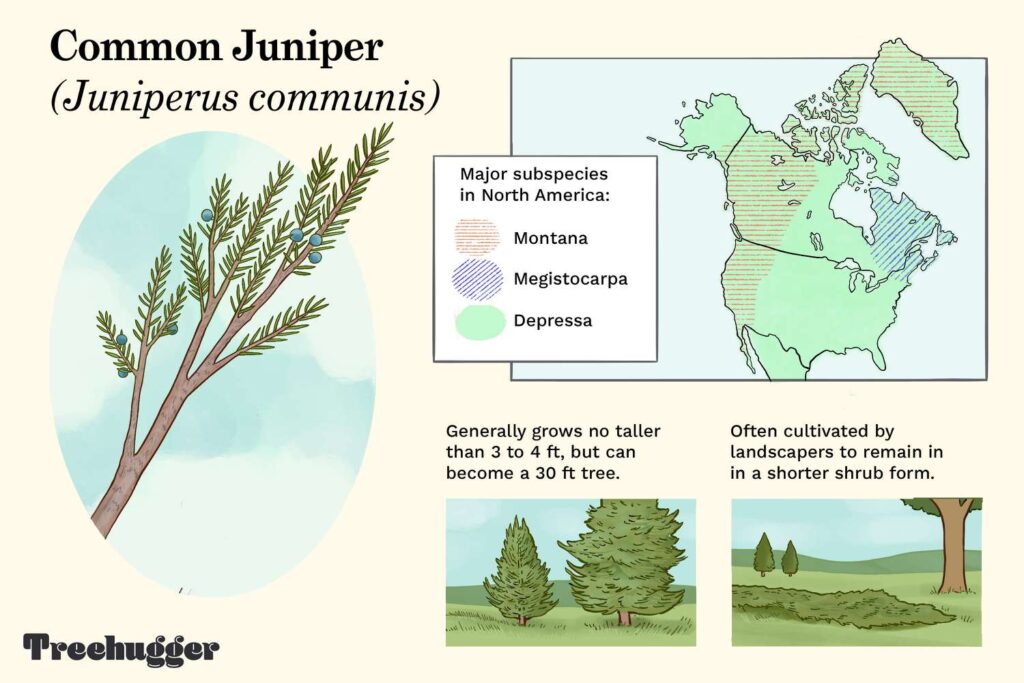
The common juniper (Juniperus communis) is a plant species within the Cupressaceae family, which comprises one of the largest categories of woody plants in the world. This article aims to provide an in-depth understanding of the characteristics, uses, and significance of the common juniper, shedding light on its unique features and adaptability.
Introduction to the Common Juniper
With various common names such as dwarf juniper, prostrate juniper, shrub juniper, or flowering juniper, the common juniper is also known by different aliases. There are numerous subspecies or varieties of the common juniper, making it challenging to simplify this topic. The plant’s versatility and widespread distribution across the globe have led to its varied naming conventions.
Physical Characteristics of the Common Juniper
The common juniper is generally not an extensively large plant, and its distribution can be found in most parts of the world, particularly in colder climates. It is often cultivated commercially as a shrub-like evergreen ornamental plant but is not particularly prized for wood products. The plant’s average height ranges from 1 to 4 feet (30-120 cm), with a spread that can reach up to 6 feet (180 cm). Its foliage is typically dark green, with an upright habit and narrow leaves that are usually wavy-edged.
Habitat of Common Junipers
Common junipers thrive in various environmental conditions and can be found in wild landscapes, fields, and hillsides. They also inhabit deserts, prairies, and forests, often growing alongside pine and oak trees. These plants are typically shrub-like with rounded shapes and sparse branching. Their adaptability to different habitats is a testament to their resilience.
Identifying the Common Juniper
The primary identifying feature of the common juniper is its leaf structure, which varies among different types. Some common junipers have thorny leaves resembling needles that grow in clusters of three, characterized by pointed tips and glossy green coloration with a white stripe on top. The plant’s bark is typically reddish-brown, shedding into thin vertical strips.
Leaf and Bark Characteristics
The fruit of the common juniper is an urn-shaped cone that transitions from green to black during maturation. This unique characteristic sets it apart from other juniper species. The cones are an essential food source for various bird species, adding to their ecological significance.
Uses of Common Junipers
Common junipers are often planted for their soil-reducing properties and as a habitat provider for wildlife. The seeds serve as food sources for various bird species, while the plant itself provides shelter and protection for numerous animals. These plants can be easily propagated through cuttings from commercial nurseries, making them an attractive choice for gardeners.
Gin Production
The common juniper’s essential oils have been historically used in gin production, particularly in Dutch gin recipes. The juniper berries are typically steeped in the spirit to infuse their distinct flavor and aroma. This historical connection between the plant and gin has led to its nickname as “juniper berry gin.”
Ornamental Value
The common juniper’s ornamental value is also a significant factor in its cultivation. Its compact size, low maintenance requirements, and attractive foliage make it an ideal choice for landscaping. Many gardens feature these plants as a decorative element, adding texture and depth to the landscape.
Threats to Common Junipers
Several parasites can harm common junipers, including various insects such as spider mites and aphids. Additionally, wildfires can be detrimental, as the plant has limited resistance to fire damage, making it challenging for new plants to grow after a disaster. Climate change is also an increasing concern, as warmer temperatures may alter the plant’s natural habitats.
Conservation Efforts
Several organizations are working to conserve common juniper populations and their habitats. For example, the United States Fish and Wildlife Service has implemented measures to protect these plants from over-harvesting and habitat destruction. Local conservation groups are also working to educate the public about the importance of preserving natural habitats.
Conclusion and FAQs
By understanding the characteristics and uses of the common juniper, we can appreciate its unique features and adaptability. In conclusion, this article aims to provide comprehensive information on the subject matter. Below are frequently asked questions about the topic:
Q: What is the common juniper’s typical distribution?
A: The common juniper can be found in various environments, including cold climates.
Q: Why are common junipers often cultivated as ornamental plants?
A: They are prized for their ability to prevent soil erosion and provide habitat for wildlife.
Q: How do you propagate a common juniper from cuttings?
A: Cuttings from commercial nurseries can be used to easily propagate these plants.
Q: What is the relationship between junipers and gin production?
A: Junipers were historically used in the production of gin due to their essential oils.
Q: Can wildfires affect common juniper populations significantly?
A: Yes, as they have limited resistance to fire damage, making it challenging for new growth.
Q: Are there any notable subspecies or varieties of the common juniper?
A: There are numerous variations and subspecies within this species.
Q: What are some potential threats to common juniper populations?
A: Various parasites and wildfires can harm these plants.
Q: Where can I learn more about the common juniper in Italy?
A: You can find additional information on websites specializing in botanical topics, as well as local public gardens or parks featuring this plant species.


