
Who among us has ever dreamed of spending a beautiful Sunday afternoon with family and friends, gliding effortlessly across a pristine ice rink? Ice skating is an accessible sport for everyone, offering a unique way to enjoy the outdoors while getting some exercise. With numerous outdoor structures in Italy and other countries offering artificial ice surfaces, why not try it out? There’s no age limit to get started! All you need are some tips and precautions to ensure a safe and enjoyable experience.
Choosing the Right Skates
Before diving into the world of ice skating, it’s essential to select the right skates. There are two types of skates to choose from based on your needs: speed skates and figure skates. Speed skates are designed for velocity and have a longer blade that allows for more energy in the push. However, they can make it challenging to change direction or simply turn around. Figure skates, on the other hand, feature rigid supports for ankle stability and a shorter blade that makes movements and transitions smoother.
When choosing figure skates, consider the following factors:
- Height: Make sure the skates fit your legs properly, with enough room between your toes and heel.
- Width: Choose skates that are wide enough to accommodate your foot shape and provide support for your ankles.
- Material: Figure skates can be made from various materials, such as leather, synthetic materials, or a combination of both.
- Rigidity: Look for skates with stiff blades that will provide stability and support during your skating sessions.
Tips for Beginners
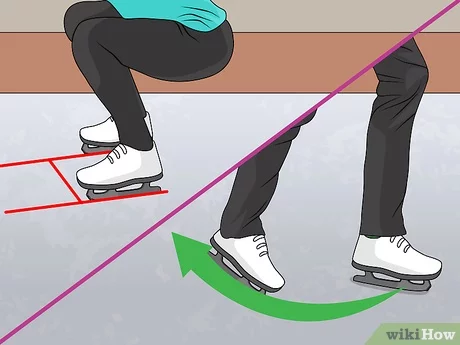
When using figure skates, there’s an essential part you should be aware of: the toe pick. The toe pick is usually located at the front of the skate and can be easily mistaken as a means to slow down or stop. Don’t do it! Using the toe pick to slow down is a big no-no for beginners. Instead, use your blades to create friction on the ice.
Additionally, here are some general tips for beginners:
- Practice standing: Stand with your feet shoulder-width apart and your knees slightly bent. This will help you maintain balance and stability.
- Start on flat ground: Begin by skating on a flat surface, such as a smooth floor or a gentle slope, to get used to the feeling of gliding on ice.
- Hold onto something: Hold onto a barrier, such as a wall or a support bar, for added stability and support while moving at a slow pace.
- Keep your weight centered: Keep your weight evenly distributed on both feet, with your knees bent and your center of gravity low.
- Practice gliding: Start by gliding on one foot, then switch to the other foot. Practice this motion repeatedly to build up your confidence.
Using Protective Gear
Protective gear is essential for beginners to prevent injuries from sharp blades and falls. Some recommended protective gear includes:
- Gloves: Choose gloves that fit snugly around your hands, with padding on the palms to absorb impact.
- Face mask: A face mask can protect you from ice chips, wind, and other debris.
- Knee pads: Knee pads can provide additional protection for your knees in case of a fall.
Additional Safety Tips
Here are some additional safety tips to keep in mind:
- Check the rink: Make sure the ice rink is well-maintained, with no loose debris or hazards on the surface.
- Skate during daylight hours: Skating during daylight hours can help you see potential hazards and avoid collisions.
- Stay hydrated: Bring water and snacks to keep you hydrated and energized throughout your skating session.
Getting Started
Now that you’ve chosen the right skates, practice standing, and understand the basics of ice skating, it’s time to get started! Here are some steps to help you begin:
- Rent equipment: Rent skates and other protective gear at a local sports store or online retailer.
- Find a beginner-friendly rink: Look for an outdoor ice rink with artificial surfaces in your area.
- Take a lesson: Consider taking a group or private lesson from a certified instructor to learn the basics of ice skating.
Conclusion
Ice skating is an exciting sport that’s accessible to everyone, regardless of age. With the right equipment and some helpful tips, you’ll be gliding across the ice in no time! Don’t be afraid to ask for help or join a group lesson – it’s all part of the fun!
Frequently Asked Questions
Q: What are the different types of skates available?
A: There are two main types of skates: speed skates and figure skates. Speed skates are designed for high-speed skating, while figure skates focus on artistic movements.
Q: How often should I sharpen my blades?
A: It’s recommended to frequently sharpen your blades as they tend to wear out over time, increasing friction on the ice.
Q: What protective gear should I use when ice skating?
A: Gloves and face masks are essential for beginners to prevent injuries from sharp blades and falls.
Q: How can I learn to ice skate safely?
A: Consider having an experienced friend accompany you or holding onto a barrier for support while moving at a slow pace to get familiar with the ice surface.
Q: What should I do if I fall while ice skating?
A: After a fall, don’t worry – just place your hands together in front of your chest and tuck your head back to minimize the impact.


