
Introduction
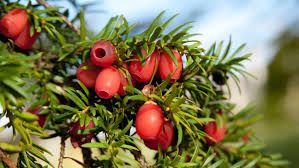
As we delve into the world of botany, there exists a plant that has captivated the imagination of many – the Taxus Baccata, commonly known as the yew tree. This evergreen conifer is often confused with pines or firs, but its distinctive bark and toxic properties set it apart from other species. Native to Mediterranean regions, the Taxus Baccata has been a subject of fascination for centuries, with various uses ranging from medicine to art.
Taxus Baccata: A Plant of Contrasts
The Taxus Baccata is a plant that embodies contrasts – its toxicity and utility, growth rate and longevity. It grows slowly but can reach up to 20 meters in height, making it a challenging tree to cultivate. Its bark is distinctive, with an initial reddish-brown color that eventually turns gray and becomes scaly.
The Toxic Properties of the Taxus Baccata
The leaves of the Taxus Baccata are highly toxic, containing a group of compounds called taxanes. These compounds have been shown to have anti-cancer properties and are used in various chemotherapeutic agents. The tree’s toxicity has led to its use as an abortifacient in ancient times, although this practice is now widely discouraged.
The Artistic Side of the Taxus Baccata
Despite its toxic properties, the Taxus Baccata has been a popular subject for artists and gardeners alike. Its unique shape and dense foliage make it ideal for topiary and hedges. The tree can be pruned to create intricate shapes and designs, making it a versatile material for artistic expression.
The Symbolism of the Taxus Baccata
In ancient cultures, the Taxus Baccata was associated with death and mourning. In Celtic mythology, the tree was believed to have supernatural powers, and its wood was used to make magical artifacts. Today, the tree is still revered for its symbolic significance, representing both life and death.
Growing a Taxus Baccata: Challenges and Rewards
Cultivating a Taxus Baccata requires patience and dedication. The tree grows slowly but can reach impressive heights with proper care. It is tolerant of various conditions, including sunlight and shade, making it an ideal choice for gardeners. However, the tree’s slow growth rate means that it may take up to 20 years to reach maturity.
Taxus Baccata: A Treasure Trove of Uses
The Taxus Baccata is a versatile plant with numerous uses. Its wood is prized for its durability and resistance to decay, making it an ideal material for tool handles and other woodworking projects. The tree’s toxic compounds have led to the development of various pharmaceutical agents.
Medicinal Properties of the Taxus Baccata
The Taxus Baccata has been used in traditional medicine for centuries, particularly in China and Europe. Its bark and leaves are rich in antioxidants and have anti-inflammatory properties. Modern research has confirmed the tree’s medicinal potential, with studies showing its effectiveness in treating various diseases, including cancer.
Pharmaceutical Applications of the Taxus Baccata
The toxic compounds found in the Taxus Baccata have led to the development of various pharmaceutical agents. Paclitaxel, a taxane derivative extracted from the tree’s bark, is used to treat breast, ovarian, and lung cancers. Other taxanes, such as docetaxel and etoposide, are also used in cancer treatment.
Environmental Benefits of the Taxus Baccata
The Taxus Baccata has environmental benefits that make it an attractive choice for gardeners and conservationists alike. The tree’s dense foliage provides habitat for various insects and birds, while its slow growth rate means that it is less likely to outcompete native species. Additionally, the tree’s durability makes it a valuable tool for land management and reforestation efforts.
Conservation Status of the Taxus Baccata
The Taxus Baccata is listed as “Least Concern” on the IUCN Red List, but its populations are declining in some regions due to over-harvesting and habitat loss. Efforts are underway to conserve the tree’s genetic diversity and protect its habitats.
Conclusion
The Taxus Baccata is a fascinating plant that embodies contrasts – toxicity and utility, growth rate and longevity. Its unique shape, dense foliage, and symbolic significance make it a popular subject for artists and gardeners alike. With proper care and patience, cultivating a Taxus Baccata can be a rewarding experience.
Frequently Asked Questions
- Q: What is the Taxus Baccata used for?
A: The Taxus Baccata has various uses, including medicine, art, and horticulture. - Q: Is the Taxus Baccata toxic?
A: Yes, the leaves of the Taxus Baccata contain toxic compounds that can be harmful if ingested or handled improperly. - Q: How do I care for a Taxus Baccata?
A: The Taxus Baccata requires proper care, including full sun to partial shade and well-draining soil. - Q: Can I grow a Taxus Baccata indoors?
A: Yes, the Taxus Baccata can be grown indoors with proper lighting and care. - Q: What are the benefits of using Taxus Baccata wood?
A: The wood of the Taxus Baccata is durable and resistant to decay, making it ideal for tool handles and other woodworking projects. - Q: Can I use Taxus Baccata as a hedge or topiary?
A: Yes, the Taxus Baccata can be used to create hedges or topiaries with proper pruning and care. - Q: Is the Taxus Baccata a slow-growing tree?
A: Yes, the Taxus Baccata is a slow-growing tree that may take up to 20 years to reach maturity. - Q: Can I use Taxus Baccata for medicinal purposes?
A: Yes, the toxic compounds in the Taxus Baccata have led to the development of various pharmaceutical agents.
Glossary
- Taxane: A group of compounds found in the leaves and bark of the Taxus Baccata, known for their anti-cancer properties.
- Topiary: The art of training plants to grow into decorative shapes or forms.
- Horticulture: The science and practice of cultivating fruits, vegetables, flowers, and trees.
- Conifer: A type of tree that produces cones and has needle-like leaves.
Additional Resources
- National Institute of Health: Taxus Baccata (English)
- Encyclopedia Britannica: Yew (English)
- IUCN Red List: Taxus baccata (English)


