
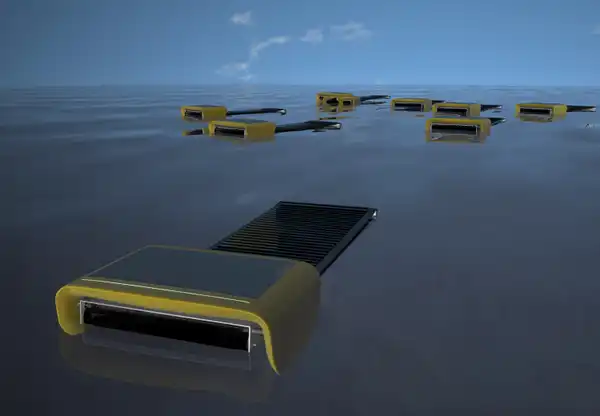
In recent years, the world has been faced with a major environmental crisis. Oil spills have become a common occurrence, causing irreparable damage to marine ecosystems and wildlife. However, a team of scientists from the University of Bristol may have come up with a solution to this problem. They have developed a special soap that can clean up oil spills in the ocean.
The impact of oil spills on marine life cannot be overstated. From birds and fish to coral reefs and seaweed, oil pollution has devastating effects on the entire ecosystem. The consequences of these events are not only tragic but also long-lasting, affecting not just the immediate environment but also the economy and human health.
One of the most significant threats to marine ecosystems is oil spills. These can occur due to various reasons such as natural disasters, ship accidents, or even intentional acts like pipeline leaks. Oil spills have been a major concern for environmentalists and policymakers alike, and finding effective solutions to mitigate their effects has become a priority.
However, traditional methods of cleaning up oil spills, such as using booms or absorbent pads, have limitations. These methods may not be effective in large-scale cleanups, and they often require significant resources and manpower. Moreover, the use of chemicals and dispersants can further harm marine life and contaminate waterways.
In this context, the development of a new soap by researchers at the University of Bristol offers hope for a more sustainable and environmentally friendly solution to oil spills. The soap is based on a principle called an amphiphile, which consists of two types of molecules: lipophilic (fat-loving) and hydrophilic (water-loving). This unique combination allows the soap to bind to both water and oil, making it an effective cleaner.
The researchers at the University of Bristol have created a special type of soap that is not only amphiphile but also magnetic. This magnetic property allows the soap to be easily removed from the water using a magnet, making it an efficient and effective cleanup tool.
How Does the Soap Work?
The soap works by creating a nanostructure that traps the oil droplets, allowing them to be easily removed from the water using a magnet. The process involves mixing the soap with water and then applying a magnetic field to create the nanostructure. The resulting structure is like a tiny “net” that captures the oil droplets.
The effectiveness of this method has been demonstrated in laboratory tests, where the soap was shown to clean up oil spills more efficiently than traditional methods. However, further research is needed to determine its efficacy in real-world scenarios and to address any potential limitations or challenges.
The Benefits of the Soap
The benefits of this new soap are numerous. Firstly, it is non-toxic and environmentally friendly, making it safe for use in large-scale cleaning operations. Secondly, it is highly effective at removing oil from water, making it an ideal solution for oil spills. Thirdly, its magnetic properties allow it to be easily removed from the water using a magnet.
Moreover, this soap has the potential to revolutionize the way we clean up oil spills and other environmental disasters. With its unique properties and applications, it has the potential to provide an efficient and sustainable solution that can reduce the impact of pollution on marine ecosystems.
Real-World Applications
One of the most promising applications of this soap is in the cleanup of oil spills. Imagine being able to clean up a spill within hours or even days, rather than weeks or months. This could save countless marine animals and ecosystems. The researchers at the University of Bristol believe that their soap could be used to clean up not only oil spills but also other pollutants such as plastics and chemicals.
Furthermore, this technology has the potential to be applied in various real-world scenarios beyond oil spills. For example, it could be used to clean up contaminated soil or groundwater, or even to remove pollutants from waterways.
The Future of Cleaning
While there is still much work to be done, the development of this new soap offers a glimmer of hope for the future of cleaning. With its unique properties and applications, it has the potential to revolutionize the way we clean up environmental disasters.
Moreover, the use of sustainable technologies like this soap can help reduce our reliance on traditional methods that may have unintended consequences on the environment. As policymakers and industries continue to explore new solutions to environmental challenges, this technology has the potential to play a significant role in shaping the future of cleaning.
Challenges Ahead
However, despite its promising potential, there are several challenges ahead for the development and implementation of this technology. Firstly, further research is needed to determine its efficacy in real-world scenarios and to address any potential limitations or challenges.
Secondly, scaling up production while maintaining the soap’s effectiveness will be a significant challenge. Moreover, ensuring the soap’s safety and efficacy for use in various environments and conditions will require rigorous testing and validation.
Finally, regulatory frameworks and policies may need to be developed or updated to accommodate this new technology and ensure its safe and responsible use.
Conclusion
In conclusion, the magic soap may just hold the key to cleaning up our oceans. Its unique combination of amphiphile and magnetic properties makes it an effective and environmentally friendly solution for oil spills and other environmental disasters. As researchers continue to explore its potential applications, we can only hope that this innovative technology will become a reality.
Frequently Asked Questions
- How does the soap work?
The soap works by creating a nanostructure that traps the oil droplets, allowing them to be easily removed from the water using a magnet.
- Is the soap non-toxic and environmentally friendly?
Yes, the soap is non-toxic and environmentally friendly, making it safe for use in large-scale cleaning operations.
- Can the soap clean up all types of pollutants?
The soap has shown promise in removing oil from water, but further research is needed to determine its effectiveness against other pollutants such as plastics and chemicals.
- How long does it take to clean up an oil spill with this soap?
According to the researchers, it could potentially clean up an oil spill within hours or even days, rather than weeks or months.
- Is the soap already being used in real-world applications?
While there is no specific information available on the use of this soap in real-world applications, the researchers at the University of Bristol believe that it has the potential to be used to clean up oil spills and other environmental disasters.
- Can the soap be used to clean up other types of pollution?
Further research is needed to determine whether the soap can be effective against other types of pollution such as plastics and chemicals.
- Is the soap patent pending?
Yes, the researchers at the University of Bristol have patented their discovery and are working to commercialize it.
- When will we see this soap in use in real-world applications?
While there is no specific timeline available, the researchers believe that this technology has the potential to be used in the near future to clean up oil spills and other environmental disasters.


