
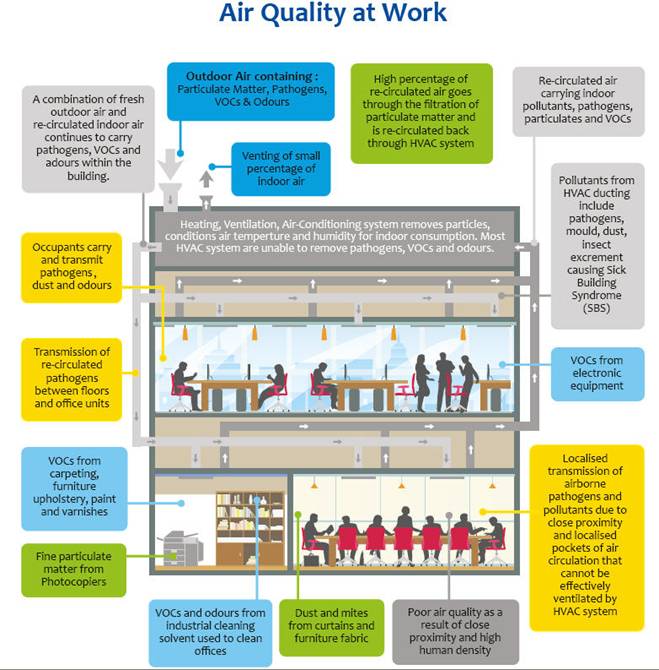
As we go about our daily lives, it’s easy to overlook the air that surrounds us. But the quality of that air can have a significant impact on our health. In particular, exposure to dust and poor air quality in offices has been linked to an increased risk of developing lung cancer.
The Connection Between Dust and Lung Cancer
Research has shown that fine particles in the air we breathe, known as PM2.5 and PM10, can increase our risk of lung cancer by up to 22% for every 10 micrograms above a certain threshold. These tiny particles are so small that they can be inhaled deep into our lungs without being filtered out by our natural defenses.
The Hidden Sources of Office Dust
While we often think of air pollution as something that affects cities, the reality is that office environments can be just as hazardous. In fact, a typical office printer or photocopier can emit up to twice as much dust as the outside air! This means that even in an otherwise clean environment, you may still be exposed to harmful levels of fine particles.
Understanding Air Quality
So what exactly makes up the air we breathe? The “clean” air contains about 21% oxygen, 79% nitrogen, and a tiny 0.03% carbon dioxide (CO2). However, when people are in enclosed spaces like offices, their breathing consumes more oxygen, making the air increasingly rich in CO2 and moisture.
The Effects of Poor Air Quality
When the oxygen level falls below 15% and CO2 levels exceed 0.07%, it can impair our ability to concentrate and cause symptoms like fatigue and headaches. To maintain good indoor air quality, regular ventilation is crucial – especially when there are electronic devices (like fax machines) and other pollutants present.
The Importance of Filtration
One of the simplest ways to reduce office dust is through filtration. Specifically, using a HEPA-filtered air purifier or a device like tesa Clean Air can capture up to 94% of fine particles produced by printers without damaging them.
Product Spotlight: Tesa Clean Air
The tesa Clean Air filter is designed for use on various printer models and captures up to 94% of dust particles. Its special fabric-like material, which is non-woven in three layers, ensures effective filtration while guaranteeing the device’s functionality. This product is certified by the European TÜV Nord.
Conclusion
As we go about our daily routines, it’s easy to overlook the subtle yet significant impact that air quality has on our health. In offices, poor ventilation and dust from devices like printers can have a profound effect on indoor air quality. By using products like tesa Clean Air, we can take simple steps to reduce exposure to hazardous particles and breathe easier.
Frequently Asked Questions
-
What is the recommended frequency for replacing HEPA filters?
It’s generally recommended to replace every 12 months or after a certain number of prints (depending on manufacturer guidelines). It’s also essential to follow the manufacturer’s instructions for cleaning and maintaining the filter to ensure optimal performance. -
Can I use any type of filter in an office printer?
No, as they can damage the device. Look for specialized HEPA-filtered air purifiers like tesa Clean Air that are specifically designed for use with printers. -
How does tesa Clean Air capture fine particles?
It uses a special non-woven material that captures up to 94% of dust particles without damaging the printer. This innovative design ensures that both the device and the air inside the office remain clean and safe. -
Is it safe to use an air purifier in close proximity to children or pets?
As with any electronic device, follow manufacturer guidelines and maintain proper usage to minimize potential risks. Regular cleaning of the device and filter is also crucial to prevent bacterial growth and ensure a healthy indoor environment. -
Can I install a HEPA-filtered air purifier in my entire office?
Yes, but ensure that the area is well-ventilated and not overly humid. A properly installed air purifier can significantly improve indoor air quality, but it’s essential to address any underlying issues with ventilation and humidity control. -
Do all printer models require HEPA filtration?
No, only those with laser or inkjet printers produce fine particles that need filtering. However, using a HEPA-filtered air purifier in the office can still provide an added layer of protection for both staff and equipment.
The Economic Impact of Office Dust
In addition to the health risks associated with poor air quality, there is also an economic impact to consider. According to studies, the average worker spends around 8 hours per day in an office environment. If just 1% of this time is spent breathing polluted air, it can result in a significant loss of productivity and decreased job satisfaction.
Reducing Office Dust: A Shared Responsibility
As employers and employees alike recognize the risks associated with poor air quality, we must work together to reduce office dust. This involves not only using HEPA-filtered air purifiers but also adopting good ventilation practices and maintaining regular cleaning schedules.
Additional Tips for Reducing Office Dust
Here are some additional tips to help minimize office dust:
- Regularly clean electronic devices like printers and photocopiers.
- Use a vacuum cleaner with a HEPA filter when cleaning carpets and floors.
- Avoid using chemicals or strong fragrances that can release particles into the air.
The Future of Air Quality in Offices
As technology advances, we can expect to see more innovative solutions for improving indoor air quality. Some potential developments on the horizon include:
- Improved HEPA filters with increased particle capture rates
- Smart sensors that detect changes in air quality and alert staff and management
- Integrated ventilation systems that use advanced algorithms to optimize airflow
Conclusion
In conclusion, office dust and poor air quality can have a significant impact on our health. By understanding the hidden dangers of these issues, taking proactive steps to reduce exposure, and adopting good ventilation practices, we can create healthier and more productive work environments.
As we move forward, it’s essential that both employers and employees prioritize indoor air quality. By working together, we can ensure that the office environment remains a safe and healthy place for everyone.
What Can You Do?
If you’re concerned about the air quality in your office or workplace, here are some steps you can take:
- Research HEPA-filtered air purifiers like tesa Clean Air and consider investing in one for your office.
- Consult with a professional to assess your office’s ventilation system and make recommendations for improvement.
- Educate yourself on the risks associated with poor air quality and share this information with colleagues.
By taking these steps, you can help create a healthier and more productive work environment for everyone.
Additional Resources
For more information on office dust and poor air quality, please visit:
- The American Lung Association (ALA) website
- The Centers for Disease Control and Prevention (CDC) website
These organizations provide valuable resources and guidance on maintaining good indoor air quality in offices and workplaces.


