
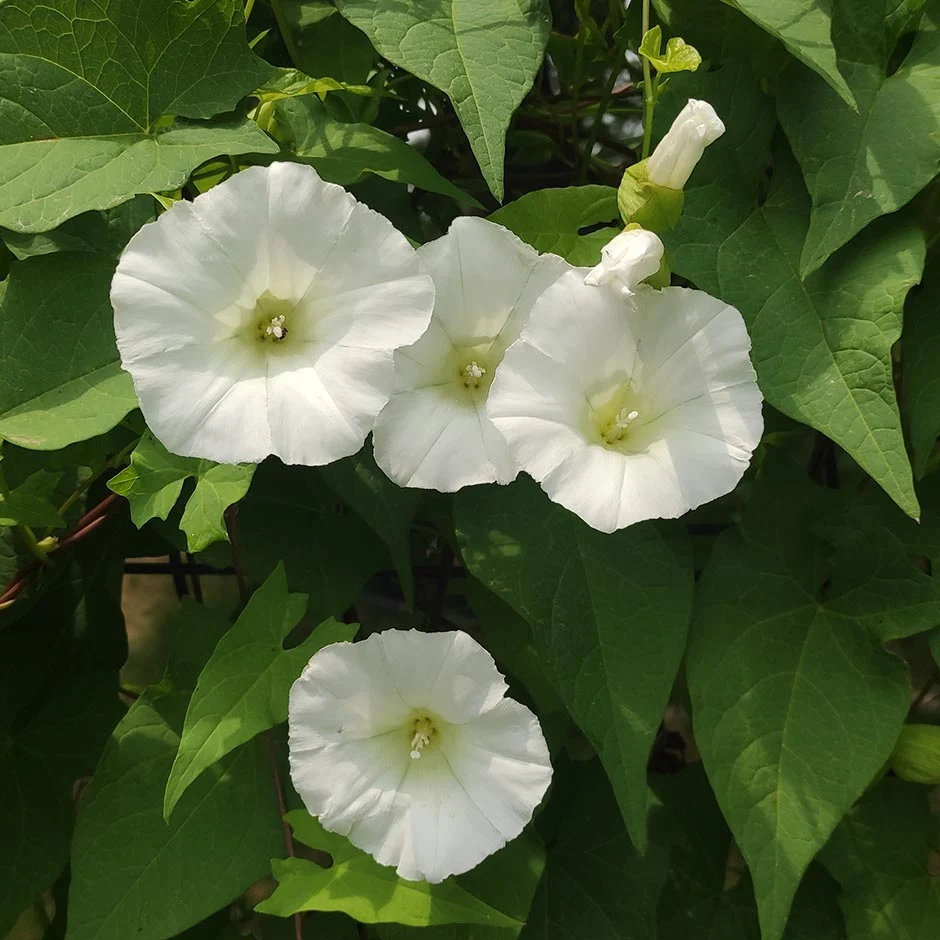
Convolvulo is a name that evokes curiosity and fascination. Behind this name lies a genus of plants, primarily rampicant, with a Mediterranean origin. Before diving into the world of Convolvolo, let’s explore an interesting fact: this plant has infiltrated even the fairy tales of the Brothers Grimm. In “The Tazetta of the Madonna,” the Convolvolo serves as a makeshift chalice for the Virgin Mary’s wine.
Understanding the Convolvolo
The Convolvolo is a genus of plants with hundreds of species, including hybrids. These plants are characterized by their fusty growth habit and produce trumpet-shaped flowers in various colors, such as blue, purple, white, or yellow, depending on the variety. The flowers bloom from spring to late summer.
Convolvolo: The Flower
The Convolvulo flower is shaped like a trumpet and can change colors throughout its life cycle. Daytime brings out its true beauty, while nighttime closes it up for rest. There are over 200 species of Convolvolo, all sharing the characteristic trumpet-shaped calyx.
Convolvulus Arvensis
This species comes in two varieties: Arvensis-Arvensis and Arvensis Linearifolius. The former has wide leaves, while the latter has linear leaves. Often considered an unwanted weed, it can be seen as a rampicant or strisciante plant due to its deep-seated roots.
The flowers of this species bloom at the axis of the middle leaf, forming a calyx with a campanulated corolla. The dominant color is white or pale pink, often marked by lighter radial stripes. This variety blooms in April and remains until the start of school season.
Convolvulus Sabatius
Also known as Mauritanicus, this Convolvolo has slender yet dense stems and small, round leaves that are always green. The color is a soft green-copper hue, with a soft, fine pelage covering them. This plant requires guidance to grow upright and can be trained on walls or large pots.
From May to November, it produces continuous blooms in shades of blue-violet, enjoying the sunlight but repose at night. This species is frequently cultivated in hanging baskets or large pots, allowing its stems to freely cascade.
Convolvolo Blu (Blue Convolvolo)
Several species showcase the beautiful blue color, including the Sabatius we just discussed. However, this is not the only one, as other varieties also bloom with a range of colors from blue-violet to sky blue.
The Convolvolo perenne (perennial Convolvolo) is highly sought after for its decorative potential on walls, displaying small, oval-shaped leaves in green and trumpet-shaped flowers in shades of blue, violet, or white.
Convolvolo Bianco (White Convolvolo)
This variety blooms throughout the spring and summer. In Mediterranean climates, it thrives well and displays delicate white flowers that remain open for several hours due to sunlight and good weather. Even on gray days, these flowers will still bloom, but only if exposed to direct sunlight.
Where to Buy Convolvolo Seeds
Convolvolo seeds can be purchased online for a few euros, providing a mix of species suitable for distribution with the density of one seed per square meter. This variety is ideal for creating beautiful borders.
Convolvolo Rampicante (Rampant Convolvolo)
In nearly all its varieties, including hybrids, the Convolvolo grows as an aggressive rampicant. It creates a dense mass of foliage and flowers, rarely straying from this path. This plant is widely spread in sunny areas throughout Europe and other regions.
Convolvolo Perenne
As classified by botanists, the Convolvolo is perennial. However, for it to truly thrive as such, careful conditions must be met. Providing well-lit spaces with just a couple of hours of sunlight per day will help create an ideal environment. Terrestrial soil with good drainage should also be used, rather than compacted ones.
The Convolvolo is relatively resistant to drought and chilly temperatures if moderate. In its care, avoid excessive watering, allowing it to grow freely disordered while gently pruning only when necessary or invading neighboring plants or territory.
Eliminating an Infestating Convolvolo
When the Convolvolo becomes invasive, removing it can be a challenging task. If left unchecked, its deep-seated roots allow it to recover quickly from any treatment, making further removal difficult. A thorough tillage or herbicides are needed to completely eliminate it.
However, if one wants to keep this beautiful flower in their life, the advice is to gently intervene and control its spread, observe how it affects other plants, and tolerate this lovely yet somewhat egocentric flower.
Interesting Facts About Convolvolo
- The Greek word “convolvulus” means rolled-up or twisted.
- This plant has been used for centuries in traditional medicine, often as a treatment for digestive issues.
- In modern times, it is also used in herbal teas and infusions to aid digestion.
- Some species of Convolvolo have antiviral properties and are being studied for their potential use in the treatment of certain diseases.
Convolvolo Care Tips
To keep your Convolvolo healthy and thriving, follow these care tips:
- Provide bright, indirect light. Direct sunlight can cause burning on the leaves.
- Water sparingly, allowing the soil to dry slightly between waterings. Overwatering can lead to root rot.
- Fertilize lightly during the growing season (spring-fall).
- Prune regularly to control its spread and maintain a desired shape.
- Avoid planting it near other plants that may be damaged by its aggressive growth.
The History of Convolvolo
The Convolvolo has been cultivated for centuries, with records of its use dating back to ancient Greece. It was highly valued for its medicinal properties and ornamental value.
In the 17th century, European botanists began to describe the various species of Convolvolo in detail, leading to a greater understanding of this fascinating plant.
Convolvolo in Art and Literature
The Convolvolo has been featured in numerous works of art and literature throughout history. Its unique shape and colors have inspired many artists and writers.
In fairy tales and children’s books, the Convolvolo is often depicted as a magical or enchanted flower. In reality, its beauty and versatility make it a popular choice for gardeners and floral designers alike.
Conclusion
The Convolvolo is a plant that captivates with its beauty and uniqueness. However, like all living beings, it requires balance in our lives. By understanding its needs and how to care for it, we can enjoy the many wonders of this marvelous flower.
If you have enjoyed reading this article, I’d love for you to follow me on Twitter, Facebook, Google+, Pinterest, and where else!
Frequently Asked Questions
Q: What is Convolvolo?
A: A genus of plants that includes hundreds of species, primarily rampicant with a Mediterranean origin.
Q: How do I care for my Convolvolo plant?
A: Provide it with well-lit spaces (2 hours sunlight/day), terrains with good drainage, and gentle pruning to control its growth.
Q: Can Convolvolo plants grow in shade?
A: Yes, but they will not thrive as much in shaded conditions due to their requirement for light exposure.
Q: Is the Convolvolo an invasive plant?
A: In some regions, yes. It can be a problem if left unchecked and its deep roots are not managed properly.
Q: Can I grow multiple varieties of Convolvolo together?
A: Yes, but ensure they have similar growing conditions to prevent competition for resources.
Q: How often should I water my Convolvolo plant?
A: Infrequent watering is beneficial to the health of your plant.


