
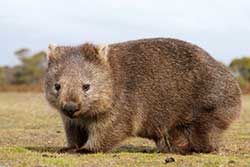
Wombats are herbivorous mammals that are often misunderstood due to their unique appearance and habits. These fascinating creatures can be found in Australia and Tasmania, but very few people know about them beyond their cute faces. In this article, we’ll delve into the world of wombats, exploring their characteristics, habitats, behaviors, and more.
What is a Wombat?
A wombat is a type of marsupial that belongs to the family Vombatidae. There are three living species of wombats: the common wombat (Vombatus ursinus), the southern hairy-nosed wombat (Lasiorhinus latifrons), and the northern hairy-nosed wombat (Lasiorhinus krefftii). Despite their size, wombats are incredibly powerful animals with strong front teeth that allow them to dig extensive tunnel systems.
Wombat Habits
Wombats are herbivores, feeding on grasses, herbs, bark, and roots. They have a unique way of eating, using their powerful incisors to chomp through tough plant material. Wombats are also skilled diggers, creating complex tunnel systems that provide them with shelter and protection.
One of the most fascinating aspects of wombat behavior is their burrowing habits. Wombats can dig extensive networks of tunnels and dens, which they use for rest, refuge, and protection from predators. These burrows can be quite elaborate, with some featuring multiple entrances and exits, as well as chambers for sleeping and storing food.
The Australian Habitat
Wombats can be found in the southeastern regions of Australia and Tasmania, inhabiting forests and grasslands far from human settlements. They have a unique adaptation to their environment, allowing them to survive in arid regions with low metabolic rates and slow movement. Despite this, wombats are capable of reaching speeds of up to 40 km/h when threatened.
The wombat’s habitat is also characterized by its lack of predators, which has allowed these animals to thrive in isolation for millions of years. This unique environment has shaped the wombat’s behavior and physiology, making them well-suited to their surroundings.
Wombat Reproduction
Female wombats give birth to a single young every two years, which stays with its mother until it’s one year old before being weaned. Adult wombats can weigh between 20-35 kilograms, with their fur varying greatly depending on the region in which they live and the type of wombat.
Wombats are also known for their complex social behavior, with females often forming close bonds with each other. These social bonds are thought to play an important role in wombat reproduction, as females will often share knowledge and resources with one another during breeding season.
Threats to Wombats
Wombats face numerous threats, including dingoes, devils, and other predators. These animals are often at risk due to habitat loss, climate change, and human activity. Conservation efforts are underway to protect these incredible creatures and their habitats.
One of the main threats facing wombats is habitat fragmentation, which occurs when natural habitats are broken up into smaller patches. This can lead to isolation and reduced access to food and shelter, making it difficult for wombats to survive in areas with fragmented habitats.
Wombat as a Plush Toy or Book Character
While wombats may not be commonly found in Italy, there are still ways to appreciate them. Wombats have become popular plush toys and book characters, providing an opportunity for people to learn about and connect with these amazing animals.
These plush toys and books often feature cute and endearing depictions of wombats, which can help to dispel common misconceptions about these animals. By sharing their unique characteristics and behaviors through media and education, we can raise awareness and appreciation for these fascinating creatures.
The Ancient Giant Wombats
Wombats have a rich history, with their ancestors being giant marsupials that lived on Earth between 55-26 million years ago. These ancient creatures were among the largest marsupials ever to exist, crossing paths with early human settlers in Australia for centuries.
The fossil record suggests that these ancient wombats were much larger than modern-day wombats, with some estimates suggesting they may have weighed as much as a small elephant. While we can only speculate about their size and behavior, it’s clear that these ancient creatures played an important role in shaping the evolution of wombat populations.
Conclusion
In conclusion, wombats are fascinating creatures that continue to capture our imagination. Through this article, we’ve explored their characteristics, habits, habitats, and more. Whether you’re interested in learning about these amazing animals or simply appreciate their unique appearance, there’s no denying the allure of the wombat.
Wombats are an important part of Australia’s ecosystem, playing a vital role in shaping the country’s unique biodiversity. By learning more about these incredible creatures, we can better understand the importance of conservation and preservation efforts aimed at protecting their habitats and populations.
Frequently Asked Questions
- What is a wombat?
A wombat is a type of marsupial that belongs to the family Vombatidae. - Where can I find wombats?
Wombats are found in Australia and Tasmania, inhabiting forests and grasslands far from human settlements. - What do wombats eat?
Wombats are herbivores, feeding on grasses, herbs, bark, and roots. - How big are wombats?
Adult wombats can weigh between 20-35 kilograms. - Are wombats endangered?
Yes, wombats face numerous threats, including habitat loss, climate change, and human activity, making them an endangered species in certain regions. - Can I have a wombat as a pet?
No, wombats are wild animals that belong in their natural habitats, not in domestic environments. - How do wombats reproduce?
Female wombats give birth to a single young every two years, which stays with its mother until it’s one year old before being weaned. - What threats do wombats face?
Wombats face numerous threats, including dingoes, devils, and other predators, as well as habitat loss, climate change, and human activity.
References
- Australian Museum: Wombat (Vombatus ursinus)
- National Geographic: Wombats
- Australian Government Department of the Environment and Energy: Wombats
- Scientific American: The Biology of Wombats
- ABC News: Wombat populations in danger due to climate change


