
Introduction
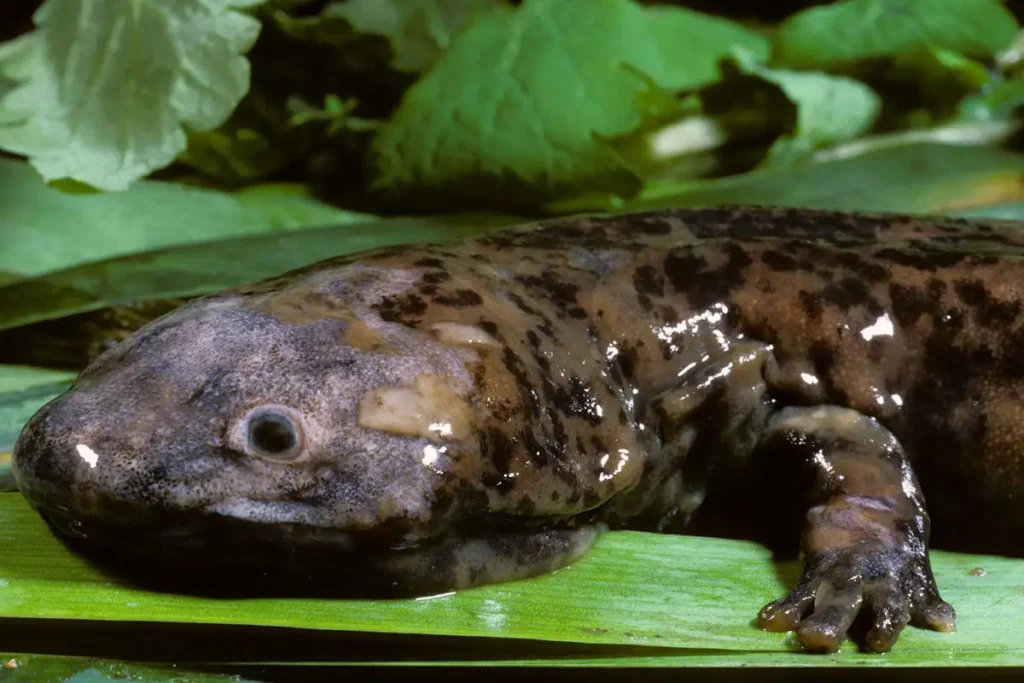
The giant salamander is not only one of the largest amphibians on Earth, but also one of the most fascinating. With a size record that’s hard to believe, this incredible creature has been studied by researchers who are determined to learn more about its behavior and characteristics.
1. Size Matters: Weighing in at 45 kg
The giant salamander can grow up to two meters long and weigh around 180 centimeters and 45 kilograms, making it one of the largest amphibians on record. If it were a human being, it would be incredibly heavy, but as an amphibian, its size is truly remarkable. Scientists have been studying this species in China, where they live, to better understand their behavior and characteristics.
2. Habitat: The Southern Subtropical Regions of China
The giant salamander can be found in the southern subtropical regions of China, including central provinces and eastern parts of the country. However, due to overhunting, these animals are now threatened with extinction. In some areas, their skin is considered a delicacy and is highly prized by locals.
3. The Study: Uncovering the Truth
Until recently, scientists believed that there was only one species of giant salamander in China, known as Andrias davidianus. However, further research has revealed that there are actually three distinct species, each with unique characteristics. By studying these animals, researchers can gain a deeper understanding of their behavior and habitat.
4. Threats to Extinction
The giant salamander is facing several threats to its survival, including overhunting for food and habitat destruction. The Chinese government has implemented measures to protect the species, but more needs to be done to ensure their long-term survival.
5. Numbers: A Glimpse into the Future
Unfortunately, recent data suggests that the giant salamander population is declining. Between 2013 and 2016, only four individuals were found in the wild, all of which were from breeding centers. However, with further research and conservation efforts, it may be possible to save this incredible species.
6. Future Studies: Uncovering the Secrets
Recent studies have revealed new insights into the giant salamander’s behavior and habitat. For example, researchers have discovered that the three species are thought to have evolved from a single ancestor around 3.1 million years ago. By studying these animals, scientists can gain a deeper understanding of their biology and ecology.
7. The Importance of Conservation
The giant salamander is an important part of its ecosystem, and conservation efforts are crucial to ensure its survival. By protecting its habitat and preventing overhunting, we can help preserve this incredible species for generations to come.
8. What Can We Learn from the Giant Salamander?
- The importance of preserving biodiversity
- The impact of human activities on wildlife populations
- The need for continued research into the biology and ecology of threatened species
9. Unique Characteristics
Giant salamanders have several unique characteristics that make them fascinating creatures. For example, they have a distinctive red or orange coloration on their underside, which helps to camouflage them in their habitat. They also have a large number of teeth, which are used for catching and eating prey.
10. Diet and Hunting Habits
Giant salamanders are carnivores and feed on a variety of animals, including fish, crustaceans, and small mammals. They use their powerful jaws and sharp teeth to catch their prey, and have even been known to eat small birds and other amphibians.
11. Habitat Requirements
Giant salamanders require specific habitat conditions to survive. They need access to fresh water, where they can breed and spawn, as well as a suitable environment for feeding and hiding. In the wild, they are found in slow-moving streams and rivers, where they can ambush prey.
12. Breeding and Spawning
Giant salamanders have a complex breeding and spawning process. They require specific water conditions, including pH, temperature, and oxygen levels, to support their reproductive cycle. Females lay hundreds of eggs, which are then fertilized by males.
13. Life Cycle
The life cycle of giant salamanders is long and complex. From egg to adult, they can take up to 20 years to mature. During this time, they undergo a series of molts, as their skin grows and adapts to their environment.
14. Conservation Efforts
Several organizations are working to protect the giant salamander and its habitat. These efforts include habitat restoration, population monitoring, and education campaigns to raise awareness about the importance of conservation.
15. What You Can Do to Help
There are several ways that you can help support the conservation of the giant salamander. For example, you can:
- Support organizations that work on giant salamander conservation
- Spread awareness about the importance of protecting this species and its habitat
- Make environmentally friendly choices in your daily life
16. The Impact of Climate Change
Climate change is having a significant impact on giant salamanders and their habitats. Rising temperatures and changing precipitation patterns are altering the distribution and abundance of their prey, making it harder for them to survive.
17. Human-Wildlife Conflict
Giant salamanders are often caught accidentally in fishing nets or other traps set by humans. This can lead to injury or death, and also disrupts local ecosystems.
18. Cultural Significance
Giant salamanders have significant cultural and spiritual importance in some communities. For example, they are considered sacred animals in some Chinese cultures.
19. Scientific Research
Scientists continue to study giant salamanders to learn more about their biology and ecology. This research can inform conservation efforts and help us better understand the impact of human activities on wildlife populations.
20. Conclusion
The giant salamander is an incredible creature that continues to fascinate scientists and conservationists alike. By learning more about its behavior, habitat, and characteristics, we can gain a deeper understanding of this amazing species and work towards ensuring its survival for generations to come.
Frequently Asked Questions
- Q: Where can I find the giant salamander?
A: The giant salamander is found in the southern subtropical regions of China, including central provinces and eastern parts of the country. - Q: Why are giant salamanders threatened with extinction?
A: Giant salamanders are threatened by overhunting for food and habitat destruction. - Q: Can I help save the giant salamander?
A: Yes, you can help by supporting conservation efforts and raising awareness about the importance of protecting this incredible species. - Q: How many species of giant salamander exist?
A: There are currently three recognized species of giant salamander, each with unique characteristics. - Q: What is the average lifespan of a giant salamander?
A: The average lifespan of a giant salamander in the wild is around 20-30 years, while in captivity it can live for up to 50 years. - Q: Can I see a giant salamander in person?
A: While it’s possible to see giant salamanders in some zoos and wildlife parks, many of these animals are protected by conservation laws and cannot be handled or kept as pets. - Q: How can I help protect the giant salamander’s habitat?
A: You can support organizations that work to protect the giant salamander’s habitat and advocate for policies that prioritize conservation efforts. - Q: Is it safe to handle a giant salamander?
A: No, it is not recommended to handle a giant salamander as they are wild animals and can carry diseases and parasites that can be transmitted to humans.


