
Air pollution is a major threat to both the environment and human health. Studies have consistently shown that its effects are far-reaching, with serious implications for our well-being. In Italy, the rate of motorization is high, leading to frequent exceedances of air quality standards.
The State of Air Quality in Italian Cities
The Istat has published data on the environmental state of our cities: in the capitals of provinces, there are 614 cars per every 1,000 inhabitants, with over half being Euro 0, I, II, and III models, which are more polluting than Euro IV and V models, which total 287.9. The vehicle density (number of vehicles per square kilometer of municipal surface area) is 725.9 vehicles per km2, with a 1.1% increase from 2010: in 49 municipalities, the density exceeds the average, with Naples having the highest value at 6,323.2, followed by Milan, Turin, Aosta, and Palermo.
The Causes of Air Pollution
Air pollution is caused by various factors, including:
- Vehicle Emissions: Cars, trucks, buses, and motorcycles emit pollutants such as particulate matter (PM), nitrogen oxides (NOx), carbon monoxide (CO), sulfur dioxide (SO2), and volatile organic compounds (VOCs).
- Industrial Activities: Factories, power plants, and other industrial activities release pollutants into the air, including PM, NOx, CO, SO2, and VOCs.
- Residential Activities: Burning of fossil fuels for heating, cooking, and electricity generation releases pollutants such as CO, CO2, and VOCs.
- Agricultural Activities: Farming practices, such as tillage and fertilizer use, can release PM, NOx, and VOCs into the air.
What is Air We Breathe?
The air we breathe is becoming increasingly polluted: since 2010, there have been a rise in days when the PM10 limit has been exceeded, from 44.6 to 54.4 days on average. The situation improves in waste management, but waste still generates high amounts of pollutants. In 2011, waste decreased by 3.1% from 609 kg per capita in 2010 to 590 kg. Recycling rates have increased slightly, with a 1.8% increase in the proportion of recycled waste among total urban waste (33.4%).
The Effects of Air Pollution
Air pollution has serious effects on human health and the environment. Some of the most significant effects include:
- Respiratory Problems: Air pollution can exacerbate respiratory conditions such as asthma, chronic obstructive pulmonary disease (COPD), and lung cancer.
- Cardiovascular Disease: Exposure to air pollution has been linked to an increased risk of cardiovascular disease, including heart attacks, strokes, and arrhythmias.
- Neurological Damage: Air pollution has been shown to cause neurological damage, including reduced cognitive function, memory loss, and anxiety.
- Cancer: Exposure to certain pollutants, such as benzene and formaldehyde, has been linked to an increased risk of cancer.
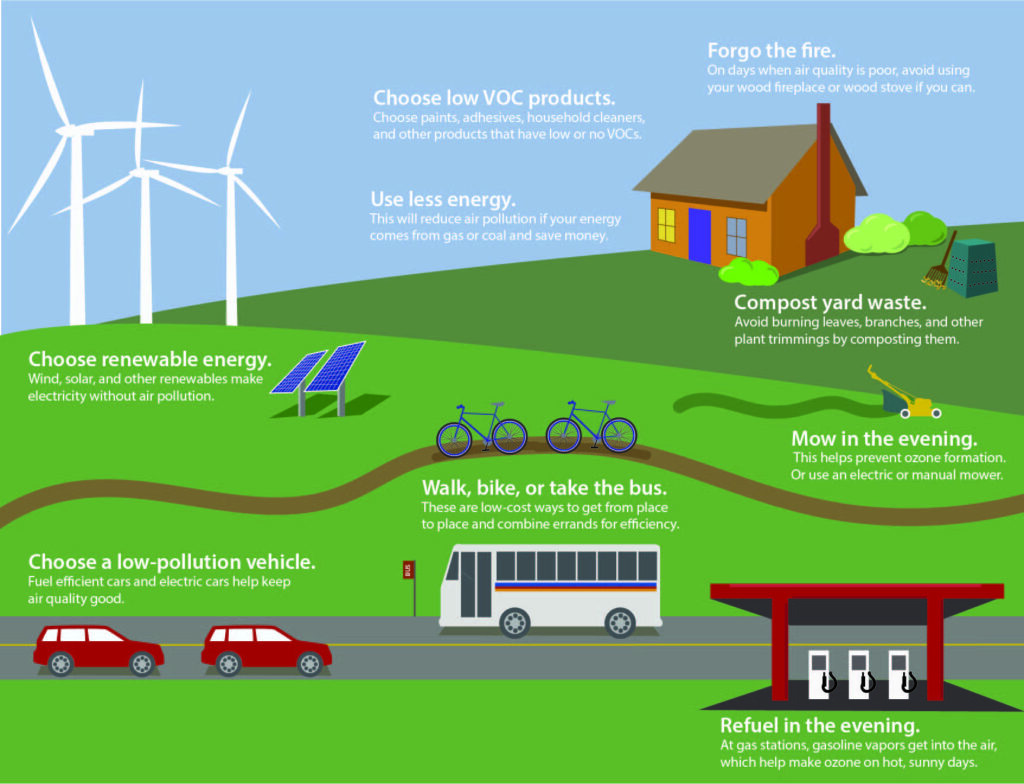
Reducing Air Pollution: Simple Steps
Using public transportation and fewer private cars could be a healthy habit for both you and the environment. Using public transport (buses, trams, metro, trains), bicycles, or even your own two feet is the best way to help the environment. Lowering the temperature in classrooms and offices by just one degree Celsius would save 10% of CO2 emissions from schools and offices.
Developing more mindful habits is also essential, such as turning off lights when not needed: switching off a light bulb that uses 60 W for five hours a day can save approximately 80 kg of CO2 in a year. Recycling paper can also reduce harmful gas emissions. Producing paper requires energy, which leads to deforestation and the use of chemicals like adhesives, whiteners, and solvents, all of which contribute to air pollution.
Another environmental concern is waste that emits significant amounts of harmful gases: for every kilogram of organic waste, 0.31 kg of methane is produced. This means it’s essential to choose products with recyclable packaging: differentiating and recycling waste results in fewer pollutants affecting the environment.
Grocery Shopping: A Simple Way to Reduce Pollution
Being mindful when shopping can also have a positive impact on the environment. Choosing products with minimal packaging, such as detergents or shampoo, is an easy step towards reducing pollution. Opting for maxi sizes for toiletries like bagnoschiuma and shampoo that have less packaging in proportion to their content can also help. Using washcloths instead of liquid soap is another eco-friendly choice.
Finally, adding some greenery to our surroundings not only improves the aesthetic but also helps remove pollutants: plants are capable of removing significant amounts of CO2, NOx, CO, SO2, O3, and other gases from the air, making them a vital part of our ecosystem.
Innovative Solutions
There are many innovative solutions being developed to reduce air pollution. Some of these include:
- Electric Vehicles: Electric vehicles are becoming increasingly popular, offering a cleaner alternative to traditional gas-powered cars.
- Biofuels: Biofuels are being used as an alternative energy source for transportation and heating.
- Carbon Capture Technology: Carbon capture technology is being developed to capture CO2 emissions from industrial sources.
- Urban Algae Farms: Urban algae farms are being established to produce biofuel and remove pollutants from the air.
Conclusion
Reducing air pollution is achievable through simple changes in our daily lives. By choosing to use public transport, lowering temperatures, developing mindful habits, and reducing waste, we can all contribute to a healthier environment. Every small step counts, and by working together, we can make a significant difference.
Frequently Asked Questions (FAQs)
- Q: What is the most effective way to reduce air pollution?
A: Using public transport or reducing private car usage is the best way to reduce air pollution. - Q: How can I lower my carbon footprint at home?
A: Lowering temperatures, using energy-efficient appliances, and switching off lights when not needed are simple steps towards reducing your carbon footprint. - Q: What can I do with waste to reduce pollution?
A: Differentiating and recycling waste is the best way to reduce pollutants affecting the environment. - Q: How does recycling paper affect air quality?
A: Recycling paper reduces harmful gas emissions by producing less energy, which leads to fewer chemicals being used. - Q: What are some simple habits I can adopt to reduce pollution?
A: Simple habits like turning off lights when not needed, using washcloths instead of liquid soap, and choosing products with minimal packaging can all contribute to reducing air pollution. - Q: Can plants really help remove pollutants from the air?
A: Yes, plants are capable of removing significant amounts of CO2, NOx, CO, SO2, O3, and other gases from the air. - Q: How can I reduce my carbon footprint when shopping?
A: Choosing products with minimal packaging, opting for maxi sizes, and using washcloths instead of liquid soap are all simple steps towards reducing your carbon footprint while shopping. - Q: What is the best way to educate others about air pollution?
A: Raising awareness through social media, sharing personal experiences, and promoting eco-friendly practices can all help educate others about the importance of reducing air pollution.
By understanding the causes of air pollution and implementing simple steps to reduce our impact on the environment, we can create a healthier world for everyone.


