
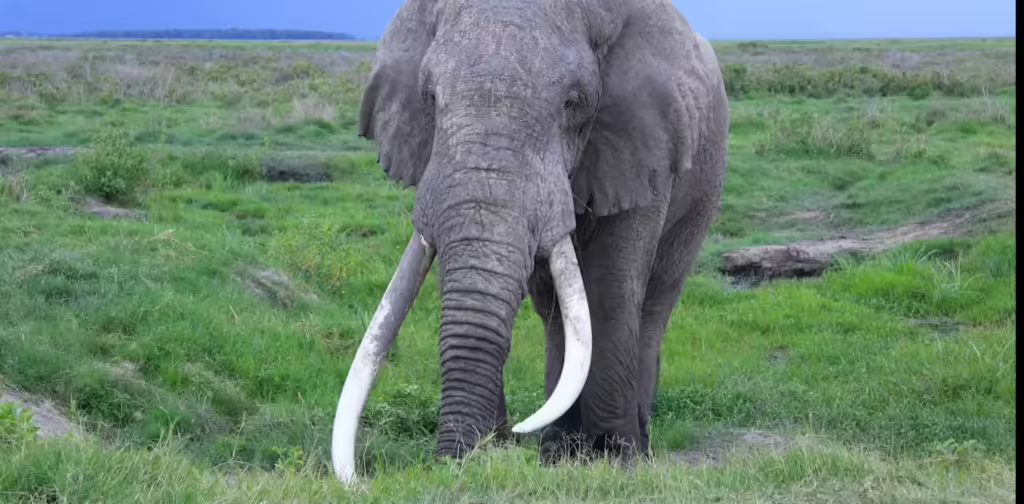
Elephants are the largest land animals on Earth, with two main species: the African elephant and the Asian elephant. Both species have tusks, but they serve different purposes and are unique to each.
Understanding Elephant Tusks and Their Importance
Elephant tusks are one of the most recognizable features of these magnificent creatures. However, their significance extends far beyond their aesthetic appeal. In the Asian elephant, tusks are a sign of masculinity. Only male elephants grow tusks, while females do not. In contrast, the African elephant has large, enormous tusks that can reach up to 2-3 meters in length.
African elephants and Asian elephants also differ in their habitats. African elephants live in sub-Saharan forests and savannas, while Asian elephants inhabit southern Asia, including India, China, and Indonesia.
Elephants Without Tusks: A Growing Concern
It’s clear that among elephants without tusks are female Asiatic elephants, but not only. In Mozambique, elephant calves are being born without tusks. The news released by National Geographic relates the absence of elephant tusks to evolutionary selection with species selection. For geneticists, biologists, and evolutionists, it’s no surprise.
This phenomenon is a result of natural selection, where genes that contribute to the growth of tusks become less prevalent in populations that do not need them. In other words, elephants without tusks are more likely to survive and reproduce, passing on their genes to their offspring.
The Human Factor: Bracken Hunting
Human intervention is an external factor that can significantly influence the selection of certain genes. The main cause of death among elephants is the hunt for ivory. It’s estimated that around 20,000 African elephants are killed every year.
This brutal practice has devastating consequences on elephant populations and ecosystems. Without their tusks, these magnificent creatures become more vulnerable to predators, have reduced mobility, and struggle to find food and water.
The Closure of the Ivory Market
In 1989, the international market for ivory was closed. However, this closure has been only temporary. In 2007, South Africa, Namibia, Botswana, and Zimbabwe (four African countries) managed to get permission from CITES (the organization that regulates the global trade in endangered species) to sell ivory legally to China.
The permit allowed only the sale of stockpiled tusks accumulated over the past twenty years. Unfortunately, this “permit” became a spark that ignited the black market for ivory with an increase in poaching, today one of the main causes of elephant extinction.
A Threat to Elephants: The Impact on Ecosystems
The loss of elephants with tusks would have unforeseen consequences on entire ecosystems and not just those affected by the mutation. Without tusks, future generations of elephants may lead to a ripple effect throughout the ecosystem.
This is because elephants play a vital role in shaping their environments through their digging, feeding, and social behavior. They help disperse seeds, create waterholes, and maintain forest structures, all of which are crucial for maintaining biodiversity and ecosystem health.
How Large Are Elephants?
African elephants can weigh up to 6,000 kg and reach heights of over 4 meters. Asian elephants are smaller and have larger ears and grayer skin, as well as longer tusks in both sexes.
Elephant size is closely related to their body mass, which is influenced by factors such as diet, habitat, and social behavior. In general, larger elephants tend to live longer and reproduce more successfully, ensuring the continuation of their species.
The Size of Elephant Tusks
Elephant tusks grow around 16-17 cm per year and never stop growing throughout an elephant’s lifetime. Unfortunately, due to poaching, it is difficult to find elephants with very long tusks in the wild. The longest tusks measured were about 350 cm, roughly twice the length of a human.
Tusk growth rates are influenced by factors such as age, sex, and nutrition. Elephants that live in areas with abundant food resources tend to grow longer tusks than those that do not.
The Composition and Value of Tusks
Elephant tusks are composed of ivory, a compact and resistant material. Ivory has a white-cream color, a translucent appearance, and is highly valued as a luxury item.
Ivory has been used for centuries in jewelry, decorative items, and musical instruments. However, its value comes at a terrible cost, driving the demand for elephant tusks and leading to widespread poaching and habitat destruction.
What Do Elephants Eat?
Elephants are herbivores. They feed on grasses, leaves, branches, fruits, flowers, roots, bulbs, and seeds… Elephants eat an enormous amount of food in a single day, consuming up to 150 kg of vegetation alone.
They also drink plenty of water: one elephant can drink up to 200 liters of water per day. This massive water consumption is necessary for maintaining their body temperature and regulating their digestive system.
Conservation Efforts
Despite the challenges posed by poaching and habitat loss, there are many organizations, governments, and conservation efforts working tirelessly to protect elephants from ivory poaching.
Some notable initiatives include:
- CITES (the Convention on International Trade in Endangered Species of Wild Fauna and Flora) regulates the global trade in endangered species, including elephants.
- The African Elephant Crisis Plan aims to reduce elephant poaching and habitat loss through a combination of law enforcement, community engagement, and conservation efforts.
- The Wildlife Conservation Society (WCS) works to protect elephant habitats and populations, while also engaging local communities in conservation efforts.
Conclusion
The truth about the tragic loss of elephant tusks is a stark reminder of the devastating impact on these magnificent creatures and their ecosystems. The ivory trade threatens to lead to extinction, but by understanding the role of elephants in their environments, we may yet find a way to protect them.
Ultimately, the survival of elephants depends on our ability to adopt sustainable practices and policies that prioritize conservation over exploitation. By working together, we can ensure the long-term preservation of these incredible creatures and the ecosystems they inhabit.


