
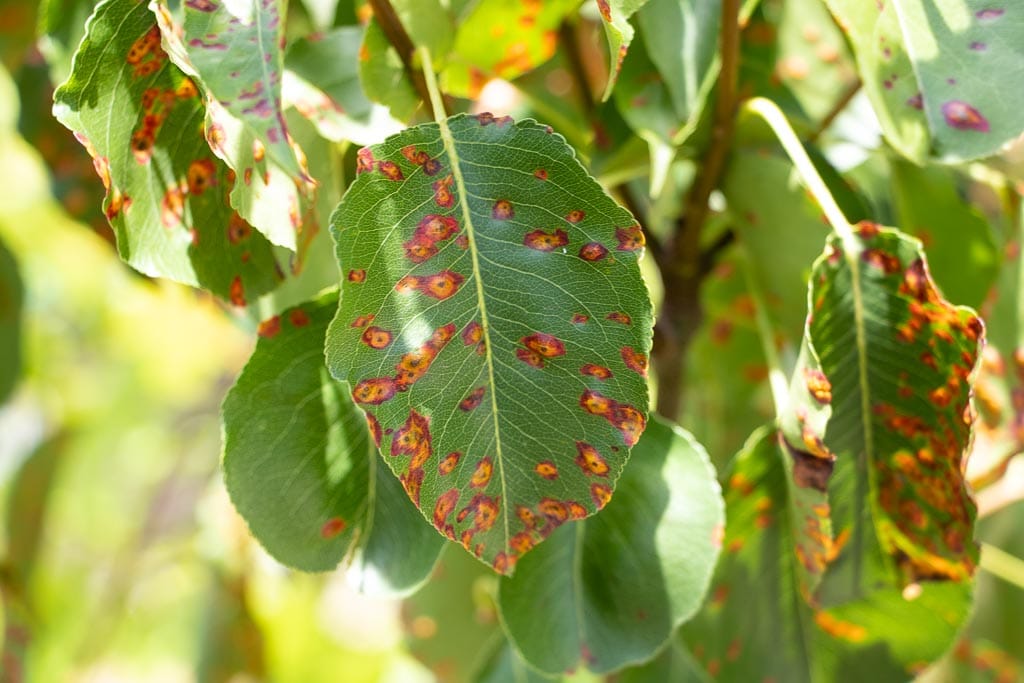
As a fruit tree enthusiast, you may have encountered the brown spots disease on your pear trees. This common problem in the Mediterranean region can cause significant damage to the tree’s leaves, fruits, and overall health. In this article, we will delve into the causes, symptoms, and management strategies for this pesky pest.
What is Brown Spots Disease?
Brown spots disease (BSD) is a fungal infection caused by the fungus Moniliale vesicarium (Wallr.) Simm., which belongs to the genus Stemphylium. This disease affects various plant species, including pear trees (Pyrus communis L.), as well as other fruits like garlic, onions, and mangoes.
Symptoms of Brown Spots Disease
The symptoms of BSD appear on infected trees during the spring, typically between May and June. The first signs are small, dark spots on the leaves, which gradually expand and merge to form larger, necrotic lesions. The affected areas often turn brown or black, hence the name “brown spots disease.” The fungus also infects the tree’s roots, causing damage to the overall health of the plant.
Impact of Brown Spots Disease on Pear Trees
The brown spots disease can have devastating effects on pear trees. In severe cases, up to 90% of the fruit production may be lost due to the spread of the disease. The affected areas often become covered with lesions, which can lead to a significant reduction in the tree’s productivity.
Distribution and Prevalence
Brown spots disease is widely distributed throughout the Mediterranean region, including Italy, Spain, France, and other European countries. It has been present in these regions for decades, with reported cases dating back to the 1970s.
Causes of Brown Spots Disease
The exact cause of brown spots disease is still not fully understood. However, research suggests that the fungus Moniliale vesicarium produces two types of toxins: HST (host-specific toxin), which is responsible for the initial infection, and SVI and SVII, which contribute to the progression of the disease.
Management Strategies
While there are no foolproof methods for eliminating brown spots disease completely, various management strategies can help control its spread and reduce damage to pear trees. These include:
1. Fungicides
A range of fungicides have been developed to combat brown spots disease, with some products showing efficacy levels as high as 70%. It is essential to choose the right fungicide for the specific needs of your tree.
- Copper-based fungicides: Copper compounds are effective against brown spots disease and can be applied as a foliar spray or soil drench.
- Chlorothalonil fungicides: Chlorothalonil is another common fungicide used to control brown spots disease. However, it may not be suitable for use on organic farming systems due to its potential impact on beneficial microorganisms.
2. Integrated Pest Management (IPM)
IPM involves a combination of cultural, physical, and chemical controls to manage pest populations. This approach can help reduce the spread of brown spots disease and promote overall tree health.
- Cultural practices: Maintaining good air circulation around the tree, pruning infected areas, and applying mulch around the base of the tree can help prevent the spread of the disease.
- Physical controls: Removing affected leaves or fruits can help reduce the spread of brown spots disease. However, be careful not to damage healthy tissues while removing infected material.
3. Biological Control Agents
Biological control agents like Trichoderma harzianum have shown promise in controlling brown spots disease. These microorganisms can be applied to the tree’s roots or leaves to stimulate its natural defense mechanisms.
- Trichoderma harzianum: This biological control agent has been shown to reduce the severity of brown spots disease by 50-60%. However, its effectiveness may vary depending on the specific growing conditions and weather patterns.
- Bacillus subtilis: Bacillus subtilis is another biological control agent that can help manage brown spots disease. It works by producing antimicrobial compounds that inhibit the growth of the fungal pathogen.
Conclusion
Brown spots disease is a significant pest that can cause significant damage to pear trees. By understanding the causes, symptoms, and management strategies for this disease, you can take steps to protect your trees from infection. Remember to consult with a professional arborist or tree care expert if you suspect that your pear tree is infected.
Frequently Asked Questions (FAQs)
1. Q: Can brown spots disease be spread through water?
A: No, the fungus Moniliale vesicarium can survive for short periods outside of water but does not thrive in it.
2. Q: How often should I apply fungicides to my pear tree?
A: The frequency of application depends on the specific fungicide used and the severity of the disease. Consult with a professional arborist or tree care expert for guidance.
3. Q: Can brown spots disease be controlled through cultural practices alone?
A: While cultural practices can help reduce the spread of brown spots disease, they may not be enough to completely control its spread. Fungicides and other chemical controls may still be necessary in severe cases.
4. Q: Are there any biological control agents available for brown spots disease?
A: Yes, Trichoderma harzianum is a recognized biological control agent that can help manage brown spots disease. Consult with a professional arborist or tree care expert to determine the best course of action for your specific situation.
5. Q: Can I grow pear trees in areas where brown spots disease is prevalent?
A: While it may be challenging to completely eliminate the risk of brown spots disease, choosing disease-resistant varieties and following proper management strategies can help minimize its impact on your tree’s health. Consult with a professional arborist or tree care expert for guidance on selecting disease-resistant pear trees.
References
- “Brown Spots Disease of Pear” by the European Association of Fruit Trees.
- “Fungicides for Brown Spots Disease Control” by the University of California, Davis.
- “Biological Control Agents for Brown Spots Disease Management” by the USDA’s Animal and Plant Health Inspection Service.


