
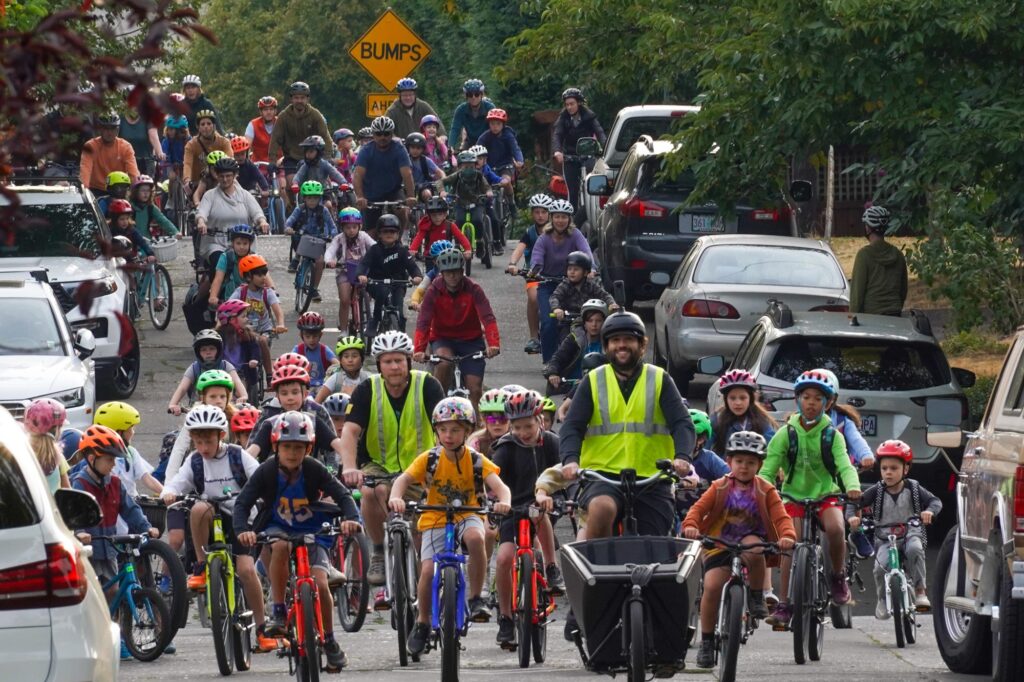
As we’ve seen with the popularity of cycling in Milan, it’s time to bring a new innovation to the table – the bicibus. This Dutch concept is gaining attention worldwide, and Italy may soon follow suit. The bicibus promises to revolutionize transportation for young people, offering a unique blend of eco-friendliness, social interaction, and physical activity.
What is the Bicibus?
At first glance, the bicibus looks like a modern take on ancient horse-drawn carriages. It’s a zero-emission vehicle that challenges traditional notions of obesity in children, particularly in southern Italy where rates are alarmingly high. By providing an alternative to cars and buses, the bicibus encourages physical activity and healthy development in young minds.
The bicibus is designed to be a fun and engaging way for children to get around their communities. It’s perfect for short trips to school or home, and can even be used as a mode of transportation for longer journeys with multiple stops. The design is sleek and stylish, making it a great addition to any neighborhood.
How Does it Work?
Imagine a rickshaw with multiple pedals – that’s basically what the bicibus is. Designed for children aged 4-11, these vehicles can carry up to 12 passengers and are perfect for daily commutes to school or home. Users pedal together as a group, enjoying social time while getting some exercise.
The bicibus operates on human power alone, making it an environmentally friendly option that produces no emissions or greenhouse gases. This means that parents can rest easy knowing that their children are not only having fun but also contributing to a healthier environment.
History of the Bicibus
This innovative concept originated in the Netherlands, where cycling is an integral part of everyday life. The bicibus has gained popularity in neighboring countries like Belgium and Germany, with over 25 units sold so far. Italy may soon follow suit, especially in cities like Bolzano and Mestre, which boast excellent cycling infrastructure.
The bicibus has been gaining attention from schools, communities, and local governments, who see it as a unique opportunity to promote physical activity, social interaction, and environmental sustainability. As the demand for eco-friendly transportation options continues to grow, it’s likely that we’ll see more cities adopting this innovative technology.
Why Choose the Bicibus?
The bicibus offers several benefits:
• Environmental Benefits: Zero emissions mean no pollution or greenhouse gas production.
• Physical Activity: Pedaling together encourages kids to stay active and healthy.
• Social Interaction: The bicibus fosters social bonding among riders.
• Cost-Effective: No fuel costs or maintenance required.
In addition to these benefits, the bicibus also offers a unique opportunity for children to develop important life skills such as teamwork, communication, and problem-solving. By working together to pedal their way around town, kids can build strong relationships with their peers and develop a sense of camaraderie that’s essential for success in all areas of life.
The Future of Transportation
As we consider the future of transportation, it’s essential to think creatively about how we can make a positive impact on our environment and public health. The bicibus represents a step in this direction, offering an engaging and healthy alternative to traditional vehicles.
With its focus on eco-friendliness, physical activity, and social interaction, the bicibus is well-positioned to become a leader in the transportation industry. As cities continue to grapple with the challenges of climate change and urbanization, innovative solutions like the bicibus will be increasingly important.
Conclusion
In conclusion, the bicibus is an exciting innovation that deserves attention from cities worldwide. Its unique blend of eco-friendliness, physical activity, and social interaction makes it an attractive option for young people and their communities. With its Dutch roots and growing popularity in neighboring countries, Italy may soon join the ranks of cities embracing this revolutionary mode of transportation.
FAQs
- What is the typical age range for bicibus riders?
The recommended age range is 4-11 years old. - How many passengers can a bicibus carry?
Up to 12 passengers are accommodated in each bicibus. - Is the bicibus environmentally friendly?
Yes, it has zero emissions and produces no greenhouse gases. - What is the cost of purchasing a bicibus?
The price ranges from €11,500. - Can anyone ride a bicibus?
Children aged 4-11 are recommended riders; adult supervision is required for younger children. - Is the bicibus suitable for long-distance travel?
While designed for short trips, it’s possible to use the bicibus for longer journeys with multiple stops. - How much maintenance does a bicibus require?
Minimal maintenance is needed, as it relies on human power and no fuel. - Can I customize my bicibus?
The standard design is available; however, customization options may be explored in the future.
Additional Resources
For more information about the bicibus and its potential applications in Italy, please visit our website or contact us directly. We’re committed to spreading the word about this innovative technology and helping cities around the world make the transition to a healthier, more sustainable transportation system.
Case Studies: How Cities Are Adopting the Bicibus
- Amsterdam: The city’s mayor has announced plans to introduce the bicibus as a new mode of transportation for its residents.
- Berlin: Berlin’s transportation department is exploring partnerships with local schools and community groups to promote the use of bicycles in urban areas.
- Stockholm: Sweden’s capital city is set to become one of the first cities in Europe to adopt the bicibus, with plans to introduce it as a regular part of its public transportation system.
The Bicibus: A Solution for Urban Planning
As cities continue to grow and evolve, urban planners are facing new challenges in terms of providing safe, efficient, and sustainable transportation options. The bicibus offers a unique solution to these challenges, providing an innovative way to promote physical activity, social interaction, and environmental sustainability.
By incorporating the bicibus into its urban planning strategy, cities can help reduce traffic congestion, improve air quality, and create more livable communities for their residents. With its focus on eco-friendliness, physical activity, and social interaction, the bicibus is well-positioned to become a key component of future transportation systems.
Challenges and Opportunities
While the bicibus has shown great promise as a solution to urban transportation challenges, there are still several obstacles that need to be addressed. These include:
- Safety concerns: Ensuring that children can ride the bicibus safely while sharing the road with cars and other vehicles.
- Infrastructure requirements: Providing designated bike lanes or routes for the bicibus to operate on.
- Maintenance and repair: Regular maintenance is essential to ensure that the bicibus operates smoothly and efficiently.
Despite these challenges, there are also many opportunities for growth and innovation. By working together to address these obstacles and capitalize on the benefits of the bicibus, we can create a healthier, more sustainable transportation system for cities around the world.
Conclusion
In conclusion, the bicibus is an exciting innovation that has the potential to revolutionize urban transportation systems worldwide. With its unique blend of eco-friendliness, physical activity, and social interaction, it’s an attractive option for young people and their communities. As we move forward in our efforts to create a more sustainable future, the bicibus will undoubtedly play an important role.
Future Developments
We’re excited to share some future developments that are already underway:
- New designs: Our team is working on new designs for the bicibus, incorporating feedback from users and community members.
- Increased production capacity: We’re expanding our manufacturing capacity to meet growing demand and provide more units to cities around the world.
- Expanded applications: We’re exploring new applications for the bicibus, including use in schools, universities, and other educational settings.
Stay tuned for more updates on these developments and others as they become available. Thank you for joining us on this exciting journey into the future of urban transportation!


