
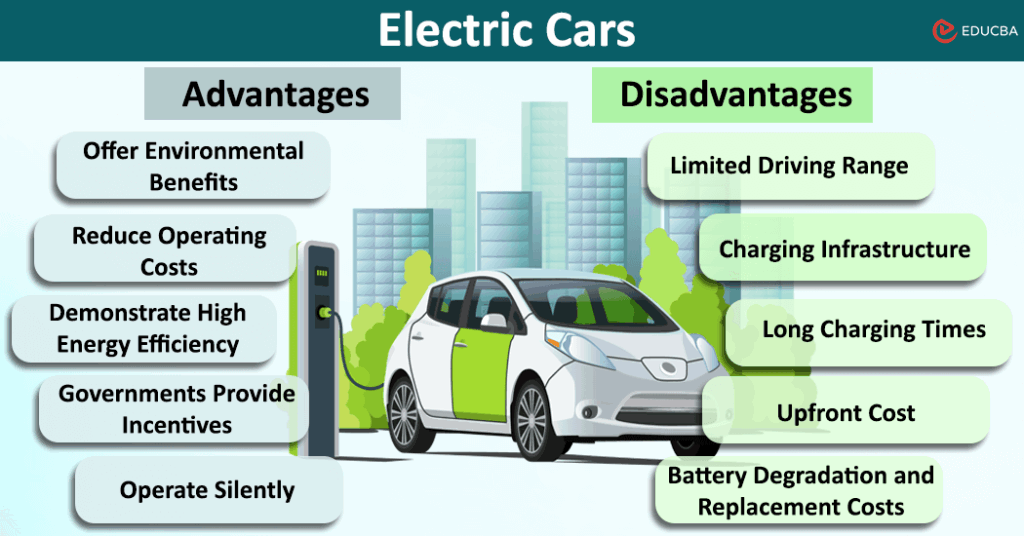
The electric vehicle (EV) market is gradually but steadily gaining traction across the globe. Thanks to technological advancements, car manufacturers are introducing more efficient and performant models, with prices becoming increasingly competitive with those of gasoline-powered vehicles.
In this article, we will explore the key advantages and disadvantages of electric vehicles, based on current trends and the perspective of IdeeGreen S.r.l., a Benefit Society company where environmental considerations play an increasingly important role in our consumption decisions.
Content
- Zero Direct Emissions
- Lower Maintenance Costs
- Access to Traffic-Constrained Areas
- Long-Term Savings
- Lower Insurance and Toll Costs
- Higher Upfront Purchase Cost
- Limited Range and Charging Infrastructure
- Electric Vehicles: Many Advantages, Few Disadvantages
Zero Direct Emissions
One of the most significant advantages of electric vehicles is that their engines do not emit direct pollutants. The combustion engine’s byproducts include carbon monoxide (CO), hydrocarbons (HC), nitrogen oxides (NOx), sulfur oxides (SOx), and particulate matter (PM). These substances are toxic to both the environment and human health.
In contrast, electric vehicles run on electricity from a battery, producing no emissions. However, studies have shown that indirect emissions during production and distribution remain relatively low due to efforts to switch to cleaner technologies. Most experts agree that even considering the entire lifecycle, EVs emit significantly less CO2 (25-30% less) than traditional gasoline-powered vehicles.
Lower Maintenance Costs
Electric vehicles use a battery as their primary energy source, which is far simpler in design compared to internal combustion engines with multiple components like pistons, cylinders, radiators, and exhaust systems. These spare parts require regular maintenance, leading to increased costs over time.
Examples of components found in gasoline-powered vehicles that are absent from electric vehicles include the cylinder head, piston, exhaust system, radiator, spark plugs, and more.
Access to Traffic-Constrained Areas
The growing concern about air quality has led many cities to implement traffic restrictions. Zones with limited access for polluting vehicles are becoming increasingly common. Electric vehicles can freely navigate these areas, as they produce zero emissions.
Here’s an image of a zone with limited access for polluting vehicles:
Long-Term Savings
The cost of owning and operating an electric vehicle is generally lower than that of gasoline-powered cars. The electricity used to charge EVs costs significantly less than the fuel required by traditional vehicles. For instance, the smart EQ fortwo can travel 100 km for just €4.50.
Calculations based on a medium energy price and Italy’s effective tariff for electricity provide this example:
- Consumption (combined): 16.5-14 kWh/100 km (NEDC)
- Emissions (combined): 0 g/km
- Consumption (combined, WLTP): 19.3-15.6 kWh/100 km
- Emissions (combined): 0 g/km
Lower Insurance and Toll Costs
Insurance premiums for electric vehicles are often lower than those for traditional gasoline-powered cars due to the reduced risk of accidents and lower repair costs.
Additionally, EVs usually have a reduced toll burden. The Italian government has announced plans to exempt EVs from toll charges for five years following registration and provide discounted rates thereafter.
Higher Upfront Purchase Cost
While the cost of owning an electric vehicle is often lower than that of gasoline-powered cars, the initial purchase price can be higher due to advancements in technology and manufacturing costs.
Limited Range and Charging Infrastructure
A key disadvantage of electric vehicles is their limited range (typically 200-300 miles) before needing recharging. This can make long-distance travel challenging without access to charging infrastructure.
However, charging stations are increasingly becoming more widespread, with many businesses and governments investing in expanding the network.
Electric Vehicles: Many Advantages, Few Disadvantages
When considering all aspects, it becomes clear that the advantages of electric vehicles outweigh their disadvantages. Their environmental impact is significantly reduced compared to traditional gasoline-powered cars. While there are some drawbacks like higher upfront costs, limited range, and charging infrastructure issues, advancements in technology and growing investment in charging infrastructure should alleviate these concerns.
As manufacturers continue to develop more efficient models with increasingly competitive pricing, electric vehicles will become an even more appealing choice for environmentally conscious consumers.
FAQs
- How do electric vehicles reduce emissions?
- What are the long-term savings of owning an electric vehicle?
- Are there any environmental benefits from manufacturing electric vehicles?
- Can electric vehicles be charged at home or are charging stations necessary?
- Do electric vehicles require more maintenance than gasoline-powered cars?
- How do electric vehicles impact air quality in urban areas?
- What are the primary advantages and disadvantages of owning an electric vehicle?
- Are electric vehicles becoming more accessible due to decreasing costs?
Electric Vehicle Manufacturers
There is a growing competition among car manufacturers, as they race to produce environmentally friendly models with lower prices.
Some examples of leading electric vehicle manufacturers include:
- Tesla: The pioneering company behind the Tesla Model S and Model 3, offering high-performance and long-range EVs.
- Nissan: With their Leaf model, Nissan has been a prominent player in the EV market for years.
- Hyundai/Kia: These Korean automakers have committed to an all-electric future, with plans to release numerous models in the coming years.
Government Incentives and Regulations
Governments worldwide are implementing policies and incentives to promote the adoption of electric vehicles. Some notable examples include:
- Charging Infrastructure Incentives: Many governments offer subsidies or tax breaks for businesses investing in charging infrastructure.
- Zero Emission Zones (ZEZs): Cities around the world are establishing ZEZs, restricting access to polluting vehicles and promoting EV adoption.
- Low-Emission Vehicle (LEV) Credits: Governments provide incentives for manufacturers producing low-emission vehicles.
As governments continue to encourage sustainable transportation options, electric vehicles will play an increasingly important role in reducing our reliance on fossil fuels and mitigating climate change.


