
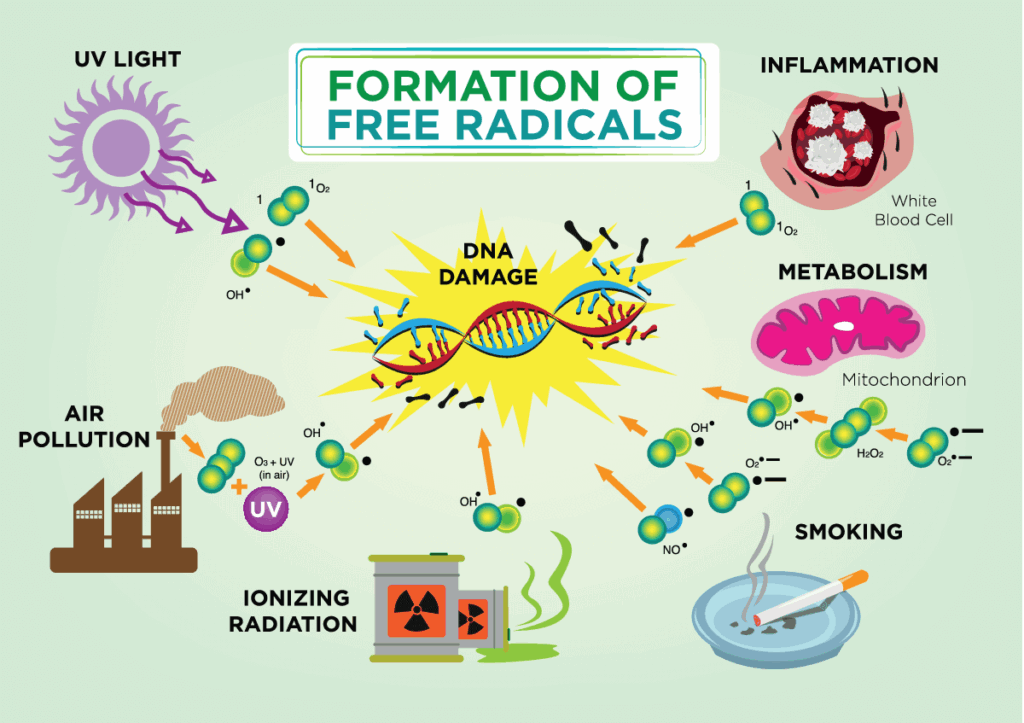
Radical free radicals, often mentioned in discussions about aging, but rarely accurately explained. What role do they play, and why are they worth fighting against? Let’s delve into the world of these tiny molecules to understand their impact on our bodies.
What Are Radical Free Radicals?
When we talk about radical free radicals, we’re referring to a type of molecule that is highly reactive due to an unpaired electron in its outer orbit. This electron “single” makes them unstable and prone to seeking a new balance by stealing an electron from a nearby atom. As a result, they create a chain reaction of unstable molecules that can damage our cellular structures over time.
Our bodies cannot prevent the formation of radical free radicals but have mechanisms to defend themselves and mitigate their negative effects.
The Link Between Radical Free Radicals and Aging
Radical free radicals are directly linked to aging, as they contribute to the stress oxidative process. When we’re under stress, our bodies can’t effectively oppose the proliferation of endogenous radicals, leading to significant cellular damage.
In a state of oxidative stress, we may experience memory problems, reduced concentration, sleep disturbances, decreased libido and muscle mass, weakened immune systems, and an increased risk of cardiovascular disease. We have less energy, are more susceptible to stress, anxiety, and depression.
Radical Free Radicals and Skin
The skin is another area affected by the unchecked action of radical free radicals, resulting in wrinkles and discoloration. Acne is also a consequence of this process. As we age, our skin becomes thinner and loses its natural elasticity, making it more susceptible to damage from UV radiation.
When we’re exposed to UV radiation, our skin’s natural barrier function breaks down, allowing free radicals to penetrate the skin and cause oxidative stress. This leads to an increase in collagen breakdown, which can result in wrinkles and age spots.
Radical Free Radicals and Hair
Just like the skin, our hair is also affected by the aging process brought about by radical free radicals, leading to premature graying and hair loss. The scalp’s natural oils are essential for maintaining healthy hair growth, but when these oils become damaged due to oxidative stress, it can lead to hair loss.
Combating Radical Free Radicals
To combat them, we must address the factors believed to contribute to their production. Some are environmental, while others are endogenous. The first group includes pollution, substance abuse, smoking, excessive alcohol consumption, and exposure to UV radiation and ionizing radiation.
We can also limit their action by consuming a balanced diet rich in antioxidants such as berries, dark chocolate, citrus fruits, spinach, kale, and olive oil. Among these, olive oil is particularly beneficial due to its high content of phenols.
Exercise and Radical Free Radicals
A healthy lifestyle includes regular physical activity, which helps boost our immune systems against radical free radicals. Studies have shown that athletes tend to look more youthful than their non-athletic counterparts of the same age.
Regular exercise can also help reduce inflammation in the body, which is a key factor in the development of oxidative stress. Exercise has also been shown to increase the production of antioxidants within our bodies.
Natural Remedies Against Radical Free Radicals
There are numerous natural remedies that can help combat aging. While we can’t reverse time completely, these remedies may slow down certain processes. For example, consuming Goji berry supplements or taking Goji berry powder has been shown to have anti-aging effects on the skin.
Amazon offers a product bearing its brand name. Amazon’s Goji Berry Product Review
Here is an image of Amazon’s dried Goji Berries with their packaging.
Conclusion
Understanding radical free radicals is crucial in comprehending how aging occurs. They can have devastating consequences if left unchecked, but there are ways to combat them. By adopting a healthy lifestyle and incorporating natural remedies into our daily routine, we may be able to mitigate some of the damage caused by these tiny molecules.
In addition to the benefits mentioned above, radical free radicals also play a significant role in various diseases such as cancer, Alzheimer’s disease, Parkinson’s disease, and other neurodegenerative disorders. Understanding their impact on our bodies can help us develop new treatments for these diseases.
Frequently Asked Questions
-
What causes radical free radicals?
Radical free radicals are created when an atom has an unpaired electron in its outer orbit, making them highly reactive and prone to seeking a new balance through stealing electrons from nearby atoms. -
How do radical free radicals affect the skin?
The unchecked action of radical free radicals can lead to wrinkles and discoloration on the skin due to their oxidative effects. -
What are some ways to combat radical free radicals?
Combating radical free radicals involves addressing environmental and endogenous factors that contribute to their production, such as pollution, substance abuse, smoking, excessive alcohol consumption, exposure to UV radiation and ionizing radiation, and adopting a balanced diet rich in antioxidants. -
Can exercise help reduce the effects of radical free radicals?
Yes, regular physical activity can boost our immune systems against radical free radicals by enhancing overall health and well-being. -
What is the role of antioxidants in combating radical free radicals?
Antioxidants play a crucial role in neutralizing oxidative stress caused by radical free radicals and help protect cells from damage. -
Are there any natural remedies that can help combat aging?
Yes, consuming foods rich in antioxidants such as Goji berries, spinach, kale, olive oil, and citrus fruits can help reduce the effects of radical free radicals on our bodies. -
Can radical free radicals be reversed completely?
While we cannot reverse time completely, incorporating natural remedies into our daily routine may slow down certain processes related to aging caused by radical free radicals. -
How can I start reducing my exposure to radical free radicals in my daily life?
Reduce your intake of harmful substances and adopt a balanced lifestyle that includes regular physical activity, a healthy diet rich in antioxidants, and sufficient sleep.


