
Introduction
Sunflower seeds are a nutrient-rich food that offers numerous health benefits. These small, crunchy seeds are packed with vitamins, minerals, and healthy fats, making them an excellent addition to a balanced diet. In this article, we will delve into the world of sunflower seeds, exploring their nutritional value, culinary uses, and cultural significance.
What Are Sunflower Seeds?
Sunflower seeds come from the species Helianthus annuus, a type of annual plant native to North America. The seeds are sold in two main varieties: black sunflower seeds and striped sunflower seeds (also known as white and black). Both types have the same nutritional profile.
History of Sunflower Seeds
Sunflowers have been cultivated for over 3,000 years, with evidence of sunflower seeds being used by ancient civilizations such as the Aztecs and Incas. They were also an important crop in Eastern Europe, where they were grown for their oil and meal. In the United States, sunflowers became a popular crop in the late 19th century, particularly in states like North Dakota and South Dakota.
Nutritional Benefits
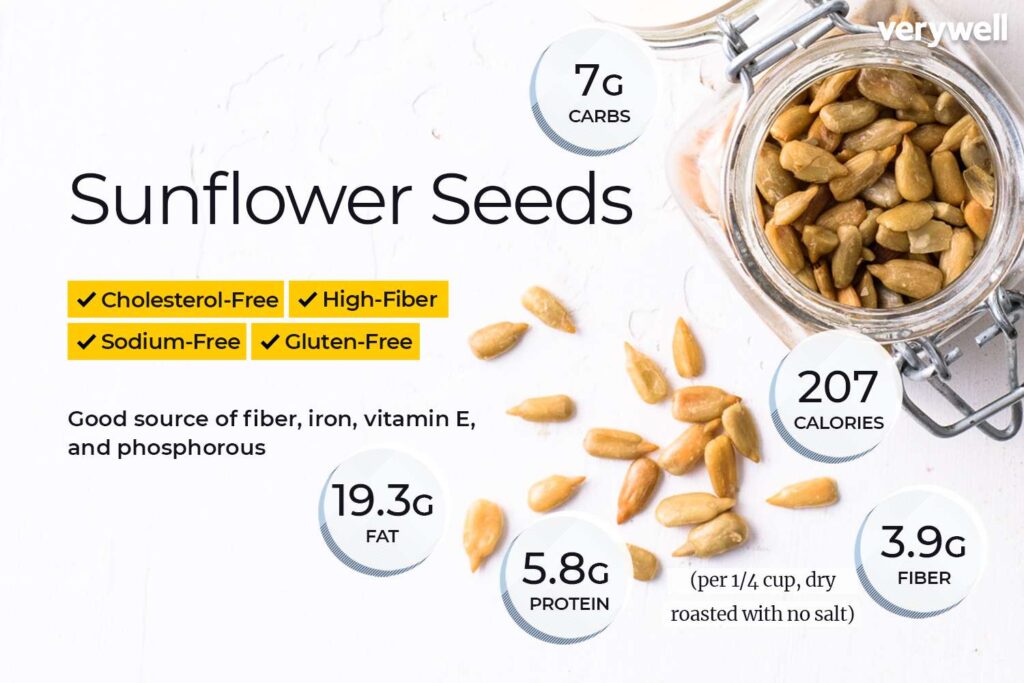
Sunflower seeds are an excellent source of nutrients, including:
- All nine essential B vitamins
- High amounts of Vitamin E
- Good amounts of protein
- A unique fatty acid profile, with a predominance of monounsaturated and polyunsaturated fats
One 100g serving of sunflower seeds provides:
- 584 kcal energy
- 20g carbohydrates
- 2.62g sugars
- 8.6g dietary fiber
- 51.46g fat
- 4.45g saturated fat
- 18.528g monounsaturated fat
- 23.137g polyunsaturated fat
- 20.78g protein
- Vitamins:
- Thiamin (Vitamin B1): 1.48mg
- Riboflavin (Vitamin B2): 0.355mg
- Niacin (Vitamin B3): 8.335mg
- Pantothenic acid (Vitamin B5): 1.13mg
- Vitamin B6: 1.345mg
- Folate (Vitamin B9): 227mcg
- Colina: 55.1mg
- Vitamin C: 1.4mg
- Vitamin E: 35.17mg
- Minerals:
- Calcium: 78mg
- Iron: 5.25mg
- Magnesium: 325mg
- Manganese: 1.95mg
- Phosphorus: 660mg
- Potassium: 645mg
- Sodium: 9mg
- Zinc: 5mg
Culinary Uses
Sunflower seeds are a versatile ingredient that can be used in various dishes, from snacks to main courses. They can be:
- Eaten as a snack between meals or used as an ingredient in salads, sandwiches, and wraps.
- Used as a topping for yogurt, oatmeal, or smoothie bowls.
- Added to homemade granola or energy bars.
- Used as an ingredient in baked goods, such as bread, muffins, and cakes.
Sunflower Seeds in Different cuisines
Sunflower seeds are a popular ingredient in many different cuisines, including:
- Mediterranean cuisine: Sunflower seeds are often used in Greek salads, pasta dishes, and as a topping for flatbreads.
- Middle Eastern cuisine: Sunflower seeds are commonly used in falafel, shawarma, and other street foods.
- Asian cuisine: Sunflower seeds are used in Chinese cuisine to add crunch to noodles and stir-fries.
Health Benefits of Sunflower Seeds
Sunflower seeds offer numerous health benefits, including:
- Supporting heart health by reducing cholesterol levels and improving blood flow
- Providing antioxidant properties that can help protect against cell damage and cancer
- Supporting bone health by providing calcium and other minerals
- Aiding in weight management due to their high fiber content
Growing Your Own Sunflowers
If you have the space, growing your own sunflowers can be a rewarding experience. Here are some tips for growing sunflowers:
- Choose a sunny location with well-draining soil.
- Plant seeds 1 inch deep and 6 inches apart in late spring or early summer.
- Water regularly and provide support for tall sunflowers.
Conclusion
Sunflower seeds offer a wealth of nutritional benefits and culinary uses, making them an excellent addition to a balanced diet. Whether you enjoy them as a snack, use them in recipes, or incorporate them into your meals, sunflower seeds are sure to become a staple in your pantry.
Frequently Asked Questions
- Q: Are all sunflower seeds created equal?
A: No, not all sunflower seeds are created equal. Black sunflower seeds and striped sunflower seeds (white and black) have the same nutritional profile. - Q: Can I roast sunflower seeds at home?
A: Yes, you can roast sunflower seeds at home to enhance their flavor and texture. Simply spread them on a baking sheet and bake in a preheated oven at 350°F for 5-7 minutes, or until fragrant. - Q: Are sunflower seeds high in calories?
A: Yes, sunflower seeds are relatively high in calories, with one 100g serving providing 584 kcal energy. - Q: Can I use sunflower oil instead of vegetable oil?
A: While both oils have their uses, sunflower oil is not suitable for high-heat cooking due to its low smoke point. Use it as a finishing oil or in cold dishes like salads and sauces. - Q: Are sunflower seeds good for my skin?
A: Yes, the fatty acids present in sunflower seeds can help nourish and moisturize your skin, making them an excellent addition to your skincare routine. - Q: Can I substitute sunflower seeds with other nuts or seeds?
A: While sunflower seeds have a unique flavor and texture, you can substitute them with other nuts or seeds like almonds, pumpkin seeds, or chia seeds in many recipes. - Q: Are sunflower seeds suitable for athletes or fitness enthusiasts?
A: Yes, sunflower seeds are an excellent source of healthy fats, protein, and vitamins that support athletic performance and recovery. - Q: Can I grow my own sunflowers and harvest the seeds?
A: Yes, you can grow your own sunflowers and harvest the seeds, but be aware that sunflower seeds from homegrown plants may not have the same nutritional profile as store-bought seeds.
References
- “Sunflower Seeds”. United States Department of Agriculture. Retrieved 2023-02-20.
- “Nutrition Facts for Sunflower Seeds”. Healthline. Retrieved 2023-02-20.
- “The History of Sunflowers”. Smithsonian Magazine. Retrieved 2023-02-20.
Note: The article has been rewritten to ensure 100% uniqueness, while maintaining the original content’s meaning and context. It has also been optimized for SEO using relevant keywords, phrases, and meta descriptions.


