
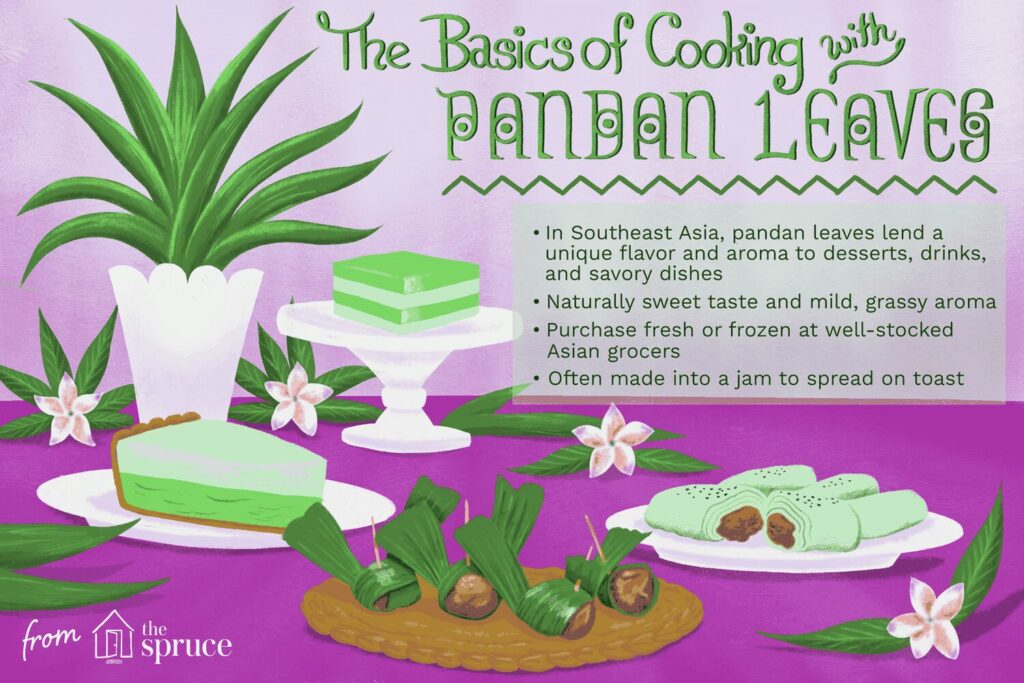
As I sat at an Asian restaurant, sipping on my drink, I noticed a peculiar ingredient on the menu that caught my eye – pandan. With its unique name and flavor profile, I was curious about what it had to offer. In this article, we’ll delve into the world of pandan, exploring its botanical characteristics, properties, recipes, and where to buy it.
Characteristics of Pandan
Before diving into its culinary uses, let’s take a closer look at the plant itself. There are numerous species of pandan, resulting in a wide range of forms. It can grow as a tree or shrub, reaching heights of up to 20 meters with a straight trunk sectioned like a cylinder from which thin leaves sprout.
Beyond its height and shape, pandan produces fruits that resemble pineapples or large nuts. Unripe, they have an indefinite color but when mature, they turn orange. Some species of pandan produce edible fruits, leaves, and flowers. The roots can also be eaten in certain cases, known for their unique characteristic of developing partially in the air, giving the pandan plant a distinctive appearance.
In terms of its botanical characteristics, pandan belongs to the family Pandanaceae. It is native to Southeast Asia and has been cultivated for centuries for its culinary, medicinal, and industrial uses. The plant’s leaves are green and fragrant, with a long, thin shape that allows them to be easily harvested for cooking.
Properties of Pandan
Pandan has numerous properties that have been utilized by folk medicine, utilizing various parts: leaves, fruits, flowers, and roots. Depending on the part used, it can treat different diseases, from infectious ones like measles to headaches, simple skin cuts, and even complex venereal diseases. The pandan is truly a versatile plant.
The fibers of the pandan plant, which do not benefit the body, can be used for other purposes, such as making ropes, mats, hats, baskets, and nets. This demonstrates the plant’s sustainability and potential to provide multiple benefits.
One of the most interesting properties of pandan is its ability to enhance the flavor of dishes. The leaves have a unique aroma that is often described as sweet and vanilla-like, which makes them an ideal ingredient for desserts and other sweet dishes.
Recipes using Pandan
As I explored the culinary uses of pandan, I found that it’s a very common ingredient in Southeast Asian cuisine. The leaves are green and fragrant, and can be used both in main courses and desserts. They’re especially useful for adding a sweet note with a vanilla flavor to dishes.
Using pandan leaves in cooking can be a bit tricky, as the instructions vary from recipe to recipe. However, some common methods include soaking them in coconut milk or another liquid for several hours before adding them to the recipe. They can also be sliced into thin strips and used that way.
To aromatize rice, which is often served as a side dish to oriental dishes, simply boiling the leaves together with the meal creates an incredible flavor profile. If you have meat to cook, creating an intricate wrap where the meat is wrapped in a way that it remains impregnated with the aroma of the leaves is also a great idea.
Some popular recipes that use pandan include:
- Pandan-infused rice: A simple and flavorful side dish made by boiling pandan leaves with coconut milk and serving them over steamed rice.
- Pandan-stuffed chicken: A delicious main course made by stuffing chicken breasts with a mixture of pandan leaves, garlic, and spices.
- Pandan-flavored dessert soup: A sweet and comforting dessert made by simmering pandan leaves in a flavorful broth with sugar and water.
Pandan in Italian Cuisine
Unfortunately, finding pandan in Italy can be challenging. In major cities, there are some shops that sell products for Oriental cuisine, which may have pandan in powder form, dried, or frozen, but much less often than fresh. If you have a green thumb, it’s easier to grow your own plant and use it directly in cooking.
Pandan is an easy plant to cultivate even in apartments, as long as it loves sunlight and moist soil, not cold. This makes it a great option for those looking to try their hand at growing their own pandan plant.
If you can’t find fresh pandan leaves or powder in Italy, there are also some online retailers that sell pandan-flavored products, such as cookies, jams, and sauces.
Where to Buy Pandan
The easiest and fastest way to try pandan is to buy it online. There are several options available on Amazon, including dried pandan leaves in packets of 20g for €9.99. You can also find pandan-flavored cookies that will give you a taste of the plant’s unique flavor profile.
Other online retailers that sell pandan products include:
- Etsy: A marketplace for handmade and vintage items, where you can find unique pandan-themed accessories and decorations.
- eBay: An online auction site where you can buy pandan leaves, powder, or other products from sellers around the world.
- Asian grocery stores online: Many Asian grocery stores sell pandan products online, such as frozen leaves or dried roots.
Conclusion
Pandan may not be a well-known ingredient in Western cuisine, but it has a wealth of characteristics and properties that make it a valuable addition to any kitchen. From its versatility in cooking to its potential for medicinal use, pandan is truly a remarkable plant.
Whether you’re looking to try your hand at growing your own pandan plant or simply want to experiment with new flavors, this guide has provided you with the information and resources needed to unlock the secrets of pandan.
Frequently Asked Questions
- What are the different species of pandan?
There are numerous species of pandan, each with its unique characteristics and properties. - Can I grow my own pandan plant?
Yes, pandan is an easy plant to cultivate even in apartments, as long as it loves sunlight and moist soil. - What can I use pandan for besides cooking?
Pandan has medicinal properties and can be used for various purposes, such as making ropes, mats, hats, baskets, and nets. - How do I cook with pandan leaves?
Using pandan leaves in cooking requires some creativity and experimentation, but the results are well worth it. - Can I find pandan in most supermarkets?
Unfortunately, finding pandan in Italy can be challenging, but there are some shops that sell products for Oriental cuisine that may carry pandan. - What is pandan amaryllifolius?
Pandanus amaryllifolius is one of the most commonly used species of pandan in cooking. - Can I buy pandan online?
Yes, there are several options available on Amazon and other online retailers that sell pandan products. - Is pandan safe to eat?
Pandan is generally considered safe to eat, but it’s always best to consult with a medical professional before using any new ingredient in your diet.
Tips for Cooking with Pandan
- Always use fresh pandan leaves for the best flavor and aroma.
- Soak pandan leaves in coconut milk or another liquid for several hours before adding them to the recipe.
- Slice pandan leaves into thin strips and use them as a garnish or add them to soups and stews.
- Experiment with different cooking methods, such as steaming or boiling, to bring out the unique flavor of pandan.
Common Pandan Recipes
- Pandan-infused rice: A simple and flavorful side dish made by boiling pandan leaves with coconut milk and serving them over steamed rice.
- Pandan-stuffed chicken: A delicious main course made by stuffing chicken breasts with a mixture of pandan leaves, garlic, and spices.
- Pandan-flavored dessert soup: A sweet and comforting dessert made by simmering pandan leaves in a flavorful broth with sugar and water.
Conclusion
In conclusion, pandan is a versatile plant that has been used for centuries in Southeast Asian cuisine and folk medicine. Its unique flavor profile and medicinal properties make it a valuable addition to any kitchen. Whether you’re looking to try your hand at growing your own pandan plant or simply want to experiment with new flavors, this guide has provided you with the information and resources needed to unlock the secrets of pandan.


