
Introduction
In the realm of interior design, there exists a philosophy that seeks to balance the energies within a space, creating harmony between humans and their environment. This ancient Chinese concept is known as Feng Shui, which aims to integrate individuals into their surroundings by harnessing the principles of lineages, elements, colors, and spaces. In this article, we will delve into the world of Feng Shui, exploring its history, key concepts, and practical applications in home design.
What is Feng Shui?
Feng Shui is an ancient Chinese philosophy that seeks to balance the energies within a space, creating harmony between humans and their environment. It is closely tied to Taoism and is one of the five traditional arts in China. By applying Feng Shui principles, individuals can create a perfect balance of forms, lines, elements, colors, and spaces, leveraging guidelines and basic philosophies of Eastern philosophy.
History of Feng Shui
The origins of Feng Shui date back over 3,000 years to ancient China, where it was used to predict the success of government decisions, military campaigns, and even individual destinies. The term “Feng Shui” literally translates to “wind-water,” referring to the flow of energy in a space.
Key Concepts in Feng Shui
To understand Feng Shui, it’s essential to grasp its core concepts:
- Chi: Chi refers to the life force or energy that flows through all living things. In Feng Shui, chi is believed to influence the well-being and happiness of individuals.
- Yin-Yang: The yin-yang principle represents the harmonious balance between opposites (e.g., light-darkness, hot-cold).
- Five Elements: Wood, Fire, Earth, Metal, and Water are the five elements that govern Feng Shui. Each element has its own energy signature, and their balancing is crucial for creating harmony.
- Bagua Map: The Bagua map is a tool used to map the energy of a space, dividing it into nine areas corresponding to different aspects of life (e.g., wealth, relationships, career).
Feng Shui Colors and Materials
When it comes to color choices for your home, Feng Shui has some surprising recommendations. For instance, blues and greens are said to promote serenity in families. On the other hand, reds should be avoided, as they can bring stress and pressure on work life.
In terms of materials, Feng Shui advocates for natural and eco-friendly options, such as wood, which symbolizes concentration and wisdom, making it an ideal choice for offices and study areas.
Feng Shui and Environment
Environmental scientists and architects often study the principles of Feng Shui, although in Western architecture, it is viewed more as a technique rather than a philosophy. However, when discussing Feng Shui, we are talking about creating harmony between humans and their environment.
The Role of Plants in Feng Shui Design
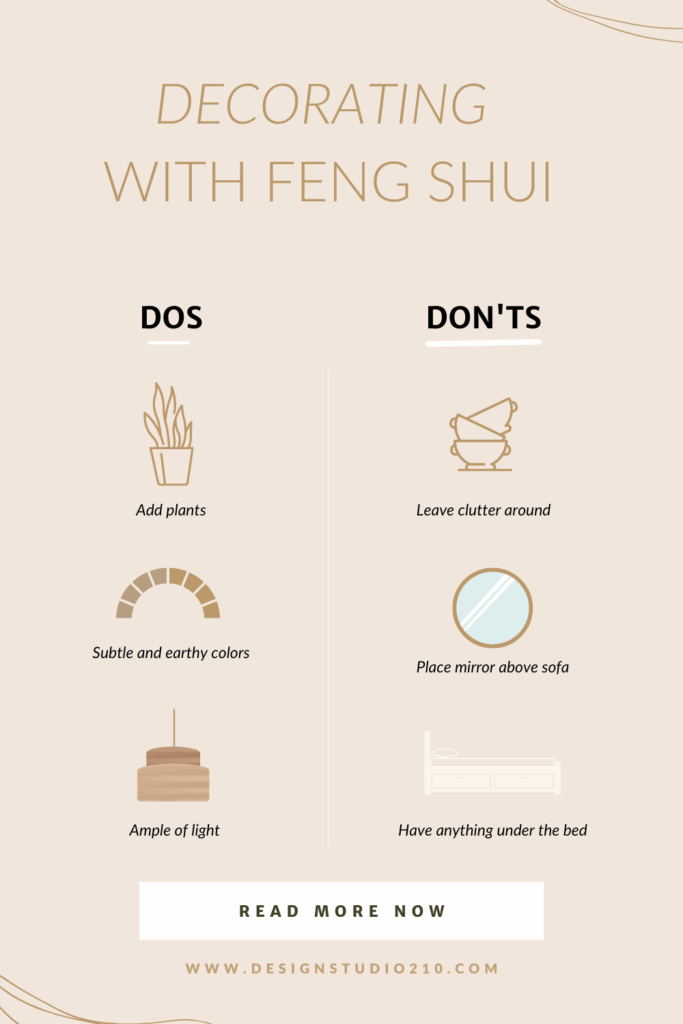
Plants play a vital role in Feng Shui design, bringing joy and happiness while also cleansing stagnant air in your space. Some popular plants for Feng Shui include:
- Peace Lily: Known for its ability to purify the air and promote relaxation.
- Snake Plant: Effective at removing toxins from the air and adding a touch of elegance to any room.
- Bamboo Palm: A symbol of strength and resilience, bamboo palms can help create a peaceful atmosphere.
Feng Shui in Kitchen Design
When it comes to designing a kitchen, Feng Shui suggests using a round table as its centerpiece. This is because circles symbolize protection from above, according to Feng Shui principles. For seating, use comfortable chairs and keep the number balanced. In contrast, avoid elaborate designs or too much ornamentation, as these can distract you from your meal.
Feng Shui in Bedroom Design
Creating a peaceful bedroom space using Feng Shui principles is vital for restful sleep and emotional well-being. This article provides more guidance on selecting colors, furniture placement, windows, and avoiding distractions to create a serene environment.
Feng Shui and Lighting
Lighting plays a crucial role in Feng Shui design, as it can either enhance or detract from the energy of a space. Warm lighting is said to promote relaxation, while cool lighting can increase alertness.
Tips for Implementing Feng Shui in Your Home
- Start with a clean slate: Begin by clearing your space of clutter and distractions.
- Assess your energy: Take a moment to reflect on how you feel about your home and identify areas that may be causing stress or discomfort.
- Apply the Bagua map: Use the Bagua map to identify which areas of your life are being supported or challenged by your current space.
- Make adjustments: Based on your assessment, make adjustments to your space to create a more harmonious balance of energy.
Common Feng Shui Mistakes
To ensure that you’re using Feng Shui effectively, be aware of the following common mistakes:
- Ignoring clutter: Clutter can stagnate energy and create feelings of overwhelm.
- Over-reliance on color: While colors can have a significant impact on mood, they should not be the sole focus of your Feng Shui design.
- Disregarding the Bagua map: The Bagua map is a powerful tool for understanding the energy of your space and making informed decisions about where to apply Feng Shui principles.
Conclusion
By embracing the ancient wisdom of Feng Shui, we can unlock the secrets to harmonious home design, creating spaces that nourish our minds, bodies, and spirits. By understanding how Feng Shui principles work, we can harness the power of color, light, materials, and even plants to create an environment that promotes balance, happiness, and well-being.
Frequently Asked Questions
- What is Feng Shui?
Feng Shui is an ancient Chinese philosophy aimed at balancing human energy within a space, creating harmony between humans and their environment.
- How does Feng Shui impact my home design?
By applying Feng Shui principles, you can create a harmonious balance of elements such as color, light, materials, and spaces, which in turn impacts your mood, behavior, and overall well-being.
- Can I really make my home healthier with Feng Shui?
Yes, by applying Feng Shui principles, you can remove stagnant energy from your space and promote fresh, positive energy through the use of natural light and plants.
- How do I choose colors for my home using Feng Shui principles?
Feng Shui suggests choosing colors that align with specific emotions or energies, such as blues for serenity and greens for calmness.
- Can Feng Shui be used in any space, including offices?
Yes, Feng Shui can be applied to all areas of the home, from kitchens and bedrooms to offices and study spaces, by leveraging its principles to balance human energy within the environment.
- How do I incorporate plants into my Feng Shui design?
Plants bring joy and happiness, while also cleansing stagnant air in your space.
- What is the role of materials in Feng Shui design?
Materials such as wood symbolize concentration and wisdom, making them ideal for offices and study areas.
- Can Feng Shui really change how I feel about my home?
Yes, by applying Feng Shui principles, you can create a space that supports your well-being and happiness.


