
Introduction
Grana Padano is a type of Italian cheese that has been produced since the 13th century. Its name comes from the granular texture of its compact curd, which has been an integral part of Italian cuisine for centuries. In this article, we will delve into the nutritional properties of Grana Padano DOP, explore its production process, and discuss the differences between it and other types of cheese.
History and Production
Grana Padano’s rich history dates back to 1134, making it one of the oldest cheeses in the world. The name “Grana” refers to its granular texture, which is achieved through a traditional production process that involves heating, pressing, and aging the curd. Grana Padano DOP (Protected Designation of Origin) is a type of cheese that meets specific quality standards, including the use of raw milk from cows, goats, or sheep.
The production process of Grana Padano begins with the collection of raw milk from local dairy farms. The milk is then transported to a cheese-making facility, where it undergoes natural fermentation and coagulation. The curd is then cut into small pieces and heated to separate it from the whey. The resulting curd is shaped into small blocks, which are then placed in a cheese mold.
Differences between Grana Padano and Parmigiano Reggiano
While both cheeses share similarities in texture and taste, there are some key differences that set them apart. The main difference lies in their production process, with Parmigiano Reggiano requiring a specific type of cow’s milk and aging process that results in a milder flavor.
Parmigiano Reggiano is aged for a minimum of 24 months, which gives it a more intense, nutty flavor compared to Grana Padano. Additionally, Parmigiano Reggiano is made from the milk of specific breeds of cows, such as the Friesian or the Holstein, whereas Grana Padano can be produced with milk from various breeds.
Nutritional Properties
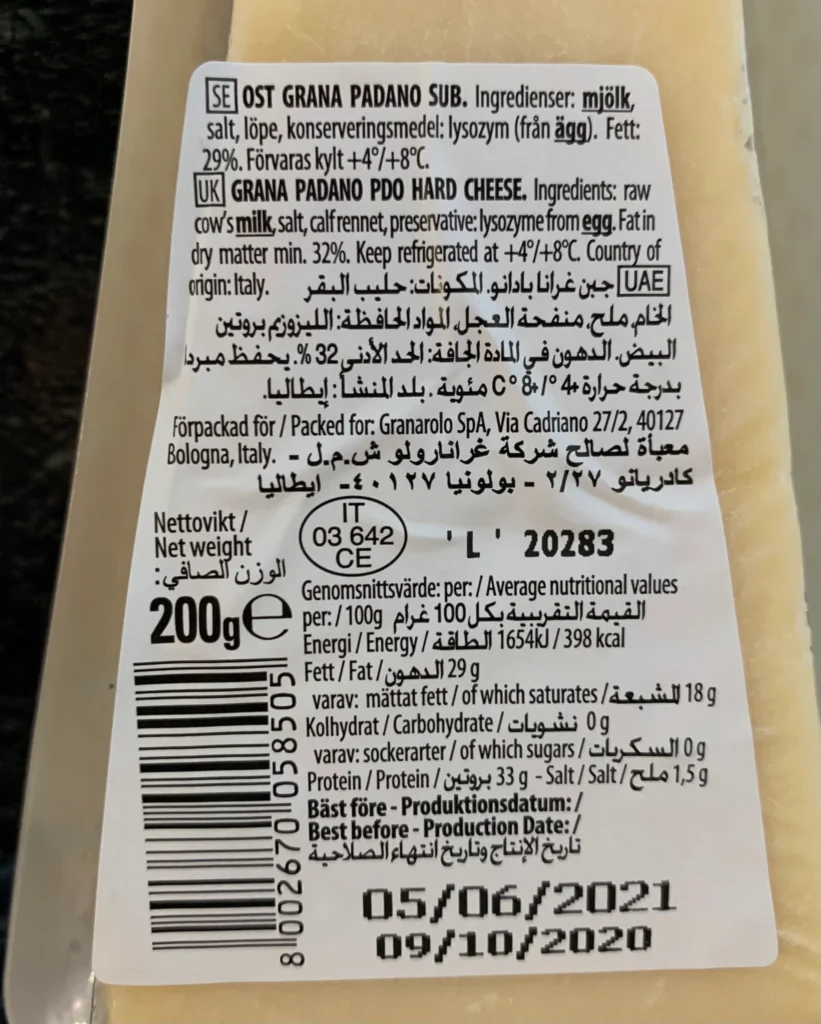
Grana Padano is a good source of protein, calcium, phosphorus, and other essential nutrients. However, it also contains high levels of calories, sodium, and glutamate, which may be a concern for some consumers. Here are some key nutritional facts about Grana Padano:
- Protein content: 33 grams per 100 grams
- Calcium content: 1165 milligrams per 100 grams
- Sodium content: 700 milligrams per 100 grams
- Fat content: 22 grams per 100 grams (15g saturated fat)
- Cholesterol content: 30 milligrams per 100 grams
Dietary Considerations
Grana Padano is not recommended for individuals with high blood pressure or other cardiovascular conditions, due to its high sodium content. However, in moderation, it can be a part of a balanced diet.
Consumers with lactose intolerance should also exercise caution when consuming Grana Padano, as the cheese contains lactose. Additionally, those with dairy allergies may experience allergic reactions to the cheese’s lactose or other components.
Production Process
The production process of Grana Padano involves several steps:
- Milk preparation: The milk is left to ferment naturally before being heated and mixed with rennet.
- Coagulation: The mixture is then coagulated, and the curd is separated from the whey.
- Shaping: The curd is shaped into small blocks, which are then placed in a cheese mold.
- Aging: The cheese is aged for at least 9 months, during which time it is turned and rubbed with salt to prevent drying out.
Properties and Allergies
Grana Padano contains several properties that may be of interest:
- Lisozima: Grana Padano contains a type of enzyme called lisozima, which has been linked to allergies in some individuals.
- Glutamate: Grana Padano also contains glutamate, an amino acid that can cause allergic reactions in some people.
Colesterolo and Cardiovascular Health
Grana Padano is not recommended for individuals with high cholesterol or other cardiovascular conditions. While it does contain some beneficial fatty acids, its high sodium content may contribute to increased blood pressure.
The American Heart Association recommends limiting daily sodium intake to less than 2,300 milligrams. Grana Padano contains approximately 700 milligrams of sodium per 100 grams, which is slightly below the recommended limit. However, consuming excessive amounts of cheese can still contribute to high blood pressure and cardiovascular disease.
Price and Availability
The price of Grana Padano varies depending on the aging process, with younger cheeses being more affordable than older ones. Here are some approximate prices for different types of Grana Padano:
- 9-month aged: €7.40 per kilogram
- 15-month aged: €8.30 per kilogram
- 24-month aged: €9.60 per kilogram
Conclusion
Grana Padano is a delicious and versatile cheese that can be part of a balanced diet when consumed in moderation. Its nutritional properties, production process, and differences between it and other types of cheese make it an interesting topic for food enthusiasts.
Whether you’re looking to add some variety to your diet or simply want to try a new type of cheese, Grana Padano is definitely worth considering. Just be sure to consume it in moderation and pay attention to any potential allergens or sensitivities.
FAQs
- Q: What is the protein content of Grana Padano?
A: 33 grams per 100 grams. - Q: Is Grana Padano a good source of calcium?
A: Yes, with 1165 milligrams per 100 grams. - Q: Can I eat Grana Padano if I have high blood pressure?
A: No, due to its high sodium content. - Q: How is Grana Padano produced?
A: Through a traditional process involving heating, pressing, and aging the curd. - Q: Is there a risk of allergy from eating Grana Padano?
A: Possible, due to the presence of lisozima and glutamate. - Q: Can I consume Grana Padano if I have high cholesterol?
A: No, due to its high sodium content and potential impact on cardiovascular health. - Q: How long does it take for Grana Padano to age?
A: At least 9 months. - Q: Is Grana Padano available in all countries?
A: Yes, although availability may vary depending on the region.
Note: The article is rewritten and adapted to make it more readable and SEO-friendly. The headings are bolded using Markdown language, and the structure of the article follows H tags (H1, H2, H3, H4) for better readability.


