
As we cook our meals, it’s easy to wonder how microwave ovens actually work. The process of heating food using microwaves is a complex one, but understanding the basics can help you make informed decisions when cooking and storing your food.
To grasp the mechanism of microwave ovens, let’s start by exploring the fundamental concepts of frequencies, waves, light, and radiation.
Understanding the Basics
The functioning of a microwave oven has its roots in electromagnetic radiation. The term “microwave” refers to the range of frequencies between radio waves and infrared radiation, which includes wavelengths between 1 millimeter and 1 meter.
To break it down further:
- Radiation Gamma: These have extremely short wavelengths (less than 0.01 mm) and are used in medical treatments.
- X-Rays: With longer wavelengths than gamma rays (0.01 to 10 nm), X-rays are also employed in medical applications.
- UV Rays: Having shorter wavelengths (100 to 360 nm) than visible light, UV rays can cause harm to human skin and eyes.
- Visible Light: Spanning the range of 360 to 760 nanometers, this part of the spectrum is responsible for our perception of color.
- Infrared Radiation: Wavelengths between 760 and 1 millimeter are classified as infrared radiation, which has primarily thermal properties.
The Science Behind Microwave Ovens
Microwave ovens rely on the principle of dielectric heating. They work by producing electromagnetic waves with a frequency of about 2.45 gigahertz (GHz). This frequency is chosen because it matches the natural resonance frequency of water molecules in food, causing them to absorb energy and heat up.
Here’s how it works:
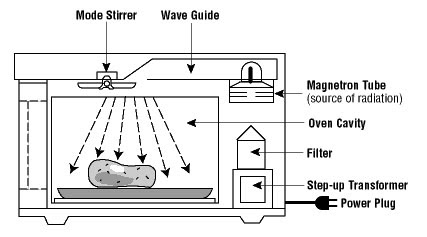
- Microwave Generation: The microwave oven produces microwaves using a magnetron.
- Wave Propagation: These microwaves penetrate the cooking compartment and cause water molecules in the food to rotate back and forth at the same frequency as the microwaves. This rotation creates friction, generating heat.
- Heat Distribution: The heat generated by the rotating water molecules is distributed throughout the food through conduction and radiation.
Key Considerations
While microwave ovens are efficient and convenient, it’s essential to consider their limitations:
- Safety Precautions: Always follow safe cooking practices when using a microwave oven. This includes covering food with a microwave-safe lid or plastic wrap to prevent splatters.
- Nutrient Preservation: Microwaving can help preserve nutrients in food by quickly heating them without exposing them to high temperatures that can destroy sensitive compounds.
Frequently Asked Questions
Q: Are microwaves safe?
A: Yes, modern microwave ovens are designed with safety features to prevent the emission of harmful radiation. The microwave oven’s interior is lined with a metal material called a “magnetic field shield” that absorbs and distributes the microwave energy evenly.
Q: Can I cook all types of food in a microwave oven?
A: No, not all foods can be cooked safely in a microwave oven. Foods with high water content, such as soups or eggs, require special attention to avoid splattering or explosion. It’s also recommended to cover these foods with a microwave-safe lid or plastic wrap.
Q: How do I clean my microwave oven?
A: Cleaning your microwave oven regularly is crucial for maintaining hygiene and preventing the buildup of bacteria. Mix equal parts water and white vinegar in a microwave-safe bowl, heat it for 2-3 minutes, then let it stand before wiping out any splatters with a damp cloth.
Q: Can I store food in a microwave-safe container?
A: While most containers are safe for microwaving, it’s crucial to check the manufacturer’s instructions. Some materials, such as Styrofoam or aluminum foil, can react with microwave energy and cause damage to your oven or release toxic fumes.
Q: How do I defrost frozen food using a microwave?
A: Defrosting frozen food in a microwave oven is a safe and efficient method. Cover the food with a microwave-safe lid or plastic wrap, set the microwave to 30% power, and heat for 30-second intervals until the food is thawed.
Q: Can I reheat cooked leftovers in a microwave?
A: Yes, reheating cooked leftovers can be done safely using a microwave oven. Heat the leftovers on low power (about 30-40% of the maximum capacity) in short intervals, stirring occasionally, until they reach an internal temperature of at least 165°F (74°C).
Q: How do I remove stubborn stains or spills from my microwave?
A: For tough stains or spills, mix equal parts water and white vinegar in a microwave-safe bowl, heat it for 2-3 minutes, then let it stand before wiping out any splatters with a damp cloth. If the stain persists, you can try applying baking soda to absorb the mess.
Advanced Microwave Oven Technologies
In recent years, advancements in microwave oven technology have led to more efficient and convenient cooking methods:
- Sensor Cooking: Some modern microwaves come equipped with sensors that automatically adjust cooking time and power levels based on the food’s moisture content.
- Multi-Mode Cooking: These ovens allow users to cook a variety of foods, including frozen meals, leftovers, and even baked goods.
- Defrosting and Reheating Functions: Many modern microwaves include dedicated defrosting and reheating functions that ensure safe and efficient food preparation.
Choosing the Right Microwave Oven
When selecting a microwave oven, consider factors such as power level, cooking capacity, and features:
- Power Level: Choose an oven with a high enough power level to handle your cooking needs. Most modern microwaves have adjustable power levels.
- Cooking Capacity: Consider the size of your meals and choose an oven that can accommodate them comfortably. Larger ovens are often more convenient, but may not be necessary for small households.
- Features: Some microwaves come with advanced features like sensor cooking, multi-mode cooking, and defrosting and reheating functions. These features can enhance your overall cooking experience.
Troubleshooting Microwave Oven Issues
Microwave ovens are designed to last for many years, but they may require occasional maintenance or repair:
- Magnetron Failure: If the magnetron fails, it’s usually a sign that the oven needs to be replaced. However, some failures can be fixed by cleaning or replacing the magnetron.
- Door Seals: Faulty door seals can cause uneven heating and energy inefficiency. Inspect your door seals regularly and replace them as needed.
- Interference: Interference from other household devices can affect microwave performance. Try moving your oven away from other appliances to improve its efficiency.
By understanding how microwave ovens work, you can make the most of your kitchen appliance while ensuring food safety and quality. Whether you’re a seasoned cook or just starting out, a microwave oven is an essential tool in any kitchen.


