
As a species, the sense of smell is essential for dogs. It’s not just for those breeds bred for hunting, but all dogs, even those that spend their days lounging on the couch. So, let’s dive into how it works and why it’s so vital for our canine friends.
How Does Dog Sense of Smell Work?
After just one week, a puppy’s sense of smell begins to develop and becomes crucial for navigation and decision-making. This is because dogs are antricial species, meaning their nervous system develops from the outside environment from birth onwards. Unlike precocial species like horses, which develop neurologically in the womb, puppies rely on their senses to navigate the world.
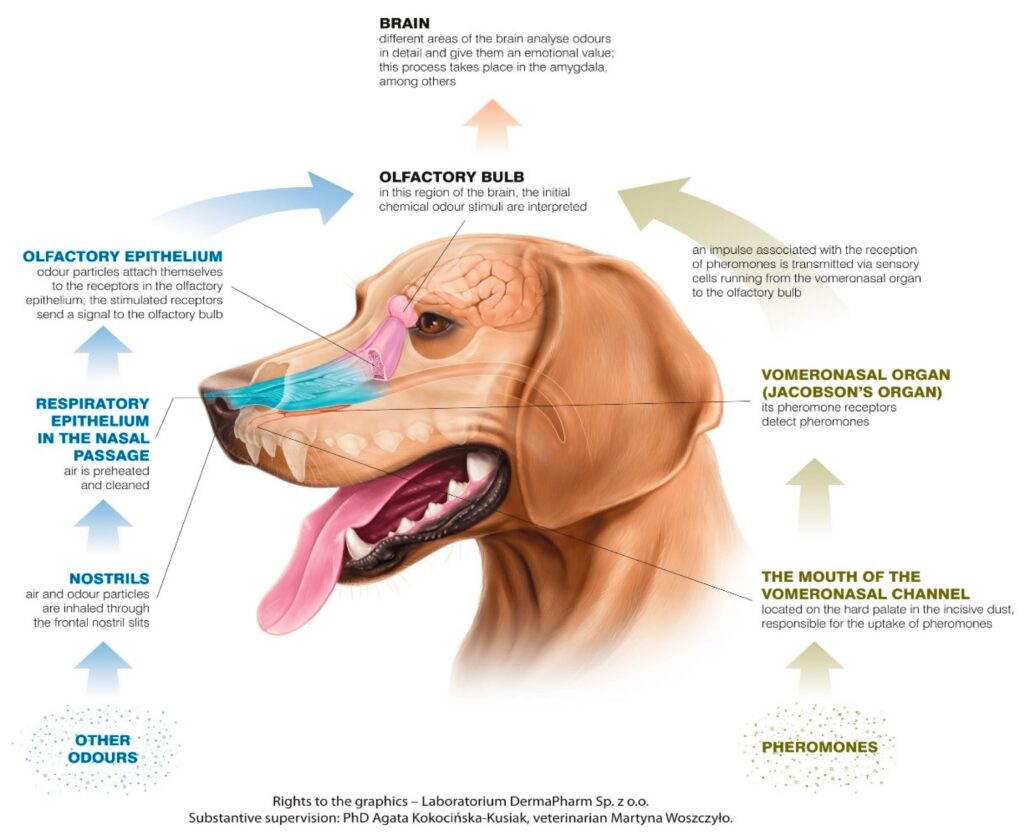
Imagine olfactory molecules as clusters that stimulate living beings in their respective organs. These molecules pass through the moist nose and are transformed into an electrical signal by the mucosa. The olfactory nerve then transmits this message to the brain for processing.
The Olfactory System: A Complex Network
The sense of smell in dogs is a complex network of structures that work together to detect odors. The nasal cavity, with its moist membranes and turbinate bones, plays a crucial role in filtering and warming the air we breathe before it reaches our olfactory receptors. The olfactory epithelium, a specialized layer of cells lining the nasal cavity, contains millions of olfactory receptors that can detect even the slightest changes in odor molecules.
Developing a Dog’s Sense of Smell
A dog’s sense of smell can be developed and improved through daily activities, such as walks, sports, and exposure to different environments. While specialized training is required for certain breeds, like those used in explosives detection or tracking, even ordinary dogs can benefit from regular exercise and socialization.
However, if a dog is not able to perceive odors, it may be suffering from anosmia. The absence of a sense of smell can have significant consequences for a dog’s overall well-being and quality of life.
The Importance of Olfaction in Canine Behavior
Olfaction plays a vital role in canine behavior, influencing everything from social interaction to foraging and hunting. Dogs use their sense of smell to navigate their environment, detect food sources, and recognize potential threats or prey. This reliance on olfaction is why dogs are often described as “sniffing” creatures.
In addition to these functional aspects, a dog’s sense of smell can also influence their emotional state. The scent of a familiar companion or the aroma of a favorite toy can evoke feelings of comfort and security in dogs, just as it does in humans.
Comparing Dog Sense of Smell to Human
While we can develop our sense of smell over time with training and practice, it’s not something that comes easily or naturally for humans like it does for dogs. Dogs have a far greater number of olfactory receptors, making them uniquely suited to detecting subtle differences in scents.
In fact, puppies begin exploring their environment through sniffing at just a few weeks old, whereas human babies don’t start developing their sense of smell until they’re several months older. This early development is crucial for the growth and survival of dogs as antricial species.
The Biology of Olfactory Receptors
Olfactory receptors are specialized proteins embedded in the olfactory epithelium that bind to odor molecules, triggering a signal that is transmitted to the brain. Each type of receptor is sensitive to specific types of odor molecules, allowing the dog’s sense of smell to distinguish between different scents.
The number and diversity of olfactory receptors can vary significantly between breeds, with some dogs possessing up to 4 billion active receptors at any given time. This remarkable sensitivity makes them well-suited for tasks like tracking and hunting, where a keen sense of smell is essential.
Genetic Factors in Olfactory Ability
Research suggests that genetic factors play a significant role in determining a dog’s olfactory ability. Some breeds, like Bloodhounds and Beagles, have been found to possess an unusually high number of olfactory receptors due to selective breeding for their hunting prowess.
On the other hand, some breeds, like Pugs and Bulldogs, may be less sensitive to odors due to genetic factors that affect the development of the olfactory epithelium. While these differences can be attributed to genetics alone, it’s essential to remember that individual variations within breeds are also significant.
Training and Exercise: Supporting a Dog’s Sense of Smell
While specialized training is required for certain tasks like explosives detection or tracking, general exercise and socialization can still contribute to developing a strong sense of smell in dogs. Regular walks, playtime, and exposure to different environments can help improve a dog’s olfactory abilities.
In addition to these general activities, some specific exercises can be designed to support a dog’s sense of smell. For example, hiding treats or toys with distinct scents around the house can help a dog develop their olfactory skills in a fun and engaging way.
Conclusion
The sense of smell in dogs is truly remarkable and plays a vital role in their lives. From navigation to social interaction, it’s essential for understanding canine behavior and cognition. While humans may have developed our own skills for detecting scents through training and practice, dogs are naturally gifted with this ability, thanks to millions of olfactory receptors working in harmony.
Frequently Asked Questions
- How often should I take my dog for walks to develop their sense of smell?
Daily walks and exposure to different environments can help improve your dog’s sense of smell. - Can my dog still have a good sense of smell if they’re not used to walking or socializing?
While specialized training is required, regular exercise and socialization can still contribute to developing a strong sense of smell in dogs. - What’s the difference between an olfactory receptor and an olfactory nerve?
An olfactory receptor detects odor molecules, while an olfactory nerve transmits this information to the brain for processing. - Why do some breeds have such impressive senses of smell?
Breed development through selective breeding can lead to variations in the number of olfactory receptors, making some breeds more sensitive to smells than others. - Can my dog develop anosmia (loss of sense of smell)?
Yes, dogs can suffer from anosmia due to various factors like age, health issues, or injury. - How does a Bloodhound’s sense of smell compare to other breeds?
Bloodhounds possess an impressive number of olfactory receptors, making them one of the most sensitive breeds when it comes to detecting scents. - Can training help improve my dog’s sense of smell?
While specialized training is required for certain tasks, general exercise and socialization can still contribute to developing a strong sense of smell in dogs. - Is there a way to measure a dog’s sense of smell?
Currently, there isn’t an official test to quantify a dog’s sense of smell; however, observing their behavior and body language can give you insight into their olfactory abilities.
Additional Resources
For those interested in learning more about the amazing sense of smell in dogs, we recommend checking out these additional resources:
- The Olfactory Perception Test: A study published in the journal “Chemical Senses” that explores the sensitivity of canine olfaction.
- Canine Olfaction: An article by the American Kennel Club (AKC) that provides an overview of a dog’s sense of smell and its importance.
- Dog Breeders’ Association: A comprehensive guide to understanding the differences in sensory abilities between various breeds.
Remember, every dog is unique, and their individual experiences with olfaction can vary significantly. By learning more about canine olfaction and providing your dog with regular exercise and socialization, you can support their natural talents and help them thrive in all aspects of life.


