
Introduction
The hydrangea, commonly known as an ornamental plant, is a popular choice for gardens and landscapes. It’s also used as a hedge or bordering for various types of areas. In this article, we’ll explore the world of hydrangeas and how to propagate them using stem cuttings, also known as “stems cutting” or simply “talea.”
What is Hydrangea?
Hydrangea is a genus of plants that are commonly grown for their beautiful flowers and versatility. They can be either herbaceous or woody, making them suitable for various environments.
History of Hydrangeas
The hydrangea has been cultivated for centuries in East Asia, where it was used as a symbol of good luck and prosperity. The plant was introduced to Europe by French botanist Philibert Commerson in the 17th century, where it quickly became popular among gardeners.
Types of Hydrangeas
There are several types of hydrangeas, including:
- Bigleaf Hydrangea (Hydrangea macrophylla): Known for its large white flowers that turn pink or blue depending on the soil pH.
- Panicle Hydrangea (Hydrangea paniculata): Produces long, cone-shaped flowers in shades of white and pink.
- Smooth Hydrangea (Hydrangea arborescens): Features rounded clusters of small white flowers.
How to Propagate Hydrangea using Stem Cuttings
Propagating hydrangea using stem cuttings is a simple process that requires attention to detail. To maximize the chances of successful rooting, you’ll need to select a healthy mother plant and take precise cuttings from it.
Choosing the Right Plant
When selecting a plant for propagation, choose one that’s healthy and robust. This will ensure the best possible results for your new plants.
Selecting the Right Cutting
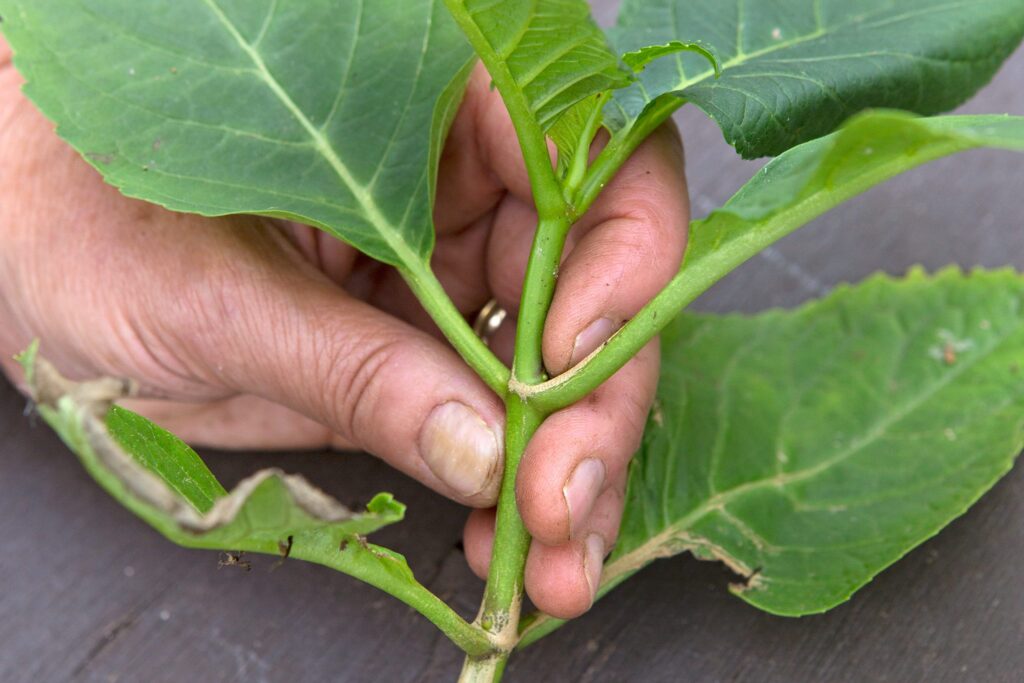
To increase the chances of successful rooting, you’ll need to select the right cutting. Choose a stem section with:
- At least two or three leaves
- A diameter of 1-2 cm
- Cut from a medium-low branching point on the mother plant
Preparation and Planting
After selecting the cutting, prepare it for planting by removing any lower leaves that may cause rot during the rooting process. Then, place the cut end in a substrate containing perlite or vermiculite to promote healthy root development.
- Water regularly but avoid overwatering.
- Provide adequate sunlight and maintain temperatures between 15°C and 25°C (59°F to 77°F).
- Fertilize sparingly during the first few weeks after planting.
Timing is Everything
The best time to take cuttings from hydrangea plants is in autumn. This allows for optimal rooting conditions, ensuring a higher success rate.
Additional Tips
To further enhance your chances of successful propagation, consider using a root stimulator or growth promoter. These products can help promote healthy root development and encourage the cutting to grow into a strong new plant.
- Use a sharp, clean knife or pruning tool to make clean cuts.
- Avoid over-handling the cuttings during the rooting process.
- Monitor the rooting process regularly for signs of rot or other problems.
By following these steps and tips, you’ll be well on your way to successfully propagating hydrangea plants using stem cuttings.
Common Mistakes to Avoid
- Taking cuttings from weak or diseased plants
- Not providing adequate substrate moisture during the rooting process
- Overwatering or underwatering the cutting
Conclusion
Propagating hydrangea plants using stem cuttings is a rewarding experience that requires patience, attention to detail, and proper care. By following these guidelines and avoiding common mistakes, you’ll be able to successfully propagate new hydrangea plants for your garden.
FAQs
- What is the best time of year to take cuttings from hydrangeas?
- Autumn (October) is generally considered the best time for taking cuttings.
- How often should I water my hydrangea stem cuttings during the rooting process?
- Water regularly but avoid overwatering.
- Can I use a root stimulator or growth promoter to enhance propagation success?
- Yes, these products can help promote healthy root development and encourage the cutting to grow into a strong new plant.
- What is the ideal temperature for hydrangea stem cuttings during the rooting process?
- Temperatures between 15°C (59°F) and 25°C (77°F) are recommended.
- Can I propagate hydrangea plants using stem cuttings in winter or spring?
- No, autumn is generally considered the best time for taking cuttings due to optimal rooting conditions.
- How long does it take for hydrangea stem cuttings to root?
- It can take anywhere from a few weeks to several months for the cutting to develop roots and grow into a new plant.
- Can I propagate hydrangea plants using stem cuttings in indoor pots or containers?
- Yes, but make sure the container has adequate drainage holes to prevent waterlogged soil.
By following these guidelines and tips, you’ll be able to successfully propagate new hydrangea plants for your garden.


