
Understanding Meningitis in Children: A Comprehensive Guide
Meningitis is a condition that always brings great concern and attention. But what are its characteristics? And, most importantly, what are the symptoms of meningitis in children?
What is Meningitis?
Let’s start by recalling that meningitis is an inflammation of the meninges, the membranes that cover the brain and spinal cord. The disease can be contracted by anyone, regardless of age. However, considering it can spread easily among people living in close quarters, adolescents and students are at a higher risk of infection.
If treated promptly, meningitis can be successfully cured. It’s essential to receive routine vaccinations, recognize signs of meningitis, and seek immediate medical attention if you suspect your child has contracted the disease.
What Causes Meningitis?
The majority of cases are caused by bacteria or viruses, but some may be due to certain medications or other illnesses.
In particular, many of the bacteria and viruses that cause meningitis are common and can lead to ordinary diseases. Bacterial meningitis is rare but usually severe and potentially life-threatening if not treated immediately. In some cases, bacterial meningitis spreads to the brain’s meninges due to a severe head trauma or a severe infection in a nearby area, such as an ear infection (otitis media) or sinus infection (sinusitis).
Several types of bacteria can cause bacterial meningitis. In newborns, the most common causes are Group B streptococcus, E. coli, and Listeria monocytogenes. In older children, Streptococcus pneumoniae (pneumococcus) and Neisseria meningitidis (meningococcus).
Understanding Viral Meningitis
Viral meningitis is more common than bacterial meningitis and usually less severe.
Many viruses can cause meningitis, including those that cause common colds, diarrhea, and influenza.
Recognizing the Symptoms of Meningitis in Children
Now, let’s move on to the central theme of our focus: identifying the symptoms of meningitis in children.
The symptoms of meningitis vary depending on the age of the person and the cause of the infection. The first symptoms can appear rapidly or begin several days after someone has had a cold, diarrhea, vomiting, or other signs of infection.
Common symptoms include:
- Fever
- Fatigue
- Irritability
- Headache
- Sensitivity to light
- Stiff neck
- Rash (in some cases)
Meningitis in Newborns
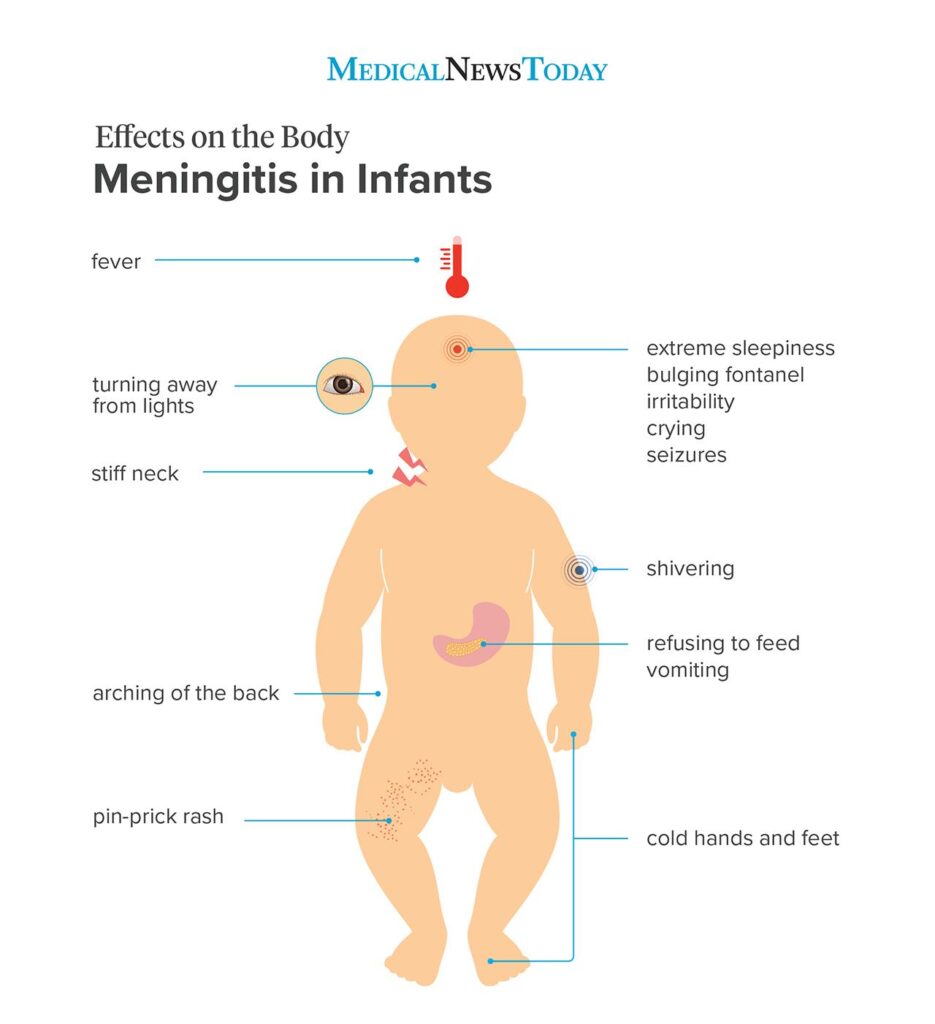
Newborns with meningitis may exhibit different symptoms. Infants may be irritable, have little appetite, excessive sleepiness, or difficulty waking up. It can also be challenging to comfort them, even when they’re being cuddled by their mother or father. They might also have a fever or “fontanelle” bulge (the soft spot on the top of the head).
Other symptoms of meningitis in children may include:
- Iritis (a yellowish coloration of the skin)
- Stiffness of the body and neck
- Lower-than-normal temperature
- Weakness
Diagnosing Meningitis
Bacterial meningitis can be severe. Therefore, if you notice its symptoms or suspect that your child has contracted the disease, it’s crucial to seek immediate medical attention.
If a case of meningitis is suspected, doctors will perform tests immediately, likely involving a lumbar puncture (spinal tap) to collect a sample of spinal fluid. This test may show signs of inflammation and whether the infection is caused by viruses or bacteria.
Treating Meningitis
Most cases of viral meningitis resolve within 7-10 days. Some people might require hospitalization, while children usually recover at home if their condition isn’t severe. Treatment to alleviate symptoms includes rest, hydration, and over-the-counter pain relievers.
If bacterial meningitis is diagnosed or suspected, doctors will start administering antibiotics as soon as possible.
Complications
Bacterial meningitis can lead to more serious complications requiring additional treatment. Specifically, children with low blood pressure may require intravenous fluids and medications to increase blood pressure. Some children might need oxygen therapy or mechanical ventilation if they have difficulty breathing.
Complications of bacterial meningitis can be severe and include:
- Neurological issues (e.g., hearing loss, vision problems, seizures, learning difficulties)
- Kidney problems
- Adrenal gland problems
While some children may develop long-term neurological problems, most who receive rapid diagnosis and treatment recover completely.
When to Seek Medical Attention
As previously mentioned, prompt medical attention is crucial if you suspect your child has meningitis or displays symptoms like vomiting, headache, fatigue, irritability, stiff neck, rash, or fever.
It’s also wise to consult with a doctor if your child has attended an environment where someone else had meningitis, as preventive measures can be taken.
We recommend that everyone interested in this topic consults their doctor to discuss the health of their little one and any actions necessary for their well-being.
Prevention
Preventing meningitis is key. This includes:
- Getting vaccinated against meningococcus (meningitis B)
- Practicing good hygiene
- Staying home if you or a family member has meningitis
- Avoiding close contact with someone who has meningitis
By understanding the causes, symptoms, and treatments of meningitis in children, we can take steps to prevent this serious disease.
Conclusion
Meningitis is a potentially life-threatening condition that requires prompt medical attention. By recognizing its symptoms, seeking immediate treatment if necessary, and taking preventive measures, we can reduce the risk of complications and ensure our children live healthy lives.
In conclusion, understanding meningitis in children is crucial for their health and well-being. If you have any concerns about your child’s health or suspect they may have contracted the disease, don’t hesitate to consult with a doctor. By working together, we can prevent this serious illness and provide our children with the best possible care.
In addition to receiving routine vaccinations, recognizing signs of meningitis, and seeking immediate medical attention if symptoms appear, parents and caregivers should be aware of the following:
- Keep an eye out for signs of meningitis in your child
- Follow the recommended vaccination schedule for meningococcus (meningitis B) and other diseases that may lead to meningitis
- Practice good hygiene, such as washing hands frequently, especially after using the bathroom or before eating
- Stay home if you or a family member has meningitis
- Avoid close contact with someone who has meningitis
By taking these steps, we can reduce the risk of complications and ensure our children receive the best possible care.


