
As humans, we all belong to at least one group in some aspect of our lives – family, school, workplace, sports, or many others. The concept of group is a fundamental one in our existence. In a particular form of psychotherapy, the idea of group has become a crucial element.
We refer to what is known as group therapy, which helps individuals with various problems deepen their self-knowledge while also improving their interindividual skills. This form of therapy has been widely adopted by mental health professionals and researchers, who acknowledge its effectiveness in treating a wide range of psychological issues.
What is Group Therapy?
Group therapy is a type of psychotherapy where specific clinical interventions are carried out in a group setting. A small, non-overcrowded group of people comes together under the guidance of a Group Leader, usually an experienced psychologist or therapist, to help each other individually and mutually. This approach has its roots in the early 1900s, sparked by Joseph Pratt, an American psychologist specializing in parapsychology.
At the heart of this approach are three fundamental elements: reciprocity, mutual support, and interaction among all participants. It is precisely the synergy between these factors that leads to therapeutic outcomes. Reciprocity refers to the idea that each participant contributes their own experiences, emotions, and perspectives to the group dynamic. Mutual support occurs when individuals help and encourage one another, creating a sense of belonging and safety. Interaction among participants allows for the exchange of ideas, experiences, and emotions, leading to increased understanding and empathy.
Benefits of Group Therapy over Individual Therapy
Group therapy offers several advantages over traditional individual therapy. Firstly, it allows for treating a larger number of people with limited resources. Typically, groups are led by one or two therapists, catering to groups ranging from 6 to 12 participants. This approach enables mental health professionals to reach a wider audience and provide services that might be unaffordable otherwise.
Another benefit is the economic aspect, as group members share the costs of treatment. From a psychological perspective, group therapy enables therapists to harness specific relational processes within the group to enhance the effectiveness of certain interventions. By observing interactions among group members, therapists can gain deeper insights into each participant’s communication dynamics, using this information as valuable clinical material.
Additionally, group therapy fosters a sense of community and social support, which is essential for individuals dealing with mental health issues. Social isolation and loneliness are common consequences of various mental health conditions, such as depression and anxiety disorders. Group therapy provides an opportunity for individuals to connect with others who share similar experiences, creating a supportive network that can help alleviate feelings of loneliness.
Types of Group Therapy
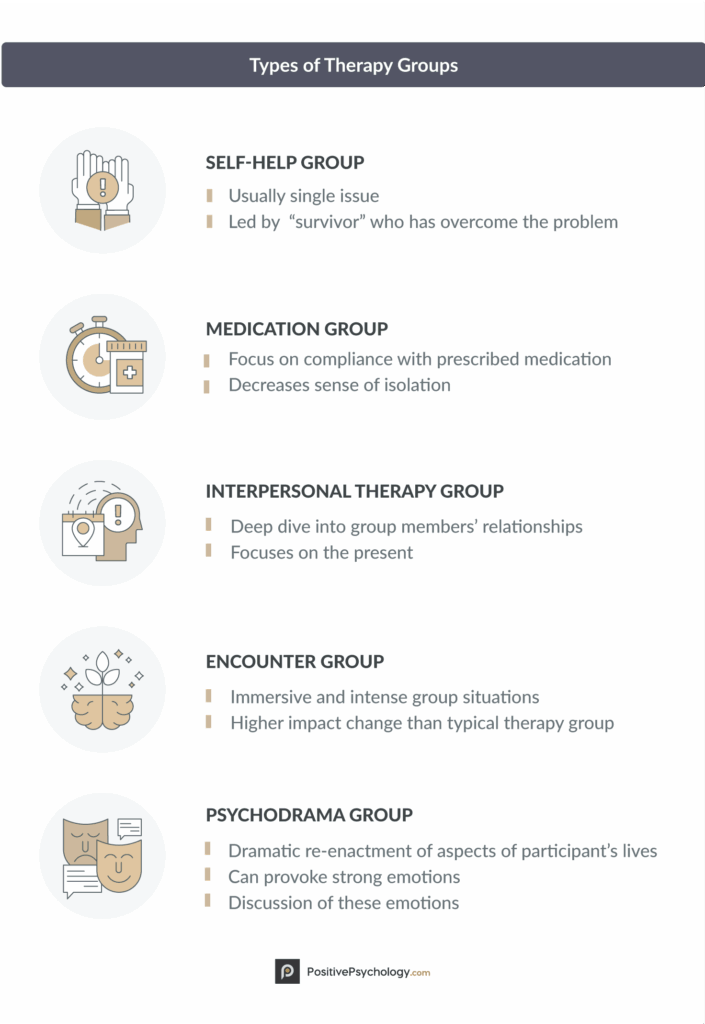
Within the realm of group therapy, there are several distinct types. Let us explore them one by one.
Psychotherapy Groups
These groups focus on building relationships among participants and working together to enhance communication skills and overall well-being. They often employ various techniques, such as role-playing exercises, group discussions, and mindfulness practices, to promote social skills development and emotional intelligence.
Cognitive Therapy Groups
This type of therapy employs cognitive-behavioral techniques to help individuals develop new coping strategies for everyday challenges. Participants learn to identify and challenge negative thought patterns, reframe unhelpful behaviors, and adopt more adaptive habits.
Dynamic Group Therapy
Often used for overcoming dependency behaviors, this form of group therapy fosters personal growth and healing through interaction with peers. The Group Leader guides the process by exploring each participant’s motivations, emotions, and reactions to their behavior, facilitating a deeper understanding of one’s own patterns and habits.
Psychoeducational Group Therapy
This approach addresses specific issues such as substance abuse, providing support and guidance to those involved. Groups can lead to improved mental health over time. Participants learn about the causes and consequences of addiction, develop coping strategies, and receive encouragement from fellow group members.
Self-Help or Support Groups
For various reasons, these groups bring people together for mutual support without necessarily involving a certified therapist. Examples include Alcoholics Anonymous (AA), Narcotics Anonymous (NA), and other organizations providing resources and guidance for individuals struggling with addiction.
Rational Emotive Behavior Therapy (REBT)
This therapy emphasizes resolving problematic behaviors and emotions through understanding their interplay. The goal is to promote happier, healthier living by identifying and challenging irrational thoughts and behaviors. Participants learn to manage stress, build self-esteem, and develop more effective coping mechanisms.
Process-Oriented Psychology and Therapy
A relatively new approach focusing on the entire human experience, from one moment to another. This method aims to enhance self-awareness and mental well-being by exploring life’s flow. By examining how thoughts, feelings, and behaviors interact, participants can gain insight into their own processes and develop more adaptive coping strategies.
The Role of a Group Leader
In group therapy, the role of the Group Leader is pivotal. Whether they are educators, consultants, or therapists, this individual wears the hat of an effective group leader, trained to facilitate sessions naturally and maintain consistent atmosphere across all therapy sessions. Key skills for a good Group Leader include:
- Active listening: The ability to fully focus on participants’ words, tone, and body language.
- Empathy: Showing understanding and compassion towards each participant’s experiences and emotions.
- Humor: Using humor to diffuse tension, break the ice, and create a relaxed atmosphere.
The ability to inspire trust among participants is also crucial, as learning to rely on oneself often stems from trusting one’s own Group Leader. Effective communication skills are essential for creating an open and supportive environment where group members feel comfortable sharing their thoughts and feelings.
Factors Influencing Group Therapy Success
Several factors can influence the success of group therapy:
- Group composition: A diverse group with a mix of ages, backgrounds, and experiences tends to lead to more effective interventions.
- Group Leader’s expertise: The Group Leader’s qualifications, experience, and training significantly impact the quality of care provided.
- Group size: A small to medium-sized group (6-12 participants) often provides the ideal balance between intimacy and anonymity.
- Duration of sessions: Regularly scheduled sessions can lead to increased engagement and motivation among participants.
Challenges and Limitations
While group therapy offers numerous benefits, there are also challenges and limitations to consider:
- Client confidentiality: Ensuring that each participant’s individuality is respected while maintaining a sense of community can be challenging.
- Diverse needs: Groups may not cater to all individuals’ unique requirements, potentially leading to feelings of frustration or disconnection.
- Group dynamics: The natural evolution of group interactions can sometimes lead to conflicts or power struggles among members.
Conclusion
In conclusion, group therapy is a valuable approach to addressing mental health issues, promoting social support, and enhancing overall well-being. By understanding its various types and roles, therapists and researchers can better design effective interventions and foster positive outcomes for their clients.


