
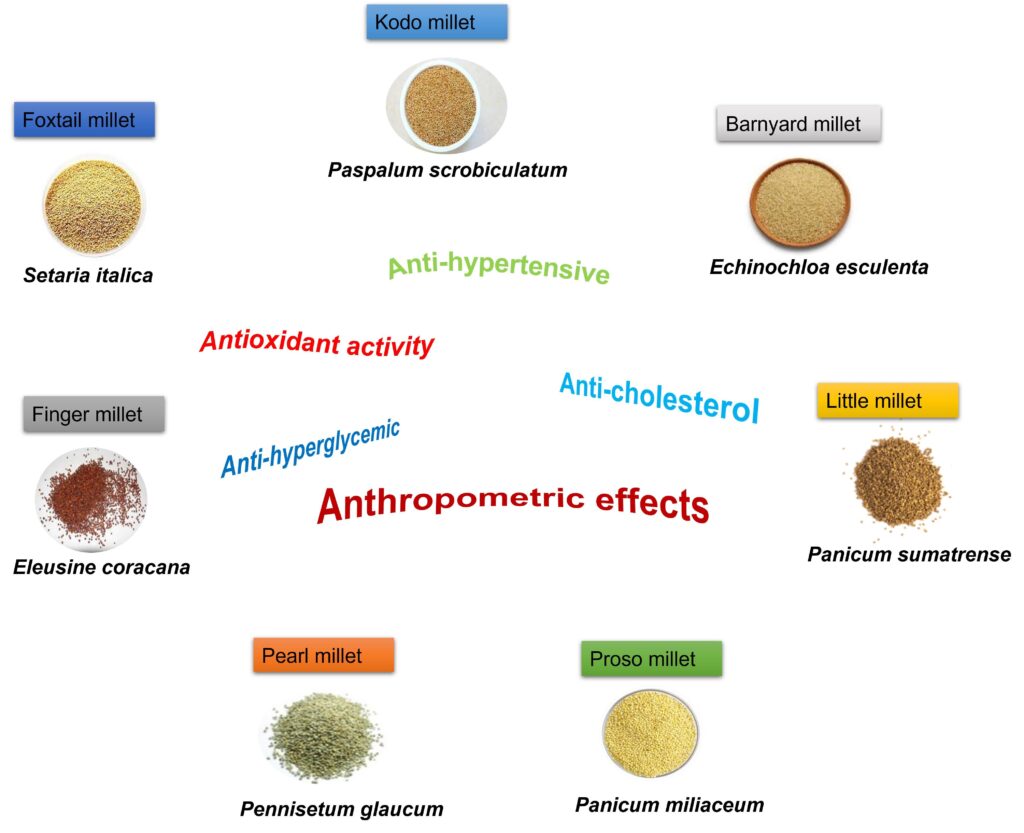
Introduction to Millet
Millet, also known as Panicum miliaceum, is a ancient cereal with unclear origins but believed to have originated from the Asia-Center-Orient or India. Its history dates back to the time of the ancient Egyptians, who cultivated it extensively. Today, millet is grown worldwide, including in Europe, although its cultivation is relatively rare.
Millet has been used for centuries as a staple food source, particularly in regions where other grains are scarce. It is an excellent option for those seeking gluten-free alternatives or looking to incorporate more nutritious food into their diet. In this article, we will delve into the properties, virtues, and culinary uses of millet, exploring its history, nutritional value, and growth requirements.
Understanding Millet’s Characteristics
Millet is a perennial crop that thrives in warm temperatures but can be challenging for those with limited experience. It can grow without extra care and is resistant to droughts and poor soil quality. In contrast, the Mediterranean climate allows for the cultivation of millet during spring-summer cycles.
Millet’s growth cycle typically spans three months, with the first sowing taking place in late winter or early spring. The crop requires adequate rainfall and sunlight to grow, making it an ideal choice for regions with mild winters and warm summers.
Growing Millet: A Seasonal Approach
In Italy, where the climate is mild, millet can be sown in late April, with harvesting taking place about two months later. This method provides optimal conditions for the crop’s growth and ensures a bountiful yield.
To cultivate millet successfully, it is essential to understand its specific requirements:
- Soil quality: Millet prefers well-draining soil with a pH between 5.5 and 6.5.
- Watering: Regular watering is necessary, but overwatering can lead to root rot.
- Sunlight: Millet requires full sun to partial shade, depending on the region.
Millet’s Nutritional Value
As an ancient food source, millet has been prized for its nutritional benefits, particularly for those who follow gluten-free diets. It is also rich in complex carbohydrates, which provide sustained energy. Millet contains high amounts of fiber, vitamins, and minerals like iron and phosphorus, making it a valuable addition to any diet.
Millet’s nutritional profile includes:
- Protein: 6-8%
- Fat: 2-4%
- Carbohydrates: 70-80%
- Fiber: 2-3 grams per 100 grams
- Vitamins:
- Vitamin B1 (Thiamin): 0.5-1 mg per 100 grams
- Vitamin B6: 0.5-1 mg per 100 grams
- Folate: 20-30 mcg per 100 grams
- Minerals:
- Iron: 3.5 mg per 100 grams
- Calcium: 17 mg per 100 grams
- Phosphorus: 300 mg per 100 grams
Millet’s Mineral Content
The mineral content of millet includes:
- Potassium: 174 mg per 100 grams
- Iron: 3.5 mg per 100 grams
- Calcium: 17 mg per 100 grams
- Phosphorus: 300 mg per 100 grams
Millet’s Culinary Uses
While millet may not be as widely consumed as other grains, its versatility in cooking and innovative recipes have made it a popular choice. In Italy, polenta made from millet has been a staple dish for centuries.
Some popular recipes featuring millet include:
- Polenta: A traditional Italian dish made by boiling millet and then stirring it with water to create a creamy, porridge-like consistency.
- Fritters: Millet can be used as an ingredient in fritters, adding texture and flavor to these crispy treats.
- Croquettes: Millet can be used as a filling in croquettes, providing a nutritious alternative to traditional fillings.
Conclusion
In conclusion, the properties and virtues of millet are undeniable, making it an excellent option for those seeking gluten-free alternatives or looking to incorporate more nutritious food into their diet. With its rich nutritional profile, versatility in cooking, and adaptability to various climates, millet is a crop that offers numerous benefits for farmers, cooks, and consumers alike.
Frequently Asked Questions (FAQs)
- What is millet?
- Millet is a type of cereal grain that is rich in nutrients and can be used as a gluten-free alternative.
- Where is millet commonly cultivated?
- Millet is primarily grown in Asia, the Middle East, Africa, and India.
- How do I grow millet?
- To cultivate millet, choose a suitable climate with warm temperatures and adequate rainfall.
- What are the nutritional benefits of millet?
- Millet is rich in complex carbohydrates, fiber, vitamins, and minerals like iron and phosphorus.
- Can I use millet as a substitute for other grains?
- Yes, millet can be used as a gluten-free alternative to wheat, barley, or rye.
- What are some popular recipes using millet?
- Some popular recipes featuring millet include polenta, fritters, and croquettes.
- Is millet suitable for those with gluten intolerance?
- Yes, millet is a great option for individuals with gluten intolerance or celiac disease.
- How do I store millet?
- Millet can be stored in an airtight container to preserve its nutritional value and shelf life.
Sources:
- “The History of Millet” by the Food and Agriculture Organization (FAO)
- “Millet Nutrition Facts” by the Academy of Nutrition and Dietetics
- “How to Grow Millet” by the National Institute of Food and Agriculture


