
As the world becomes increasingly dependent on advanced technologies, the demand for Rare Earth Elements (REEs) has grown exponentially. But what exactly are these mysterious elements, and why are they so crucial to our modern way of life?
In this article, we’ll delve into the world of REEs, exploring their definition, classification, and applications. We’ll also examine the current state of the industry, including reserves, production, and recycling.
What Are Rare Earth Elements?
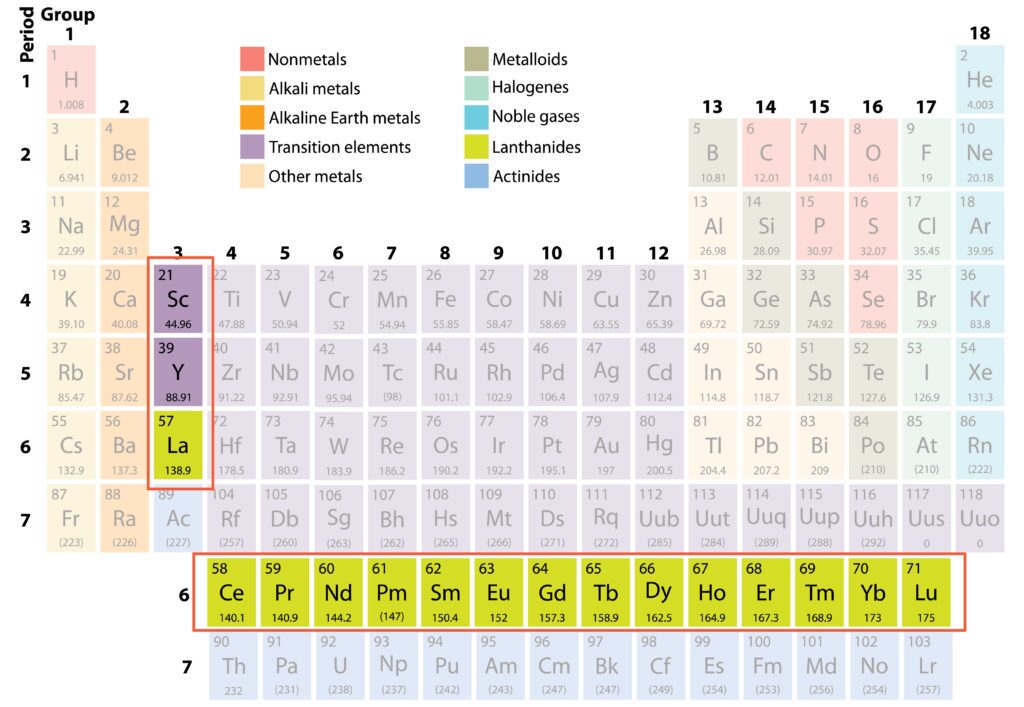
Rare Earth Elements (REEs) are a group of 17 metallic elements with unique properties that make them essential for various technologies. They are classified into two categories: Light REEs (LREEs) and Heavy REEs (HREEs), based on their atomic number and electronic configuration.
The LREEs, which include lanthanum, cerium, praseodymium, neodymium, and samarium, are found in the first five positions of the periodic table. The HREEs, comprising europium, gadolinium, terbium, dysprosium, holmium, erbium, thulium, ytterbium, and lutetium, occupy the last six positions.
Classification and Reserves
The classification of REEs is primarily based on their chemical properties and electronic configuration. The CAGR (Compound Annual Growth Rate) reports that China holds 50% of the world’s REE reserves, followed by Australia, the United States, and South Africa. However, other countries like Russia, India, Brazil, Malaysia, and Malawi also have significant reserves.
The 91% of REEs used in the US technology industry comes from China, highlighting the country’s dominant role in the global market.
Metals Precious to Earth Elements
REEs are closely linked to precious metals, such as platinum, gold, palladium, silver, rhodium, iridium, osmium, and ruthenium. These metals have unique properties that make them essential for various industrial applications.
The demand for REEs has grown exponentially in recent years, driven by the increasing need for advanced technologies like electronics, renewable energy systems, and electric vehicles.
RAEEs: A Growing Concern
Electronics waste (e-waste) is a significant concern, as it contains valuable resources like REEs and precious metals. The recycling of these materials has become essential to reduce waste and conserve natural resources.
Many devices, such as computers, smartphones, televisions, and LED lights, contain REEs and precious metals. When these devices reach the end of their life cycle, they can be recycled and reused, reducing the need for primary extraction and processing.
Which Devices Contain Rare Earth Elements?
REEs are found in a wide range of devices, including:
- Batteries (rechargeable and non-rechargeable)
- Memory devices (hard drives, flash memory, etc.)
- Display screens (LCD, plasma, LED)
- Electronics components (microprocessors, motherboards, etc.)
- Renewable energy systems
- Electric vehicles
Recycling and Recovery
The recycling of REEs and precious metals from e-waste has become increasingly important. Closed-loop recycling involves the collection, sorting, and processing of waste materials to extract valuable resources.
Companies like Honda have already demonstrated their commitment to recycling REEs by implementing closed-loop recycling systems for their products.
Challenges in Recycling REEs
While significant progress has been made in recovering REEs from e-waste, there are still several challenges that need to be addressed. These include:
- High cost of extraction: The cost of extracting REEs from e-waste is relatively high compared to primary extraction methods.
- Limited availability of REE-rich materials: Many devices do not contain significant amounts of REEs, making it difficult to find valuable resources.
- Environmental concerns: Recycling processes can be hazardous if not implemented correctly.
Technologies for REE Recovery
Several technologies have been developed to recover REEs from e-waste, including:
- Mechanical separation: This involves the physical separation of REEs from other materials using various techniques such as magnetic separation and flotation.
- Hydrometallurgical processing: This involves the use of chemicals to extract REEs from e-waste.
- Pyrometallurgical processing: This involves the use of high-temperature processes to extract REEs from e-waste.
Economic Implications
The recycling of REEs has significant economic implications, including:
- Reduced costs: Recycling REEs can reduce the cost of extracting these elements from primary sources.
- Increased revenue: Recycling REEs can generate significant revenue for companies and countries that implement closed-loop recycling systems.
- Job creation: The recycling industry creates new job opportunities in fields such as processing, sorting, and manufacturing.
Conclusion
Rare Earth Elements (REEs) play a critical role in our modern world, from electronics to renewable energy systems. As technology advances and demand grows, it’s essential to address the challenges associated with extracting, processing, and recycling these elements.
By understanding the properties of REEs, their applications, and the importance of recycling, we can work towards reducing waste and conserving natural resources for future generations.
Frequently Asked Questions (FAQs)
- What are Rare Earth Elements?
REEs are a group of 17 metallic elements with unique properties that make them essential for various technologies.
- Why are REEs used in electronics?
REEs are used in electronics due to their magnetic, thermal, and optical properties, which enable the production of high-performance devices.
- What is the classification system for REEs?
The classification system for REEs is primarily based on their chemical properties and electronic configuration.
- Which countries hold the majority of REE reserves?
China holds 50% of the world’s REE reserves, followed by Australia, the United States, and South Africa.
- How do we recycle REEs from e-waste?
Closed-loop recycling involves the collection, sorting, and processing of waste materials to extract valuable resources like REEs.
- What are some examples of devices that contain REEs?
Many devices, such as computers, smartphones, televisions, LED lights, renewable energy systems, and electric vehicles, contain REEs.
- Why is recycling of REEs important?
Recycling of REEs is essential to reduce waste, conserve natural resources, and minimize the environmental impact associated with primary extraction and processing.
- Can we recover all the REEs from e-waste?
While significant progress has been made in recovering REEs from e-waste, there is still room for improvement, particularly for HREEs (heavy Rare Earth Elements).


