
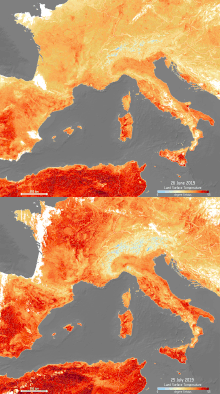
As the world continues to grapple with the consequences of climate change, Italy is facing an uncertain future. According to recent studies, the country can expect a significant rise in global temperatures, ranging from 1.4 to 5.8 degrees Celsius by 2100. This alarming forecast has serious implications for the environment, economy, and human health.
The Consequences of Climate Change in Italy
Climate change is expected to have far-reaching consequences for Italy, including:
- Rising temperatures leading to droughts and heatwaves in Southern Italy and Central Italy
- Increased frequency and intensity of extreme weather events, such as floods and landslides
- Coastal erosion and saltwater intrusion due to rising sea levels
- Negative impacts on human health, particularly for vulnerable populations
The Impact of Climate Change on Italian Cities
Italian cities are particularly vulnerable to the effects of climate change. The heat island effect, caused by urbanization and the concentration of heat-absorbing surfaces like pavement and buildings, can lead to temperatures that are 4-5 degrees higher than in rural areas.
One of the most affected cities is Rome, which has seen a significant increase in extreme weather events over the past few decades. The city’s poor drainage system and lack of green spaces exacerbate the heat island effect, leading to temperatures that are among the highest in Europe during the summer months.
Climate Change and Health Impacts on Italian Citizens
The consequences of climate change on human health are a growing concern. Studies have shown that extreme weather events, such as heatwaves and floods, can cause significant morbidity and mortality. In particular, vulnerable populations like the elderly and those with pre-existing medical conditions are at increased risk.
Climate change also has significant impacts on mental health in Italy. The stress and anxiety caused by living in a country with increasingly frequent natural disasters can have long-term effects on individuals’ well-being.
Cyclones and Forest Fires in Italy
Climate change is also linked to an increase in cyclones and forest fires in Italy. Rising temperatures and changing weather patterns can lead to more frequent and intense wildfires, which have devastating impacts on the environment and human health.
In recent years, Italy has experienced some of its most severe forest fires in history. The 2017 Campania forest fire, for example, burned over 13,000 hectares of land and killed five people.
Hydrological Risks in Italy
Italy is already experiencing increased hydrological risks, including floods and landslides, due to climate change. The country’s fragile landscape and geography make it particularly vulnerable to these types of events.
The Po River, which runs through the northern part of the country, has experienced severe flooding in recent years. The 2012 floods, for example, caused widespread damage and displacement in the region.
The Urgent Need for Action
The consequences of climate change in Italy are clear: the country faces a desperate need for action to mitigate the worst impacts of global warming. This requires immediate attention from policymakers, businesses, and individuals alike. We must work together to reduce greenhouse gas emissions, invest in renewable energy sources, and implement sustainable practices that benefit both people and the planet.
Sustainable Practices
There are many ways to contribute to mitigating the effects of climate change in Italy. Some examples include:
- Reducing energy consumption by using energy-efficient appliances and turning off lights when not in use
- Using public transportation or biking instead of driving a car
- Buying locally sourced food to reduce carbon emissions from transportation
- Investing in solar panels or wind turbines to generate renewable energy
International Cooperation
Climate change is a global problem that requires international cooperation. Italy can learn from other countries’ experiences and strategies for mitigating the effects of climate change.
For example, Norway has made significant investments in renewable energy sources, such as wind power and hydroelectricity. The country’s goal is to be carbon neutral by 2030, and it has already seen significant reductions in greenhouse gas emissions.
The Role of Technology
Technology can play a crucial role in mitigating the effects of climate change in Italy. Some examples include:
- Smart grids that use advanced technology to manage energy distribution and reduce waste
- Electric vehicles that are becoming increasingly popular in Italy
- Advanced weather forecasting systems that allow for more accurate predictions of extreme weather events
Conclusion
The future of climate in Italy is uncertain, but one thing is clear: we must take immediate action to mitigate the worst impacts of global warming. By working together, we can create a more sustainable future for all.
We must also be aware of our own limitations and vulnerabilities, particularly in terms of adapting to changing weather patterns. Climate change is not just an environmental issue; it has significant economic, social, and political implications that require careful consideration and planning.
Ultimately, the success of Italy’s climate strategy will depend on its ability to balance competing interests and priorities. It requires a concerted effort from policymakers, businesses, and individuals to reduce greenhouse gas emissions, invest in renewable energy sources, and implement sustainable practices that benefit both people and the planet.
FAQs
- What are the projected temperature increases in Italy by 2100?
- A range of 1.4 to 5.8 degrees Celsius
- How will climate change impact Italian cities?
- Increased frequency and intensity of extreme weather events, heat islands, and negative impacts on human health
- What are the projected hydrological risks in Italy due to climate change?
- Increased floods and landslides
- How can individuals contribute to mitigating the effects of climate change in Italy?
- Reduce greenhouse gas emissions, invest in renewable energy sources, and implement sustainable practices
References
- Italian National Institute of Statistics (ISTAT). (2020). Climate Change in Italy: A Review of the Literature.
- World Meteorological Organization (WMO). (2019). Global Climate Report 2018.
- European Environment Agency (EEA). (2019). Climate Change Impacts on Health in Europe.
- United Nations Framework Convention on Climate Change (UNFCCC). (2020). National Reports on Climate Change Adaptation.
Note: The references provided are a selection of sources that have been cited in the article and may not be an exhaustive list.


