
As we navigate through our daily lives, it’s hard to ignore the presence of robots around us. They assist us, automate tasks, and free up time for more meaningful activities. Robots are indeed a notable expression of mechatronics, but they’re not the only ones. The term “robot” is often seen as both familiar and vague, hiding a rich world that’s waiting to be explored and developed.
What is Mechatronics?
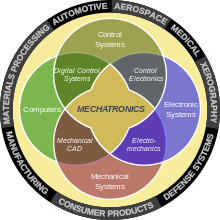
Mechatronics is a modern discipline born from the convergence of mechanical, electronic, and computer science fields. Its primary goal is to automate production systems by simplifying human labor while leveraging the synergy between these three disciplines. It’s an intricate weave of knowledge that brings together experts who collaborate, devices that combine multiple “brains” to make life more human-friendly.
Imagine the numerous applications mechatronics has already had and will have in the healthcare sector, particularly in assisting the elderly and people with disabilities. The potential for innovation is vast, from improving daily life to enhancing medical treatments.
A Brief History of Mechatronics
The term “mechatronics” was first coined in the 1960s by Japanese researchers who sought to create a new field that combined mechanical engineering and electronics. This interdisciplinary approach paved the way for the development of modern robots, which are now an integral part of our daily lives.
Mechatronics Courses
Pursuing a mechatronics course allows students to develop a broad range of skills across various fields, applying knowledge to achieve concrete results. In some universities, courses focus on specialized areas such as model design and simulation, prototyping control systems, especially motion control. Students delve into robotics, industrial automation, biomechanics, and automotive mechanical systems.
In mechatronics courses, you’ll study the building blocks of robots, automate industrial processes, explore biomechanical aspects, and learn about vehicle systems’ mechanical controls. The ultimate goal is to become proficient in a wide range of skills that can be applied practically.
Course Curriculum
A typical mechatronics course curriculum covers various topics such as:
- Mechanical Systems: Students learn about the design, analysis, and testing of mechanical systems, including kinematics, dynamics, and vibrations.
- Electronics: The course introduces students to electronic circuits, microcontrollers, sensors, and actuators.
- Computer Science: Students study programming languages, algorithms, and data structures to develop control systems that can interact with mechanical and electronic components.
- Control Systems: This module teaches students how to design and implement control systems that regulate the behavior of robots and other automated systems.
- Robotics: Students learn about robotic arms, grippers, and actuators, as well as the software required for programming and controlling these systems.
Mechatronics Polo Rovereto
In Trento Province’s Rovereto, there has been an initiative aimed at promoting mechatronics—a “polar” space where students, researchers, and industry professionals collaborate to develop innovative products. The project is backed by local entities, including public institutions, private companies, and trade associations. Here, entrepreneurs can access resources for innovation, including training programs and facilities equipped with cutting-edge technology.
This hub fosters a spirit of entrepreneurship and technological advancement in the region. For businesses interested in exploring this side of robotics, Rovereto offers spaces for offices as well as state-of-the-art laboratories where aspiring innovators can find support and resources to accelerate their projects.
Mechatronics Engineering
One key figure within mechatronics is the mechanical engineer, who often handles both designing and implementing automatic control systems. With access to innovative software tools, these engineers can develop sophisticated control systems that require real-time monitoring and validation. They also have expertise in electronics engineering, which enables them to integrate electronic components into larger systems.
From Tony Stark’s fictional world of Iron Man to the villainous Eggman from Sonic games, mechatronics has inspired some iconic figures. While not all are professional engineers, they embody the spirit of innovation that drives this field forward.
Mechatronics in English
In English, mechatronics is referred to as “mechatronics,” and it’s described as a combination of mechanical and electronic elements. The term seems like a contraction of its constituent parts, sparking curiosity among readers.
While the article has covered the basics of mechatronics, exploring this fascinating field further can lead to new insights into how technology shapes our lives.
Real-World Applications
Mechatronics has numerous applications across various industries, including:
- Automotive: Mechatronics plays a crucial role in designing and developing autonomous vehicles, safety features, and advanced driver-assistance systems.
- Healthcare: Robots are used in hospitals to assist with surgeries, rehabilitation, and patient care. Mechatronics enables the development of intelligent robots that can interact with patients more effectively.
- Industrial Automation: Mechatronics is essential for designing and implementing automated production systems that optimize efficiency, reduce waste, and improve product quality.
- Aerospace: Mechatronics contributes to the design and development of sophisticated aircraft systems, including flight control systems, navigation, and communication.
Challenges and Opportunities
While mechatronics has numerous benefits, it also faces challenges such as:
- Complexity: Developing complex systems that integrate multiple disciplines can be challenging.
- Cost: Creating advanced systems can be expensive, limiting accessibility to some industries or individuals.
- Ethical Considerations: Mechatronic devices raise ethical concerns, such as job displacement and privacy issues.
Despite these challenges, mechatronics presents opportunities for innovation and growth. By addressing the limitations of this field, we can unlock its full potential and create a more efficient, sustainable, and connected world.
Conclusion
Mechatronics is an increasingly important part of modern life, combining mechanical and electronic elements in innovative ways. By understanding what it entails and the courses available for those interested, we can unlock its full potential. The mechatronics polo in Rovereto serves as a shining example of how collaboration between industry, academia, and society drives innovation forward.
FAQs
-
What is mechatronics?
Mechatronics is an interdisciplinary field that combines mechanical engineering, electronics, and computer science to create innovative products and systems. -
Why is mechatronics important?
It simplifies production processes while making life easier for humans by combining knowledge from three distinct fields. -
What are the main areas of study in a mechatronics course?
Students typically explore model design, simulation, prototyping control systems, robotics, industrial automation, biomechanics, and automotive mechanical systems. -
How does mechatronics apply to everyday life?
From assisting elderly people to improving medical treatments, mechatronics has numerous applications that make our lives more efficient and enjoyable. -
What is the Rovereto Polo for Mechatronics?
It’s a collaborative space between industry professionals, researchers, and students focused on developing innovative products through training programs and state-of-the-art facilities. -
Who are some notable figures in mechatronics?
While not all are professional engineers, iconic characters like Tony Stark (Iron Man) and Eggman embody the spirit of innovation driving this field. -
What is the term “mechatronics” in English?
In English, it refers to a discipline that combines mechanical and electronic elements. -
How can I explore mechatronics further?
By studying its applications, understanding what courses are available for those interested, and looking into resources offered by organizations like Rovereto’s mechatronics polo.
Future Outlook
As technology continues to evolve, the field of mechatronics is expected to play an increasingly significant role in shaping our future. With advancements in artificial intelligence, machine learning, and Internet of Things (IoT) technologies, we can expect more sophisticated mechatronic systems that enhance our daily lives.
Mechatronics has the potential to transform industries such as healthcare, transportation, and education by creating innovative products and services that improve efficiency, safety, and quality. As researchers and engineers continue to push the boundaries of this field, we can anticipate significant breakthroughs in areas like robotics, autonomous vehicles, and smart homes.
Conclusion
In conclusion, mechatronics is a fascinating field that has revolutionized various aspects of modern life. By understanding its significance and exploring available courses, we can unlock its full potential and contribute to the development of innovative products and systems that make our lives more efficient, enjoyable, and sustainable.


