
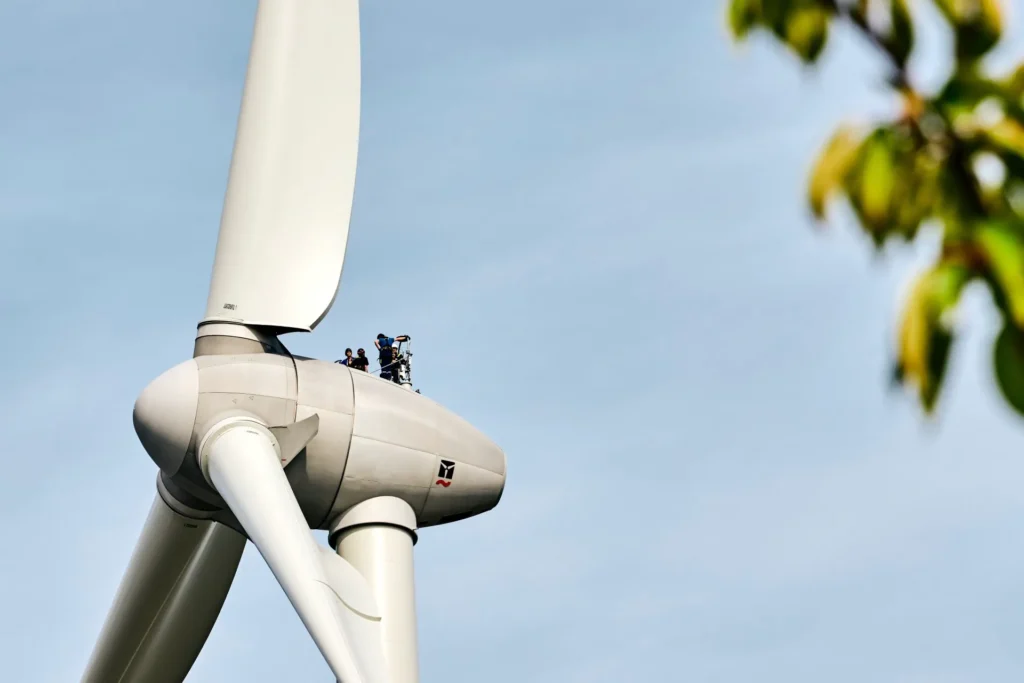
As the world continues to grapple with the challenges of climate change, renewable energy sources have become a crucial part of the solution. One of the most promising technologies in this field is wind power, which has been steadily gaining momentum over the years. However, one major issue has hindered the widespread adoption of wind turbines: their disposal. In recent years, researchers from the University of Massachusetts Lowell and Qichita State University have made significant strides in addressing this problem.
The Problem with Traditional Wind Turbines
Traditional wind turbines are made from materials that contain high amounts of fiberglass and epoxy resins, both derived from petroleum. These materials are notoriously difficult to recycle, leading some architects to get creative by repurposing the structures of old wind turbines as playgrounds. However, this solution is not a permanent fix, and researchers have been working tirelessly to develop more sustainable alternatives.
A Breakthrough in Biodegradable Materials
Recently, a team of scientists from the University of Massachusetts Lowell and Qichita State University has made a groundbreaking discovery that could change the game. Using funding from the National Science Foundation (NSF), they have developed a new system that enables wind turbines to be made from biodegradable materials.
The Benefits of Biodegradable Wind Turbines
So, what makes these biodegradable wind turbines so special? For starters, they are significantly easier to manufacture and dispose of. The new materials used in their construction are derived from plant-based sources, such as vegetable oils, making them non-toxic and sustainable.
The Science Behind Biodegradable Wind Turbines
So, how do these biodegradable wind turbines work? According to Professor Christopher Niezrecki of the Wind Energy Research Group (WERG), “our efforts are focused on developing resins and epoxy compounds derived from vegetable oils. This material is non-toxic, sustainable, and easily accessible, reducing energy consumption and production costs.”
The Future of Wind Turbines: A Cleaner and Greener Option
With the advent of biodegradable wind turbines, the industry has taken a significant step forward in its quest for sustainability. These new designs not only reduce waste but also provide a cleaner and greener alternative to traditional fossil-fuel-based materials.
Reducing Carbon Footprint
The production of biodegradable wind turbines results in significantly lower carbon emissions compared to traditional wind turbines. This is due to the fact that the biodegradable materials used in their construction are derived from plant-based sources, which reduces the reliance on non-renewable energy sources.
Enhancing Energy Efficiency
Biodegradable wind turbines also offer enhanced energy efficiency due to their unique design and materials. The new materials used in their construction have improved thermal conductivity, allowing for more efficient heat transfer and reduced energy losses.
Increased Sustainability
The use of biodegradable materials in wind turbine construction has significant implications for sustainability. By reducing waste and promoting the reuse and recycling of materials, biodegradable wind turbines contribute to a more circular economy.
Reducing Environmental Impact
Biodegradable wind turbines also offer a cleaner alternative to traditional fossil-fuel-based technologies. The production of these turbines results in significantly lower greenhouse gas emissions, contributing to a reduction in climate change.
Economic Benefits
The adoption of biodegradable wind turbines is expected to have significant economic benefits, including reduced energy costs and increased competitiveness. By reducing energy consumption and promoting the reuse of materials, biodegradable wind turbines contribute to a more sustainable and resilient economy.
Conclusion
As we look to the future, it’s clear that biodegradable wind turbines are poised to revolutionize the renewable energy sector. With their non-toxic and sustainable design, these turbines offer a cleaner and more environmentally friendly option for generating electricity. As researchers continue to push the boundaries of innovation, one thing is certain: the future of wind power has never looked brighter.
Frequently Asked Questions
- What makes biodegradable wind turbines so special?
Biodegradable wind turbines are made from materials derived from plant-based sources, such as vegetable oils, making them non-toxic and sustainable. - How do these biodegradable wind turbines work?
Biodegradable wind turbines use a process of gassification or bio-construction to convert the turbine into electricity or building material. - What are the benefits of using biodegradable materials in wind turbines?
The benefits of using biodegradable materials include reduced waste, lower energy consumption, and production costs. - How do these biodegradable wind turbines compare to traditional wind turbines?
Biodegradable wind turbines are significantly easier to manufacture and dispose of than traditional wind turbines. - What is the potential impact of biodegradable wind turbines on the environment?
The potential impact of biodegradable wind turbines is a significant reduction in waste, with the ability to convert turbine materials into valuable building materials. - Can biodegradable wind turbines be used in urban areas?
Yes, biodegradable wind turbines can be used in urban areas due to their compact design and reduced environmental footprint. - How long will it take for biodegradable wind turbines to become widely adopted?
The adoption of biodegradable wind turbines is expected to accelerate in the coming years as technology improves and costs decrease. - What are the next steps for researchers working on biodegradable wind turbines?
Researchers are currently exploring new materials and manufacturing techniques to further improve the sustainability and efficiency of biodegradable wind turbines.
Conclusion
In conclusion, biodegradable wind turbines offer a cleaner and more environmentally friendly alternative to traditional fossil-fuel-based technologies. With their non-toxic and sustainable design, these turbines are poised to revolutionize the renewable energy sector. As researchers continue to push the boundaries of innovation, one thing is certain: the future of wind power has never looked brighter.
Future Developments
In the coming years, we can expect to see further developments in biodegradable wind turbine technology. Researchers are currently exploring new materials and manufacturing techniques, such as 3D printing and nanotechnology, to improve the sustainability and efficiency of these turbines.
Challenges Ahead
While biodegradable wind turbines offer a cleaner and more environmentally friendly alternative to traditional fossil-fuel-based technologies, there are still challenges ahead. These include scaling up production, reducing costs, and addressing regulatory frameworks.
Conclusion
In conclusion, biodegradable wind turbines offer a cleaner and more environmentally friendly alternative to traditional fossil-fuel-based technologies. With their non-toxic and sustainable design, these turbines are poised to revolutionize the renewable energy sector. As researchers continue to push the boundaries of innovation, one thing is certain: the future of wind power has never looked brighter.


