
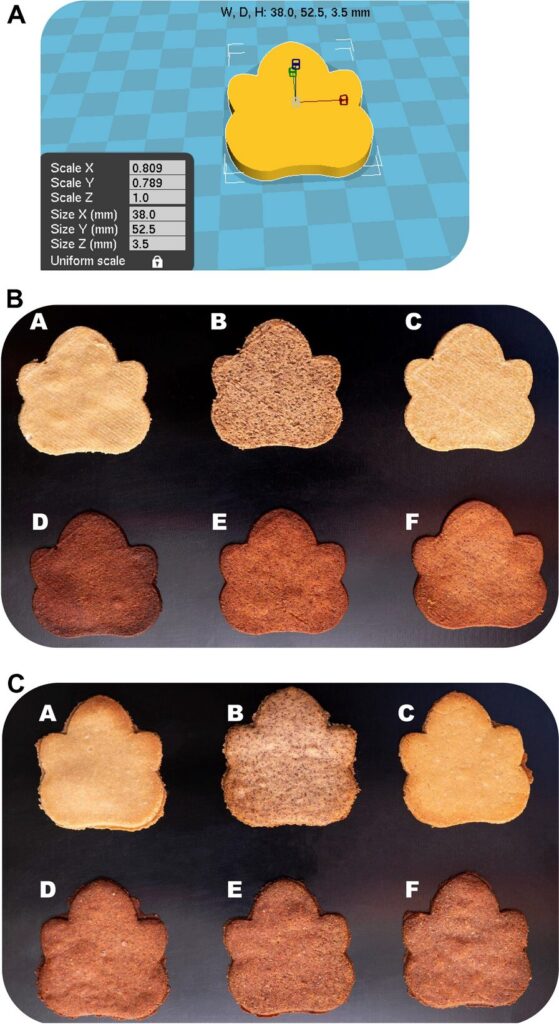
As the holiday season approaches, many of us are looking for new and exciting ways to indulge in our favorite treats. For some, that means baking a batch of classic Christmas cookies. But what if we told you there’s a way to make those perfect biscuits with minimal effort? Enter the world of 3D printing, where designers like Ralf Holleis have been pushing the boundaries of culinary innovation.
A Brief History of 3D Printing
Before we dive into the exciting world of 3D printed cookies, let’s take a quick look at how this technology came to be. The first 3D printers were developed in the late 1980s, but it wasn’t until the early 2000s that they became more accessible to hobbyists and enthusiasts.
Fast forward to today, and we have a whole new generation of designers and makers who are using 3D printing to create everything from jewelry to architectural models. And now, they’re turning their attention to the world of food.
The Science Behind 3D Printed Cookies
So, how does it work? In short, 3D printed cookies are created by layering a special type of dough or batter onto a heated plate using a 3D printer. The result is a perfect replica of the design, with no messy mixing or kneading required.
But that’s not all – the use of 3D printing also means that waste is minimized, as each cookie is designed to fit perfectly into a pre-printed mold. No more scraps or leftover dough!
A Look at Ralf Holleis’ Design
One of the most interesting examples of 3D printed cookies comes from Ralf Holleis, a German designer who has been experimenting with this technology for years. His design features intricate, spiral-shaped biscuits that are almost too beautiful to eat.
But don’t be fooled – these cookies are delicious! By using pre-made cookie dough and imaging software to create the perfect shape, Holleis is able to produce batch after batch of perfectly baked treats with minimal effort.
The Future of Food Technology
So what does this mean for the future of food technology? For one thing, it’s clear that 3D printing is going to play a major role in the culinary world. With its ability to minimize waste and create complex designs with ease, this technology has the potential to revolutionize everything from baking to cooking.
But it’s not just about the technology itself – it’s also about the creativity and innovation that it inspires. Who knows what other delicious treats we’ll see emerge as a result of 3D printing?
The Benefits of 3D Printed Cookies
So, why should you consider using 3D printing for your next baking project? Here are just a few benefits:
- Minimal waste: With each cookie designed to fit perfectly into a pre-printed mold, there’s no need for scraps or leftover dough.
- Perfect results: No more guessing whether your cookies will turn out right – with 3D printing, the result is guaranteed.
- Increased creativity: With the ability to create complex designs and shapes, the possibilities are endless.
The Challenges of 3D Printed Cookies
While 3D printed cookies have many benefits, there are also some challenges to consider:
- Cost: While not as expensive as traditional baking methods, 3D printing can still be a significant investment.
- Limited availability of ingredients: Depending on the type of dough or batter used, it may be difficult to find specific ingredients.
- Cleaning and maintenance: Cleaning the 3D printer after use is an important consideration.
Conclusion
As we look to the future of food technology, one thing is clear: 3D printed cookies are just the beginning. With their ability to minimize waste, create complex designs, and produce perfect results with minimal effort, these innovative treats have the potential to change the way we think about baking forever.
So next time you’re tempted to reach for the store-bought cookie, consider giving this technology a try. Who knows what delicious creations you’ll come up with?
Frequently Asked Questions
-
Q: Can I use any type of dough or batter in a 3D printer?
A: No, it’s best to use a specialized cookie dough that is designed specifically for 3D printing. -
Q: How long does it take to print a batch of cookies?
A: The time it takes will depend on the size of the batch and the complexity of the design, but typically can range from 15-60 minutes. -
Q: Are 3D printed cookies safe to eat?
A: Yes, as long as you follow proper food safety guidelines and use a clean and sanitized printer, your 3D printed cookies should be perfectly safe to eat. -
Q: Can I customize the design of my cookies using a 3D printer?
A: Absolutely! Most 3D printers come with software that allows you to create custom designs and modify existing ones. -
Q: Is 3D printing really worth it for baking?
A: If you’re looking to minimize waste, create complex designs, or produce perfect results with minimal effort, then yes – 3D printing is definitely worth considering for your next baking project! -
Q: Can I use a 3D printer at home?
A: Yes! While some commercial-grade printers can be expensive, there are many affordable options available for home use. -
Q: How do I clean my 3D printer after printing cookies?
A: Clean your printer according to the manufacturer’s instructions to ensure optimal performance and hygiene. -
Q: Can I sell or share my 3D printed cookies?
A: It depends on local regulations, but in general, it’s best to check with your local health department before selling or sharing any food products, including those created using a 3D printer!
Common Mistakes to Avoid
When it comes to 3D printing, there are several common mistakes that can be made. Here are a few things to watch out for:
- Incorrect temperature settings: If the temperature is not set correctly, the dough may not cook evenly or at all.
- Insufficient calibration: Failing to calibrate the printer properly can result in poor-quality prints.
- Inadequate cleaning: Not cleaning the printer regularly can lead to clogs and other issues.
Tips for Success
If you’re new to 3D printing, here are a few tips to help you get started:
- Start with simple designs: Begin with basic shapes and gradually move on to more complex designs.
- Practice makes perfect: Don’t be discouraged if your first few prints don’t turn out perfectly – practice will help you improve your skills.
- Stay up-to-date with the latest software and hardware: Regularly check for updates and new releases to ensure you have the best possible experience.
Conclusion
In conclusion, 3D printing is a game-changer for the world of baking. With its ability to minimize waste, create complex designs, and produce perfect results with minimal effort, this technology has the potential to revolutionize everything from baking to cooking.
So next time you’re tempted to reach for the store-bought cookie, consider giving 3D printing a try. Who knows what delicious creations you’ll come up with?


