
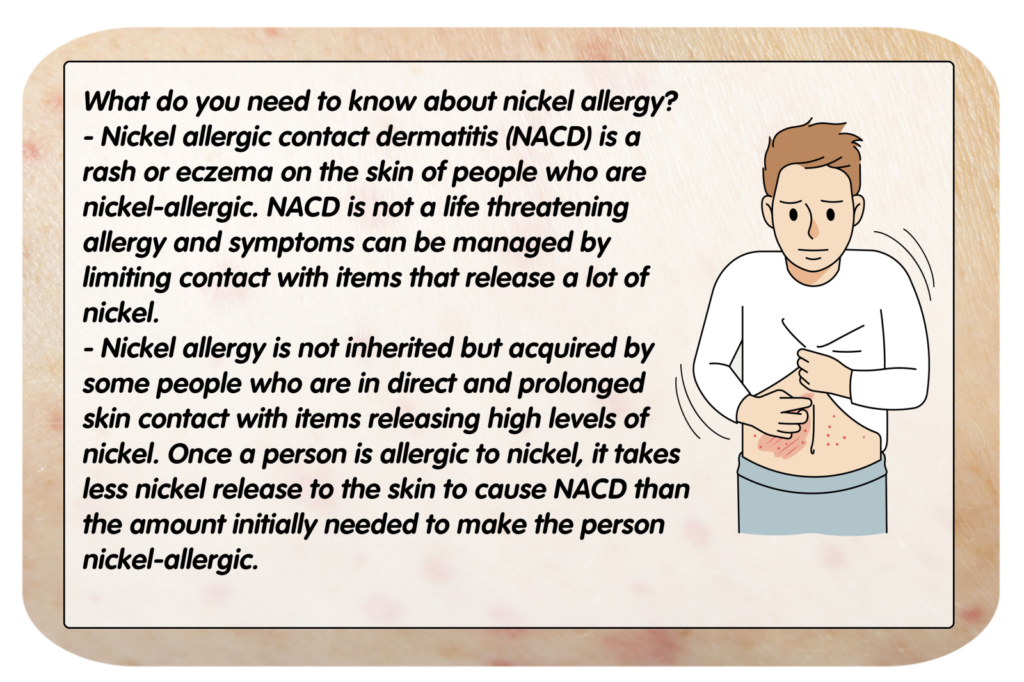
Nickel is a hard, widely distributed metal that has been used in various industrial processes since its discovery in 1751. While it’s affordable and malleable, nickel allergy is a common condition affecting millions of people worldwide. In this article, we’ll delve into the world of nickel allergies, exploring what they are, how prevalent they are, symptoms, treatment options, and precautions to take.
What is Nickel Allergy?
Nickel allergy is an allergic reaction caused by contact with the metal. Unlike immediate hypersensitivities (e.g., pollen, insect venom, or most food allergies), nickel allergy reactions occur several hours to days after exposure. This delayed response is triggered by immune cells called T lymphocytes.
T lymphocytes play a crucial role in the immune system, protecting against infections and remembering harmful substances, like nickel. When these cells detect nickel as an invader, they trigger an inflammatory response, leading to symptoms.
Prevalence of Nickel Allergy
According to studies, nickel is the most common allergenic metal worldwide. One study found that:
- 8.5% of children between 0 and 10 years old have a nickel allergy.
- 12.35% of adolescents (13-17 years old) have a nickel allergy.
- 15.5% of adults have a nickel allergy.
Another study revealed that:
- 25.9% of the Italian population has a nickel allergy.
- 24% of the Spanish population has a nickel allergy.
- 11.9% of the Danish population has a nickel allergy.
While these numbers indicate a significant prevalence, it’s essential to note that not everyone who tests positive for nickel sensitivity will experience symptoms.
Symptoms of Nickel Allergy
Nickel allergy symptoms typically occur on areas of skin exposed to the metal:
- Pruritus: Intense itching
- Brûlure: Burning sensation
- Dolore: Pain
- Arrossage: Redness
- Gonfiore: Swelling
- Papules: Small, raised bumps
- Vesicules: Blister-like lesions
- Peeling: Exfoliation of skin
Common areas affected by nickel allergy include:
- Palm of the hand
- Fingertips
- Navel
- Ears
- Wrist
- Ankles
- Mouth (rarely)
Precautions and Prevention
To alleviate symptoms, it’s crucial to avoid exposure to nickel. This can be achieved by:
- Avoiding jewelry and accessories containing nickel
- Using gloves when handling objects that may contain nickel
- Choosing products with nickel-free coatings or materials
- Wearing protective clothing
In severe cases, medical treatment may be necessary. Creams containing cortisone can help alleviate symptoms.
While rare, some individuals with severe nickel allergies may experience reactions to foods containing nickel. Before making significant changes to their diet, it’s essential for these patients to consult a healthcare professional to determine which foods are safe and which should be avoided.
Researchers are currently studying immunotherapy options for treating nickel allergy.
Frequently Asked Questions
- What is the most common symptom of nickel allergy?
- Pruritus (intense itching) is the most common symptom.
- Can anyone with a nickel allergy react to food containing nickel?
- While rare, some individuals may experience reactions to foods containing nickel.
- How can I prevent nickel allergies?
- Avoid exposure to nickel by choosing jewelry and accessories made from non-nickel materials, wearing protective clothing, and selecting products with nickel-free coatings or materials.
- Can nickel allergy be cured?
- Currently, there is no cure for nickel allergy, but researchers are studying immunotherapy options.
- What should I do if I suspect a nickel allergy?
- Consult a healthcare professional for proper diagnosis and treatment.
Causes of Nickel Allergy
While the exact cause of nickel allergy is unknown, several factors contribute to its development:
- Genetic predisposition: Some people may be more susceptible to nickel allergies due to their genetic makeup.
- Environmental exposure: Prolonged contact with nickel can trigger an allergic response in some individuals.
- Skin conditions: Certain skin conditions, such as eczema or psoriasis, increase the risk of developing a nickel allergy.
Diagnosis and Testing
A healthcare professional will typically diagnose nickel allergy through:
- Medical history
- Physical examination
- Allergy testing (e.g., patch test)
- Skin prick test
Allergy testing involves applying small amounts of nickel to the skin to observe the reaction. This test is usually performed on areas not exposed to nickel regularly.
Treatment Options
While there is no cure for nickel allergy, various treatment options can help alleviate symptoms:
- Avoidance: Refrain from exposure to nickel through jewelry, clothing, and products.
- Topical creams: Apply topical cortisone cream to reduce inflammation and itching.
- Oral antihistamines: Take oral antihistamines to relieve itching and pruritus.
- Immunotherapy: Researchers are studying immunotherapy options for treating nickel allergy.
Prevention Strategies
To prevent nickel allergies, follow these guidelines:
- Choose jewelry and accessories made from non-nickel materials (e.g., stainless steel, titanium).
- Wear protective clothing when handling objects that may contain nickel.
- Select products with nickel-free coatings or materials.
- Keep jewelry clean and well-maintained to prevent nickel exposure.
By understanding the causes, symptoms, treatment options, and precautions for nickel allergy, individuals can effectively manage their condition and reduce the risk of severe reactions.


