
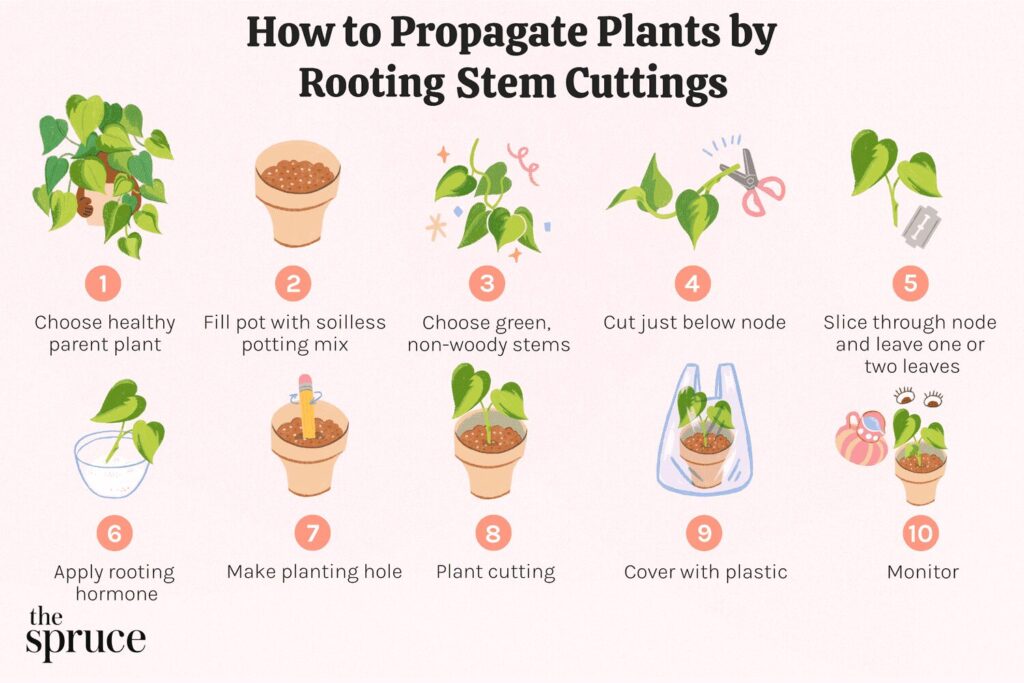
As a gardener, you’re likely familiar with the concept of rooting plants by stem cutting. This technique allows you to propagate new plants from existing ones, reducing the need for nursery-bought specimens and creating a more sustainable gardening practice. In this article, we’ll delve into the world of root propagation using stem cuttings, exploring the best practices, techniques, and tips to ensure success.
Choosing the Right Plants for Rooting by Stem Cutting
Not all plants can be rooted using stem cuttings. Generally, plants with soft, green stems or leaves work better than those with hard, woody trunks. Some examples of plants that can be easily propagated through stem cutting include:
- Aromatic herbs like rosemary, thyme, and oregano
- Succulents like aloe vera, echeveria, and crassula
- Conifers like pine, spruce, and fir
- Flowering shrubs like camellias, rhododendrons, and azaleas
However, not all plants can be rooted using stem cutting. Some examples of plants that are better suited for other propagation methods include:
- Citrus trees (which typically require grafting or budding)
- Fruit trees (like apples, pears, and cherries)
The Different Methods of Rooting Plants by Stem Cutting
There are several ways to root plants using stem cuttings, each with its own advantages and disadvantages.
Talea in Acqua (Water Rooting)
This method involves placing the stem cutting in a container filled with water. The idea is that the plant will absorb nutrients from the water and develop roots. While this method can be effective for some plants, it’s not always reliable and requires careful monitoring of the cuttings’ progress.
Advantages:
- Easy to set up
- No need for specialized equipment or potting mix
Disadvantages:
- Limited success rate
- Requires consistent water change
- Can lead to root rot if not done correctly
Talea Verde (Green Stem Cutting)
This method involves cutting a healthy stem from the mother plant, removing lower leaves, and placing the cutting in a well-draining potting mix. The idea is that the plant will develop roots as it absorbs water and nutrients from the soil. This method is generally more reliable than water rooting but still requires careful monitoring.
Advantages:
- Higher success rate compared to water rooting
- Allows for better control over environmental conditions
Disadvantages:
- Requires a well-draining potting mix
- Needs consistent watering and fertilization
Talea Semilegnosa (Partially Wooden Stem Cutting)
This method involves cutting a partially wooden stem from the mother plant, removing lower leaves, and placing the cutting in a well-draining potting mix. The idea is that the plant will develop roots as it absorbs water and nutrients from the soil. This method is generally more reliable than green stem cutting but still requires careful monitoring.
Advantages:
- Higher success rate compared to green stem cutting
- Allows for better control over environmental conditions
Disadvantages:
- Requires a well-draining potting mix
- Needs consistent watering and fertilization
Talea Legnosa (Fully Wooden Stem Cutting)
This method involves cutting a fully wooden stem from the mother plant, removing lower leaves, and placing the cutting in a well-draining potting mix. The idea is that the plant will develop roots as it absorbs water and nutrients from the soil. This method requires more expertise and care than other methods.
Advantages:
- Higher success rate compared to green stem cutting
- Allows for better control over environmental conditions
Disadvantages:
- Requires a well-draining potting mix
- Needs consistent watering and fertilization
- Requires specialized knowledge and equipment
When to Root Plants by Stem Cutting
The timing of root propagation using stem cuttings depends on the type of plant and its growth cycle. In general, it’s best to root plants when they’re actively growing and producing new shoots. For most plants, this means:
- Spring: When the weather is mild and temperatures are stable (around 15°C to 20°C or 59°F to 68°F).
- Summer: After a light frost has occurred, as this will stimulate the plant’s growth cycle.
However, some plants require specific conditions for rooting. For example:
- Camellias: Root in late summer or early autumn.
- Rhododendrons: Root in late winter to early spring.
- Azaleas: Root in late winter to early spring.
Tips and Tricks for Successful Root Propagation
Here are some expert tips for successful root propagation using stem cuttings:
- Use fresh, healthy material from the mother plant.
- Remove lower leaves to prevent rotting and promote rooting.
- Keep the potting mix consistently moist but not waterlogged.
- Provide adequate light and temperatures suitable for the plant species.
- Monitor the cutting’s progress regularly.
Frequently Asked Questions
Here are some frequently asked questions related to root propagation using stem cuttings:
Q: Can I root any plant using stem cutting?
A: No, only plants with soft, green stems or leaves can be rooted using stem cutting. Consult our article on suitable plants for further information.
Q: How long does it take for a stem cutting to develop roots?
A: The time it takes for a stem cutting to develop roots depends on the plant species and environmental conditions.
Q: What’s the best way to care for a stem cutting until it develops roots?
A: Keep the potting mix consistently moist, provide adequate light, and maintain suitable temperatures.
Q: Can I propagate plants by stem cutting during winter?
A: Yes, some plants can be rooted using stem cuttings during winter, but others may require specific conditions or techniques.
Q: Are there any risks associated with rooting plants by stem cutting?
A: Yes, risk of rotting, failure to develop roots, and other complications. Follow proper techniques and monitor the cutting’s progress regularly.
Q: Can I propagate succulents using stem cuttings?
A: No, succulents typically require leaf or seed propagation instead of stem cutting.
Troubleshooting Common Problems
Here are some common problems that may arise during root propagation using stem cuttings, along with solutions and prevention strategies:
- Root Rot: Check for signs of rotting leaves or stems. Remove affected parts to prevent the spread of disease.
- Failure to Develop Roots: Ensure proper potting mix, watering, and fertilization. Monitor temperature and light conditions.
- Overwatering: Be careful not to overwater. Allow the potting mix to dry slightly between waterings.
Conclusion
Root propagation using stem cuttings is a powerful tool for gardeners looking to create new plants from existing ones. By choosing the right plants, selecting the best method, and following proper techniques, you can increase your chances of success. Remember to monitor progress regularly and troubleshoot common problems promptly. Happy planting!


