
Understanding Chemical Reactions: A Journey Through Balancing and Examples
As we go about our daily lives, chemical reactions are happening all around us. From the way our bodies digest food to the rusting of iron, these reactions are an integral part of the world we live in. But what exactly are these reactions, and how do they work? In this article, we’ll delve into the world of chemistry and explore the concept of chemical reactions, balancing equations, and examples.
What are Chemical Reactions?
Chemical reactions are transformations of matter where one or more substances change their composition, resulting in new substances with different properties. These reactions involve the breaking and forming of bonds between atoms, which can lead to changes in the physical and chemical properties of the substances involved.
Imagine a game of musical chairs, where the atoms and molecules are like dancers moving to a new rhythm. As they move, they form new relationships and patterns, resulting in a new dance, or reaction.
What are Reagents and Products?
In a chemical reaction, there are two main players: reagents and products. The reagents are the substances that undergo changes during the reaction, while the products are the new substances formed as a result of the reaction.
Think of it like a recipe for baking cookies. The flour, sugar, and eggs are the reagents, which combine to form a batch of delicious cookies – the product.
What is Balancing?
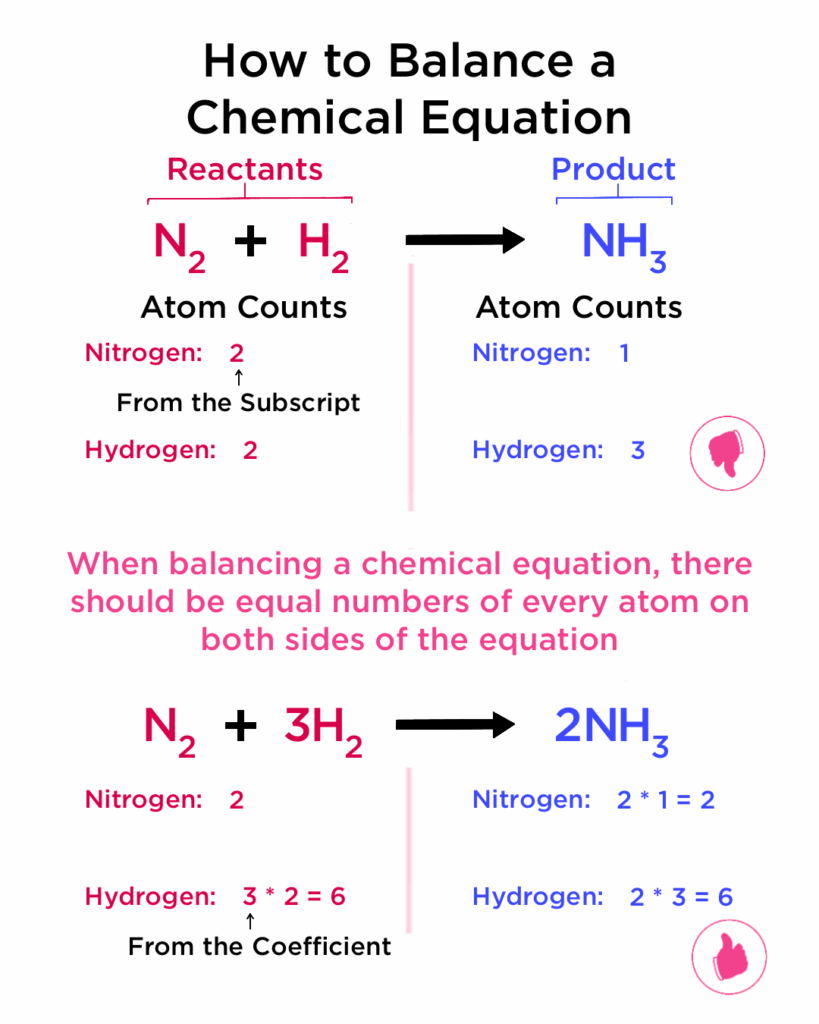
Balancing is an essential part of chemistry that ensures the law of conservation of mass is upheld. This means that the total number of atoms on both sides of the equation must be equal.
To balance a reaction, chemists use a combination of algebraic manipulation and mathematical calculations to ensure that the number of atoms of each element is the same on both sides of the equation.
Types of Reactions
There are several types of chemical reactions, including synthesis, decomposition, substitution, and metathesis. Each type has its own unique characteristics and involves different mechanisms for breaking and forming bonds between atoms.
- Synthesis reactions involve two or more reagents combining to form a single product.
- Decomposition reactions involve a single reactant breaking down into multiple products.
- Substitution reactions involve one reagent replacing another, while metathesis reactions involve the exchange of partners between ions.
Examples of Chemical Reactions
Chemical reactions are all around us. Here are some examples:
- Digestion: Our bodies break down food into nutrients through a series of chemical reactions.
- Rusting: Iron reacts with oxygen to form rust, which is an acidic substance.
- Combustion: The burning of fuel releases energy in the form of heat and light.
- Melting: Ice changes state from solid to liquid when heated.
Chemical Formulas
Chemical formulas are like secret codes that reveal the composition of a molecule. They consist of symbols for each element, which represent the number of atoms present in the compound.
Understanding chemical formulas can be tricky, but it’s also fun! Imagine deciphering a message hidden in plain sight using cryptography techniques.
The Periodic Table
The periodic table is a tool that helps chemists understand the properties and relationships between elements. It’s arranged by atomic mass and other properties, with elements in rows (periods) and columns (groups).
- The first row of the periodic table contains the alkali metals, which are highly reactive.
- The noble gases are found at the far right end of the periodic table and are unreactive.
Redox Reactions
Redox reactions involve the transfer of electrons between molecules. They are an essential part of many chemical processes, including metabolism and combustion.
In a redox reaction, one substance loses electrons (oxidation) while another gains electrons (reduction). This process is crucial for many biological and industrial applications.
Acid-Base Chemistry
Acid-base chemistry deals with the behavior of acids and bases in solution. Acids are substances that donate hydrogen ions (H+), while bases accept hydrogen ions.
The pH scale measures the concentration of hydrogen ions in a solution, ranging from 0 to 14. A pH of 7 is neutral, below 7 is acidic, and above 7 is basic.
Conclusion
Chemical reactions are an integral part of our world, from the way we digest food to the rusting of iron. By understanding the concept of reagents and products, balancing equations, and examples, we can gain insight into the amazing world of chemistry. Whether you’re a seasoned chemist or just starting out, there’s always more to learn and discover.
Frequently Asked Questions
Q: What is the law of conservation of mass?
A: The law of conservation of mass states that matter cannot be created or destroyed in a chemical reaction, only transformed from one substance to another.
Q: How do chemists balance equations?
A: Chemists use algebraic manipulation and mathematical calculations to ensure that the number of atoms of each element is the same on both sides of the equation.
Q: What are some common types of chemical reactions?
A: Synthesis, decomposition, substitution, and metathesis are four main types of chemical reactions that involve different mechanisms for breaking and forming bonds between atoms.
Q: How do we apply chemical reactions in everyday life?
A: Chemical reactions occur all around us, from digestion to rusting. Understanding how they work can help us solve problems and create new technologies.
Q: What is the importance of understanding chemical formulas?
A: Chemical formulas are like secret codes that reveal the composition of a molecule. Understanding them can help us decipher the secrets of chemistry and unlock its power.
Q: Can you give me an example of a simple chemical reaction?
A: A simple example of a chemical reaction is when baking soda (sodium bicarbonate) reacts with vinegar (acetic acid) to form carbon dioxide gas, water, and salt.
Q: How do I get started with chemistry if I have no experience?
A: Start by learning the basics of atomic structure, bonding, and reactions. Practice balancing equations and working with chemical formulas to build your skills.
Q: What are some real-world applications of chemical reactions?
A: Chemical reactions have numerous real-world applications in fields such as medicine, energy, materials science, and environmental protection.
Q: Can you explain the concept of redox reactions?
A: Redox (reduction-oxidation) reactions involve the transfer of electrons between molecules. They are an essential part of many chemical processes, including metabolism and combustion.
Additional Resources
- “Tutto è chimica!” by Christophe Joussot-Dubien and Catherine Rabbe
- Online resources for learning chemistry
- Chemical reaction videos and tutorials
- Chemistry textbooks and study guides
Exercises and Activities
- Balance the following equation: 2H2 + O2 → ?
Answer: 4H2O - Identify the type of chemical reaction that occurs when iron reacts with oxygen to form rust.
Answer: Decomposition - Write a short essay on the importance of understanding acid-base chemistry in everyday life.
- Create a diagram illustrating the periodic table and its properties.
- Research and present on a real-world application of chemical reactions.
By exploring the world of chemistry, we can gain a deeper understanding of the amazing processes that occur around us. Whether you’re a seasoned chemist or just starting out, there’s always more to learn and discover. So, let’s dive in and explore the fascinating world of chemistry!


