
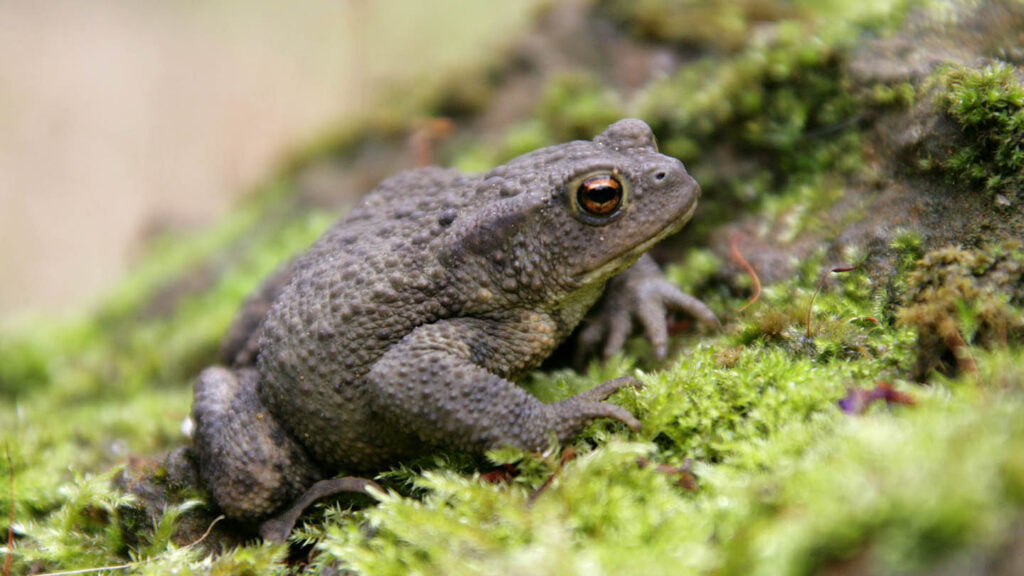
What is the Common Toad?
The common toad, also known as Bufo bufo, is a widespread species of toad found in Europe, including Italy. It is one of the two most common types of toads in Italian countryside, along with the Emerald Toad (Bufo viridis). In this article, we will focus on the common toad, exploring its habits, behavior, and reproduction.
Toxicity vs. Velenosity
One myth surrounding the common toad is that it is venomous. However, this is not entirely accurate. The toad’s skin contains a substance that can cause irritation to mucous membranes, but it is not deadly. This misconception likely arose from observations of animals dying after coming into contact with the toad’s skin.
Habitat and Distribution
The common toad is found throughout Italy, except in Sardinia. It inhabits various environments, including gardens, orchards, and rural areas. The toad can be recognized by its thick, bumpy skin, which can vary in color from brown to greenish-gray. This skin pattern helps the toad blend into its surroundings, making it a formidable camouflage.
Behavior and Socialization
Unlike the Emerald Toad, the common toad is not typically solitary. During breeding season, males will often gather in large groups, creating a cacophony of sounds that can be mistaken for crickets chirping. The toad’s social behavior is also notable in its ability to form small groups during mating season. This communal behavior is known as “mating aggregation.”
Diet and Hunting
The common toad is primarily an insectivorous species, feeding on insects, worms, and other small invertebrates. During the day, it is often active, searching for food in damp or overcast conditions. The toad’s long tongue allows it to catch prey with ease, making it a skilled hunter.
Hibernation
As winter approaches, the common toad begins its hibernation period, seeking sheltered locations to escape the cold. It will often burrow under rocks, logs, or soil, where it remains dormant until spring arrives. During this time, the toad’s metabolism slows down, and it relies on stored energy reserves to survive.
Metamorphosis and Life Cycle
The life cycle of the common toad is fascinating, with a unique metamorphosis from egg to tadpole to adult. The eggs hatch into girtins, which undergo rapid development over 24-48 hours. During this phase, they develop limbs, lose their tails, and begin eating small organisms.
Predators and Defense
Despite its formidable appearance, the common toad has several natural predators, including snakes (Natrix spp.), rats, birds, and fish. To defend itself, the toad employs its sticky tongue to catch prey and its bumpy skin to deter predators. The toad’s bumpy skin also contains glands that produce a toxic secretion, which helps protect it from predators.
Presence in Gardens and Orchards
The common toad is a welcome presence in gardens and orchards, where it helps control insect populations. Its hunting prowess makes it an effective natural pest control method. By allowing the toad to inhabit your garden, you can reduce the need for pesticides and maintain a healthy ecosystem.
Garden-Friendly Toads
If you’re considering introducing common toads into your garden, here are some tips:
- Provide a shallow water source, such as a birdbath or small pond, where toads can drink and hunt.
- Create a humid environment by placing rocks, logs, or soil in areas with low vegetation.
- Avoid using pesticides, which can harm the toad population.
Common Toad Habitat Requirements
To create an ideal habitat for common toads, consider the following requirements:
- Moisture: A damp or overcast environment is perfect for common toads.
- Shelter: Provide rocks, logs, or soil for the toad to burrow under.
- Food: Offer a variety of insects and invertebrates as food sources.
- Water: A shallow water source is essential for drinking and hunting.
Conservation Status
The common toad’s population has been declining in recent years due to habitat loss and fragmentation. Efforts are being made to conserve the species, including the creation of protected areas and the reintroduction of toads into habitats that have become extinct.
Q&A
- Is the Common Toad venomous?
No, the common toad is not venomous; its skin contains a substance that causes irritation to mucous membranes. - What does the Common Toad eat?
The common toad primarily feeds on insects, worms, and other small invertebrates. - Does the Common Toad hibernate?
Yes, during winter, the common toad seeks sheltered locations to escape the cold. - How long does it take for a girino (tadpole) to metamorphose into an adult?
The transformation from egg to tadpole to adult takes around 24-48 hours. - What are some of the Common Toad’s predators?
Some of its natural predators include snakes, rats, birds, and fish. - Can I keep a Common Toad as a pet?
It is not recommended to keep common toads as pets due to their specific habitat requirements and potential health risks. - How do Common Toads reproduce?
The reproduction process occurs in water, with males fertilizing eggs deposited by females. - Are Common Toads social animals?
Unlike the Emerald Toad, common toads are not typically solitary; they often form small groups during breeding season.
Interesting Facts
- The common toad can live up to 20 years in captivity.
- They have a complex communication system that involves visual cues and sound signals.
- Common toads are able to survive without water for extended periods of time by metabolizing stored energy reserves.
Conclusion
The common toad is an interesting and ecologically important species that deserves our appreciation. By understanding its behavior, habits, and life cycle, we can better coexist with these fascinating creatures in our gardens and natural environments.


